


The silence of the “hellhole”
The Narendra Modi government has, in the past, demonstrated remarkable alacrity in responding to perceived slights—especially when they originate from adversarial quarters
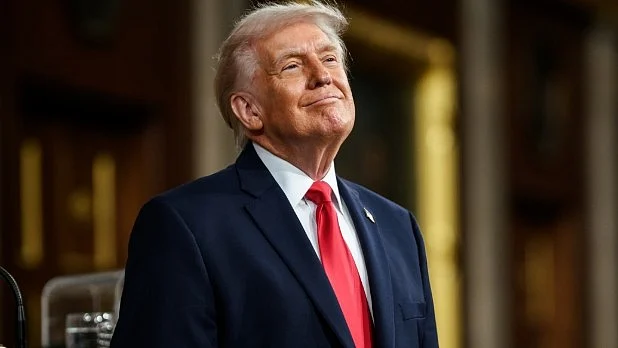


When Donald Trump amplifies a remark describing countries like India as “hellholes,” it is not merely a lapse in language—it is a calculated insertion into a long-standing political grammar that thrives on provocation, prejudice, and spectacle.
The controversy this week did not emerge from an offhand comment but from Trump’s decision to share, on his platform Truth Social, a transcript rooted in anti-immigrant rhetoric tied to debates over birthright citizenship in the United States.
The phrasing—linking India and China to a caricature of global dysfunction—was not incidental. It was embedded in a broader narrative that casts immigrants as exploiters of American law and opportunity. What followed was predictable: outrage from civil rights groups, condemnation from sections of the Democratic Party, and unease among diaspora communities who number in the millions and form a vital bridge between the two democracies.
Yet, what is striking is not the provocation itself—Trump’s political career has often relied on rhetorical excess—but the unevenness of the response it elicited across political geographies. India’s official reaction, though present, remained restrained, describing the comments as “uninformed” and “in poor taste.” But beyond this formal diplomatic phrasing lies a deeper disquiet: a conspicuous absence of political urgency.
In moments like these, silence is rarely neutral. It is a political choice.
The government led by Narendra Modi has, in the past, demonstrated remarkable alacrity in responding to perceived slights—especially when they originate from adversarial quarters. But when the source is a figure who has, at various points, been politically convenient or ideologically aligned, the tone shifts. The response becomes measured, calibrated, almost reluctant.
This selective assertiveness reveals a contradiction at the heart of contemporary Indian diplomacy: a desire to project muscular nationalism domestically while maintaining transactional pragmatism internationally. The result is a curious dissonance—where rhetorical sovereignty at home coexists with strategic reticence abroad.
It is also a missed opportunity.
India today is not merely a nation-state; it is a civilisational entity with global influence, economic heft, and a diaspora that shapes politics far beyond its borders. To allow such a description—“hellhole”—to pass with only procedural objection risks normalising a language that diminishes not just the state, but its people.
“Kabhi India Aa Ke Dekho”: Iran’s Cultural Counterpoint
If India’s response appeared muted, the riposte from Iran was anything but.
In a move that blended diplomacy with digital theatre, Iran’s consulate in Mumbai released a short video celebrating Maharashtra’s cultural and natural richness—its festivals, landscapes, and urban vitality. Accompanying it was a pointed message directed at Trump: “Kabhi India aa ke dekho, phir bolna” (Come to India, then speak).
The phrasing was colloquial, even playful, but its implications were profound. It reframed the discourse from insult to invitation, from derision to demonstration. In suggesting a “cultural detox” to counter Trump’s “random bakwaas,” Iran deployed satire as a diplomatic tool, exposing the absurdity of the original remark.
This was not merely a defence of India; it was an assertion of a shared civilisational ethos. Iranian officials went further, describing India and China as “cradles of civilisation,” thereby situating the debate within a historical continuum that predates modern political rhetoric.
There is an irony here that cannot be ignored. At a time when India itself appeared cautious in its articulation, it was a foreign mission—operating from within Mumbai—that offered the most culturally resonant defence of the country’s dignity.
The Politics of Language and the Burden of Response
Language in politics is never incidental. Words like “hellhole” are not descriptive; they are performative. They construct hierarchies, legitimise exclusion, and shape public perception.
Trump’s remark must be understood within this broader ecosystem of discourse—one that reduces complex societies into simplistic tropes for political gain. But equally important is how such language is contested.
The reactions this week present a study in contrasts:
In the United States, sections of the political class and civil society pushed back, framing the remark as xenophobic and harmful.
In Iran, the response was sharp, creative, and culturally grounded.
In India, the official response remained diplomatically correct but politically subdued.
This divergence raises uncomfortable questions. What does it mean for a nation to defend its image? Is a formal protest sufficient in an age where narratives are shaped as much by social media as by statecraft? And can silence—or restraint—be mistaken for acquiescence?
Beyond Outrage: Reclaiming the Narrative
The deeper issue is not Trump’s remark; it is the ecosystem that allows such remarks to gain traction. In an interconnected world, reputations are not only defended through diplomatic channels but also through cultural assertion, intellectual engagement, and public discourse.
Iran’s intervention, however unexpected, demonstrates the power of narrative reclamation. By showcasing India’s lived reality—its plurality, its vibrancy—it challenged the reductive framing of the original comment.
India, with its vast cultural capital and democratic legacy, possesses far greater resources to do the same. The question is whether it chooses to deploy them.
The Cost of Quiet
Silence, in diplomacy, is often strategic. But it can also be read as hesitation, or worse, indifference.
When a global leader amplifies a term as loaded as “hellhole,” the response it demands is not merely procedural—it is moral, cultural, and political. It requires a defence not just of territory, but of identity.
In this episode, the most compelling rebuttal did not come from the state that was targeted, but from an unlikely interlocutor that chose wit over withdrawal.
“Kabhi India aa ke dekho,” the message said.
It was more than a retort. It was a reminder—that nations are not defined by the language used against them, but by the confidence with which they respond.
~Hasnain Naqvi is a former member of the history faculty at St. Xavier’s College, Mumbai
Join our official telegram channel (@nationalherald) and stay updated with the latest headlines