


UK, France sign pact to deploy troops in Ukraine if peace deal is reached
Starmer says London, Paris ready to establish military hubs to deter future invasion; Russia warns foreign forces would be ‘legitimate target’
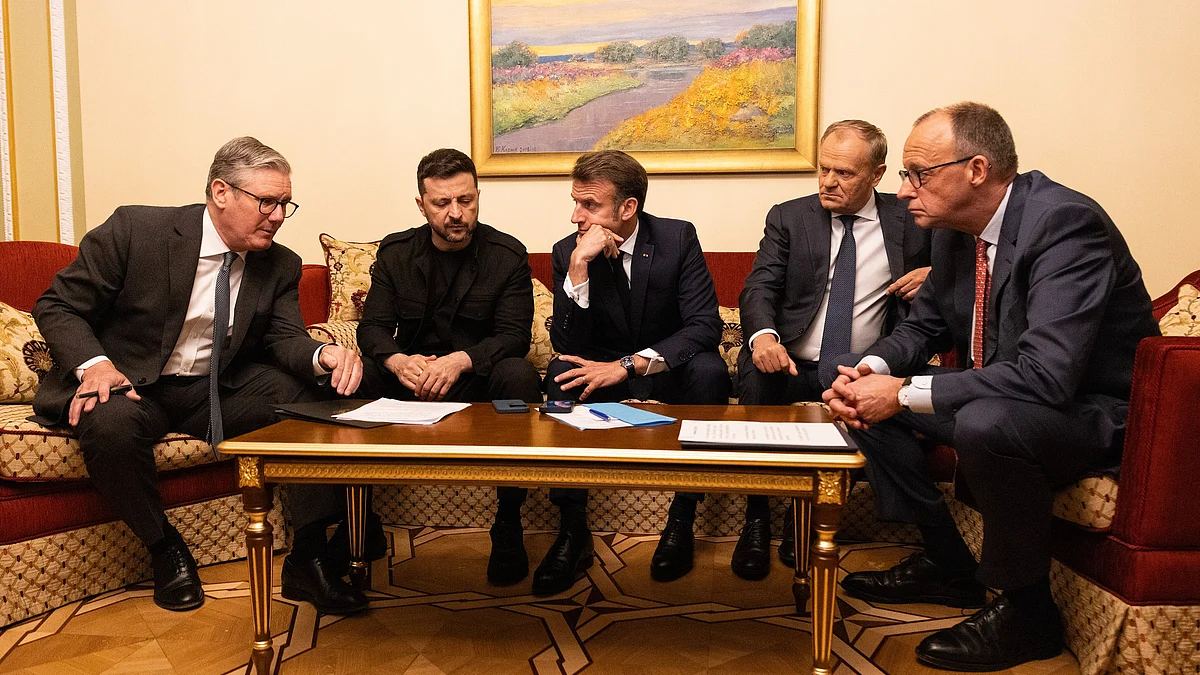


The United Kingdom and France have signed a declaration of intent to deploy troops in Ukraine if a peace deal is reached with Russia, UK Prime Minister Sir Keir Starmer announced on Tuesday after talks with Ukraine’s allies in Paris.
Starmer said the two countries would move to “establish military hubs across Ukraine” as part of a long-term security framework to deter any future Russian invasion. French President Emmanuel Macron later said that thousands of troops could be deployed under the arrangement.
Speaking at a joint press conference after the meeting of the so-called “Coalition of the Willing”, Starmer said:
“We signed a declaration of intent on the deployment of forces to Ukraine in the event of a peace deal.
“This is a vital part of our commitment to stand with Ukraine for the long-term.
“It paves the way for the legal framework under which British, French and partner forces could operate on Ukrainian soil, securing Ukraine’s skies and seas, and regenerating Ukraine’s armed forces for the future.”
He added that the UK would participate in any US-led verification mechanism for a potential ceasefire.
Security guarantees take shape
Officials from the US and European allies said broad agreement had emerged in Paris on the need for robust security guarantees for Ukraine, although critical questions around territory remain unresolved.
US negotiator Steve Witkoff said: “Durable security guarantees and robust prosperity commitments are essential to a lasting peace.”
He added that allies had “largely finished” their work on agreeing security protocols so that Ukrainians could be assured that when the war ends, “it ends forever”.
Jared Kushner, US President Donald Trump’s special envoy, said Ukrainians needed to know that “real backstops” would be in place to ensure the war would “not happen again”.
Macron described the talks as having made “considerable progress”, saying “robust” guarantees had been agreed in principle in the event of a ceasefire.
Ukrainian President Volodymyr Zelensky called the Paris meeting a “huge step forward”, but cautioned that progress would only be meaningful if it resulted in a real end to the war.
Russia issues warning
Russia has repeatedly warned that any foreign troops deployed in Ukraine would be considered a “legitimate target”. Moscow has not yet officially commented on Tuesday’s announcements.
President Vladimir Putin, who launched the full-scale invasion of Ukraine in February 2022, currently controls about 20 per cent of Ukrainian territory. Russian forces occupy most of the Donbas region, including around 75 per cent of Donetsk and almost all of Luhansk.
Putin is known to oppose the idea of a European-led international force in disputed areas and has warned that Ukrainian troops must withdraw from eastern Ukraine as a precondition for peace.
What remains unresolved
While momentum is building around a potential ceasefire, major sticking points remain:
Territory: There is still no clarity on where a future ceasefire line would be drawn or what land Ukraine might be asked to concede. Zelensky has so far ruled out ceding territory, though he has said Ukraine could reposition forces if Russia does the same.
Security architecture: The difference between what Ukraine calls security “guarantees” and what US officials term security “protocols” leaves room for interpretation about Washington’s obligations in a future crisis.
Russian consent: Any deal still hinges on Moscow’s acceptance, and the Kremlin has remained largely silent on the latest diplomatic push.
Zelensky last week said a peace agreement was “90 per cent ready”, adding that the remaining 10 per cent would “determine the fate of peace, the fate of Ukraine and Europe”.
Strategic pressure mounts
With winter conditions worsening and Russian strikes continuing against Ukrainian cities and infrastructure, Kyiv faces the prospect of another costly season of attritional warfare if diplomacy fails.
Ukrainian officials believe that a combination of US monitoring, a multinational force on Ukrainian soil, and sustained weapons support could help convince a war-weary public that pursuing a negotiated settlement is the right course.
However, Zelensky acknowledged that Tuesday’s developments, while a “milestone”, do not in themselves guarantee peace.
“Real progress still needs Russian support,” he said, underlining that the final outcome will depend on whether both sides are prepared to make the compromises needed to end Europe’s largest conflict since the Second World War.
Join our official telegram channel (@nationalherald) and stay updated with the latest headlines