


US lawmakers move to overturn Trump’s emergency tariffs on Indian imports
The proposal seeks to revoke tariffs of up to 50 per cent imposed on Indian-origin goods under the International Emergency Economic Powers Act
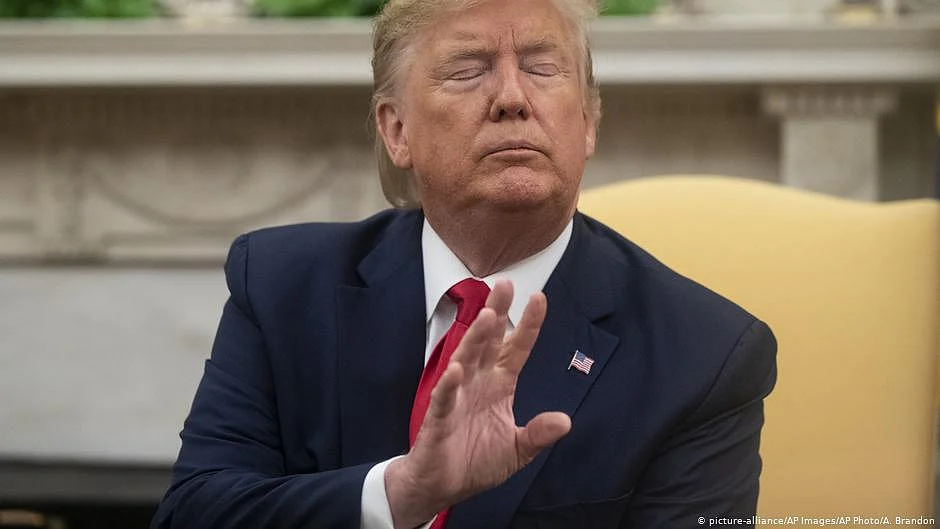


Three members of the United States House of Representatives have introduced a resolution to nullify President Donald Trump’s national emergency declaration that paved the way for steep tariffs on imports from India, describing the measures as unlawful and damaging to both economies.
The proposal, tabled in the US House of Representatives by Democratic Representatives Deborah Ross, Marc Veasey and Raja Krishnamoorthi, seeks to revoke tariffs of up to 50 per cent imposed on Indian-origin goods under the International Emergency Economic Powers Act (IEEPA).
According to the resolution, lawmakers aim to roll back an additional 25 per cent “secondary” tariff levied on India on 27 August 2025, which was layered on top of earlier reciprocal duties. Taken together, the measures pushed tariffs on a wide range of Indian exports to as high as 50 per cent.
The move follows a recent bipartisan effort in the Senate to curb the President’s use of emergency powers for trade action, including an initiative targeting similar tariffs imposed on Brazil.
Explaining her support for the resolution, Ross highlighted the economic ties between India and her home state. She said North Carolina’s economy was closely linked to India through trade, investment and its Indian American community, noting that Indian firms had invested more than a billion dollars in the state, creating thousands of jobs in sectors such as life sciences and technology.
At the same time, North Carolina exporters ship hundreds of millions of dollars’ worth of goods to India annually.
Veasey said the tariffs amounted to an unfair burden on American households. He described India as a key cultural, economic and strategic partner, arguing that the duties effectively acted as a tax on consumers already grappling with higher living costs in Texas and elsewhere.
Krishnamoorthi echoed those concerns, calling the tariffs counterproductive. He warned that rather than strengthening US security or economic interests, the measures were disrupting supply chains, hurting American workers and pushing up prices for consumers.
Ending the tariffs, he said, would create space for Washington to engage constructively with India on shared economic and security priorities.
The resolution forms part of a broader push by congressional Democrats to challenge the Trump administration’s unilateral trade actions and to reset relations with India. In October, Ross, Veasey and Krishnamoorthi, along with Representative Ro Khanna and 19 other lawmakers, urged the President to withdraw the tariff measures and repair strained bilateral ties.
In a statement accompanying the latest move, the lawmakers said overturning the India tariffs was also about reasserting Congress’s constitutional authority over trade and preventing the executive branch from using emergency powers to impose what they described as misguided trade policies.
The Trump administration first imposed a 25 per cent tariff on Indian goods from 1 August, followed by a further 25 per cent increase days later. The White House justified the action by citing India’s continued purchases of Russian oil, arguing that the trade supported Moscow’s war effort in Ukraine.
While India and the United States continue to cooperate closely on defence, technology and broader geopolitical issues, the escalation in trade tensions has emerged as a significant test for the bilateral relationship.
With agency inputs
Join our official telegram channel (@nationalherald) and stay updated with the latest headlines