


US troops leave Iraq after 23 years, shifting security burden to Baghdad
Final US forces depart from Erbil as Iraq takes full responsibility for security, while ISIS remnants and armed groups remain key challenges
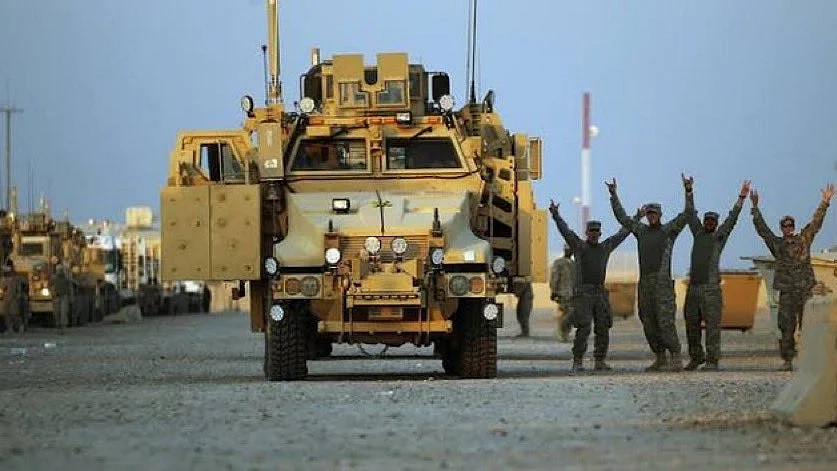


The United States has completed the withdrawal of its troops from Iraq, ending a 23-year military presence that began with the 2003 invasion that toppled Saddam Hussein and later resumed in 2014 to fight the Islamic State.
The final US forces left mainly from an airbase in Erbil in the semi-autonomous Kurdistan Region on 30 September, formally ending the latest chapter of the American military presence in Iraq. The US military described the departure as the conclusion of its 12-year mission against ISIS.
The withdrawal does not end US-Iraq security ties. Washington is expected to continue targeted training and intelligence support, while the two countries retain cooperation in counterterrorism, information exchange and economic affairs.
The latest departure follows the US withdrawal of 2011, after which American forces returned in 2014 when ISIS captured Mosul and large areas of Iraq and Syria. ISIS lost its territorial strongholds in Iraq by 2017, although the group continues to operate through clandestine networks. Pasted text
Security burden shifts to Iraq
The withdrawal places greater responsibility on Iraqi security institutions to prevent an ISIS resurgence, protect critical infrastructure and maintain control over the use of force.
The continued presence of ISIS sleeper cells remains a concern. The US military has said Iraqi security forces now have the capacity to manage threats independently, while Washington will continue counter-ISIS operations from neighbouring Syria.
Another challenge is the Popular Mobilisation Forces, or PMU, an umbrella of armed formations created to fight ISIS in 2014 and later incorporated into Iraq's formal security architecture.
The source material says Prime Minister Ali Faleh Al-Zaidi has stressed that the state must remain the ultimate authority over war and peace and that weapons must remain under constitutional institutions. He had pledged to disarm powerful Iran-aligned militias by 30 September, but several groups rejected the deadline. The broader process of bringing armed groups under state control could continue until June 2027.
Kurdistan faces a new security environment
The final withdrawal from Erbil is particularly significant for the Kurdistan Region, where Kurdish forces have maintained a close security relationship with Washington for more than a decade.
The region has faced drone and ballistic-missile threats during the recent regional conflict, while Kurdish authorities have expressed concerns about losing US security capabilities, including air-defence support.
The departure could increase the importance of security coordination between Erbil and Baghdad, particularly amid longstanding disputes over oil revenues, budgets, territory and the limits of Kurdish autonomy.
US influence extends beyond military presence
Although American troops have left, Iraq remains connected to the US-linked international financial system and heavily dependent on oil revenues.
Iraqi oil revenues are held through an account belonging to Iraq's central bank at the Federal Reserve Bank of New York. The source material notes that the funds belong to Iraq, while the arrangement gives Washington influence over the mechanisms through which Iraqi oil revenues are transferred and converted into dollars. Pasted text
Speaking at the UN General Assembly on 25 September, Al-Zaidi said the end of the international coalition mission marked a new phase in Iraq's relations with its strategic partners, with the focus shifting from military cooperation towards economic and development ties.
He also highlighted the Development Road project, which aims to connect the Grand Faw Port with Türkiye and European markets, and said Iraq wants to develop its energy sector and strengthen its position as a regional economic hub.
The US withdrawal therefore marks not only the end of a major American military deployment but also a shift in responsibility to Iraqi institutions. Baghdad now faces the task of maintaining security, containing ISIS remnants and asserting state control over armed groups, while Erbil adjusts to the loss of a major military partner.
Join our official telegram channel (@nationalherald) and stay updated with the latest headlines