


World leaders react as US strikes Venezuela, captures Maduro
The bold US action has sparked global scrutiny and debate over legality, sovereignty, and Venezuela’s future
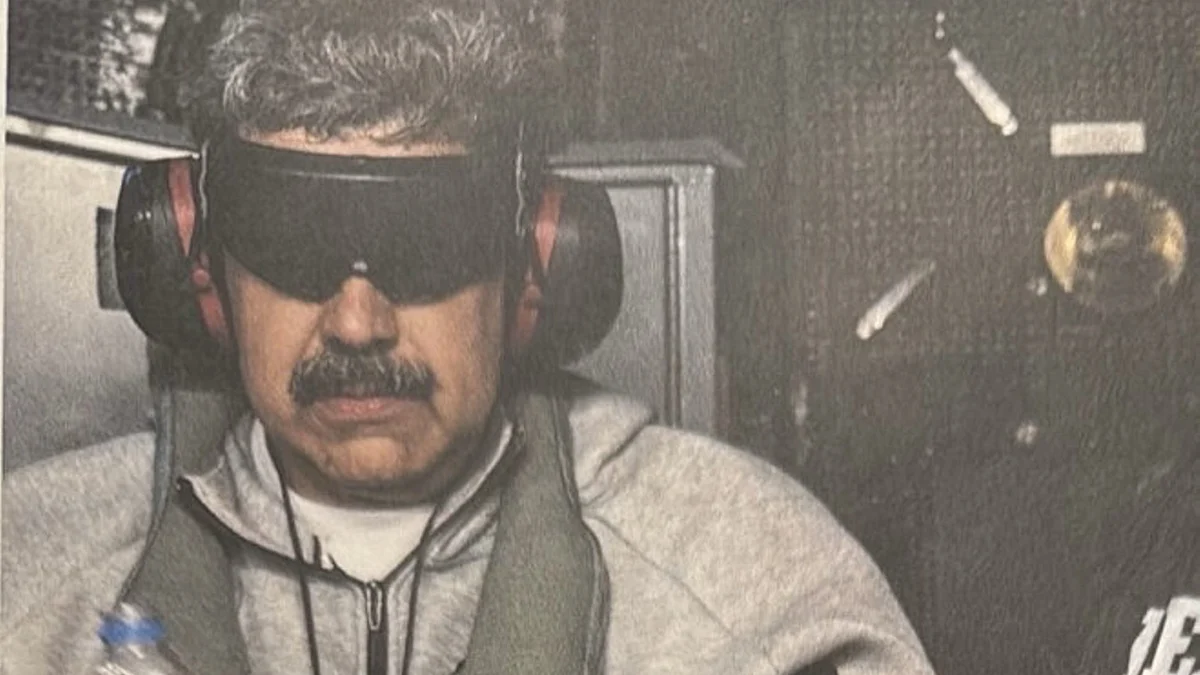


In a dramatic escalation on the global stage, the United States launched a sweeping military strike on Caracas on Saturday, culminating in the capture of Venezuelan President Nicolás Maduro and his wife, Cilia Flores. The operation, ordered by President Donald Trump, has ignited an international firestorm, drawing sharp reactions from world leaders across continents — some voicing alarm, others expressing support.
According to Trump, Maduro and Flores will be brought to New York to face a host of criminal charges, marking a bold and unprecedented intervention in a sovereign nation. The audacity of the US action has reverberated far beyond Latin America, prompting intense scrutiny and widespread debate about legality, sovereignty, and the future of the Venezuelan state.
Russia and China speak out:
Moscow was quick to condemn the strike. The Russian Foreign Ministry issued a forceful statement urging Washington to “reconsider their position and release the legitimately elected president of a sovereign country and his spouse.” In a Telegram post, it underscored the need to resolve disputes between the US and Venezuela “through dialogue” rather than unilateral military action.
China echoed the call for restraint, denouncing the strikes as “hegemonic acts” that flagrantly violate international law. “China is deeply shocked and strongly condemns the US’s blatant use of force against a sovereign state and its President,” the Chinese Foreign Ministry declared. “We call on the US to abide by international law and the UN Charter, and to immediately cease violations of another country’s sovereignty and security.”
Latin American leaders decry the strikes:
Brazilian President Luiz Inacio Lula da Silva described the operation and Maduro’s capture as an “unacceptable line,” warning that such actions set a “dangerous precedent” for the entire international community. In an X post, he lamented that attacks in violation of international law pave the way for a “world of violence, chaos, and instability,” where might trumps multilateralism, threatening Latin America and the Caribbean as a “zone of peace.”
Argentinian President Javier Milei, a known ally of Trump, offered a starkly different perspective, celebrating the intervention on social media. “Freedom moves forward. Long live freedom, damn it!” he proclaimed, while Ecuador’s President Daniel Noboa declared that the “narco chavista criminals” would see their power collapse across the continent.
European responses:
In Europe, the reaction was measured but cautious. EU foreign policy chief Kaja Kallas stated that the bloc was “closely monitoring” the unfolding situation, calling for “restraint” and respect for the UN Charter. Speaking on X, Kallas highlighted that while the EU has long challenged Maduro’s legitimacy, any transition must adhere to international law, stressing the protection of EU citizens in Venezuela as a top priority.
UK Prime Minister Keir Starmer similarly underscored the need to uphold international law while stressing that Britain had no involvement in the US operation. “This is a fast-moving situation. We must establish the facts before taking any further stance,” he said, committing to gather more information from the US. Spanish Prime Minister Pedro Sánchez added a call for “de-escalation and responsibility,” emphasising that the principles of the UN Charter must guide all actions.
Trump’s vision for Venezuela:
In the immediate aftermath, President Trump signaled Washington’s intention to exert direct influence over Venezuela, stating the US would “run” the country until a safe transition of power is secured. He also revealed plans to exploit Venezuela’s vast oil reserves, promising to sell “large amounts” to other nations, a move certain to reshape global energy dynamics.
The strike, its swift execution, and the capture of the Venezuelan leader have thrown the world into diplomatic turbulence. Allies and adversaries alike are weighing the implications: a stark reminder that in today’s geopolitics, unilateral action can ignite both admiration and alarm, reshaping alliances and redrawing the boundaries of international order.
This extraordinary episode not only challenges the sovereignty of Venezuela but also tests the principles of international law, multilateralism, and regional stability — with repercussions that will resonate across the Americas and beyond for years to come.
With PTI inputs
Join our official telegram channel (@nationalherald) and stay updated with the latest headlines