


10,000 litres for a litre of fuel: Govt's ethanol push under scrutiny
India Today report, based on Kisan Tak findings, highlights massive water cost of rice-based ethanol
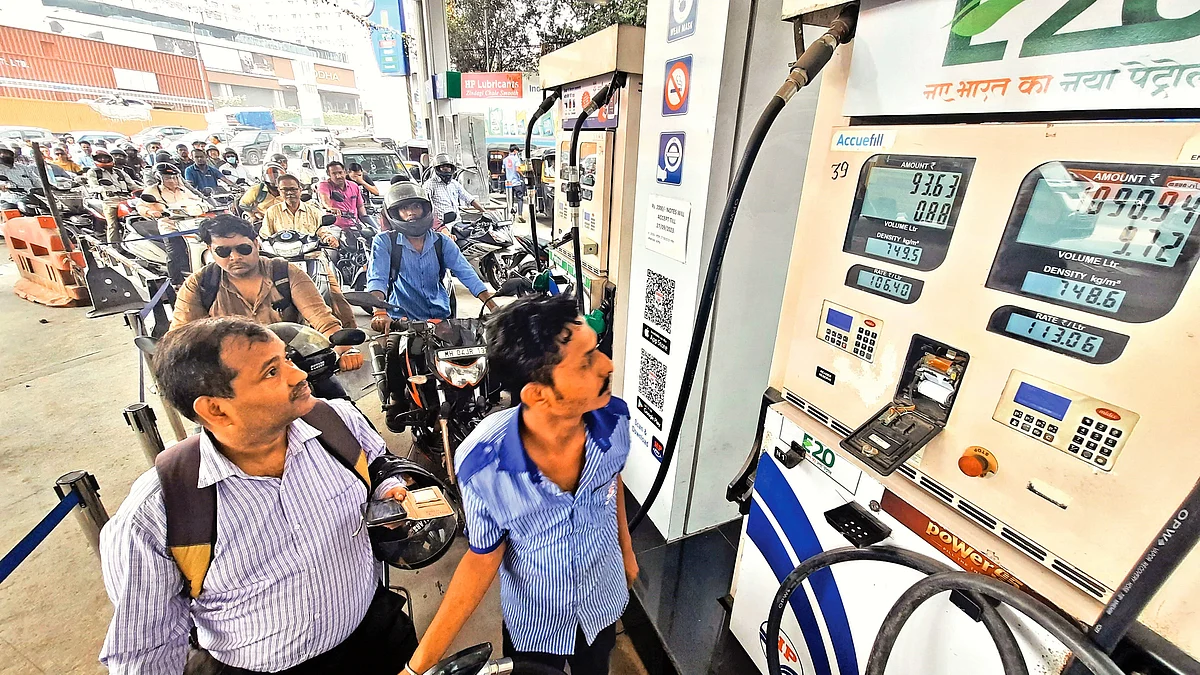


India’s aggressive push to blend ethanol with petrol — positioned as a cleaner alternative to fossil fuels — could be worsening the country’s already severe water crisis, according to a report by India Today, drawing on findings first reported by Kisan Tak.
The core concern lies in the raw materials driving ethanol production. Crops such as sugarcane, maize and rice — all highly water-intensive — form the backbone of India’s ethanol programme. Climate expert and IPCC author Anjal Prakash noted that the policy risks compounding water stress because both sugarcane and maize demand significant water during cultivation and processing.
Ethanol blending involves mixing plant-derived alcohol with petrol to cut dependence on imported crude oil. India has been rapidly scaling up this programme, with rice emerging as a key feedstock. The government allocated 52 lakh tonnes of rice for ethanol production in 2024–25 and is targeting 90 lakh tonnes in 2025–26.
To enable this shift, the Centre plans to reduce the share of broken rice distributed through the public distribution system from 25 per cent to 10 per cent, diverting the surplus to distilleries.
Data cited in the report underscores the scale of the problem. Producing one litre of ethanol from rice requires roughly 10,790 litres of water, according to food secretary Sanjeev Chopra. Most of this water is consumed during cultivation rather than processing.
Growing one kilogram of rice typically needs between 3,000 and 5,000 litres of water. Since about 2.5 to 3 kg of rice is required to produce one litre of ethanol, the total water footprint exceeds 10,000 litres per litre of fuel.
By comparison, maize requires about 4,670 litres and sugarcane around 3,630 litres of water per litre of ethanol. However, rice remains among the most water-intensive due to its low conversion efficiency — one tonne of rice yields only about 470 litres of ethanol.
The environmental cost extends beyond water use. The report mentions that ethanol production generates large volumes of wastewater, known as vinasse, which can contaminate surface and groundwater if not properly treated, Prakash warned.
The original Kisan Tak report, by editor Om Prakash, highlighted a striking contradiction: farmers are often blamed for groundwater depletion when growing rice, yet industries use far more water to convert the same crop into fuel. “The industry is never blamed for the water crisis,” he observed.
These concerns come against an already alarming backdrop. NITI Aayog’s Composite Water Management Index has warned that groundwater levels in 21 major cities — including Delhi, Bengaluru and Chennai — could be depleted by 2030.
India’s ethanol production capacity currently stands at 1,822 crore litres, with a large share concentrated in water-stressed regions. Maharashtra alone accounts for 396 crore litres of capacity, even as areas like Vidarbha and Marathwada face acute drinking water shortages.
Similarly, ethanol plants in Uttar Pradesh and Karnataka draw from groundwater reserves already classified as critically depleted.
Although sugarcane remains the dominant feedstock for ethanol in India, it too places heavy pressure on water resources. Experts note that ethanol plants are typically located in sugarcane-growing regions for logistical ease, further intensifying groundwater extraction in already stressed areas.
Swathi Seshadri of the Institute for Energy Economics and Financial Analysis pointed out that decades of sugarcane cultivation have already weakened water tables, with ethanol expansion likely to aggravate the situation.
The report also flags a broader policy contradiction. Crops like rice in Punjab and Haryana have long been criticised for draining groundwater. Yet the same crops are now being diverted for industrial-scale fuel production under the banner of green energy.
As India races to meet its ethanol blending targets, the findings cited by India Today from Kisan Tak suggest that the environmental trade-offs — particularly on water — may be far more severe than acknowledged.
Join our official telegram channel (@nationalherald) and stay updated with the latest headlines