


SC objects, NCERT acts: Chapter in Class 8 textbook taken off website
Council reviews content on judicial corruption as Centre questions process and context
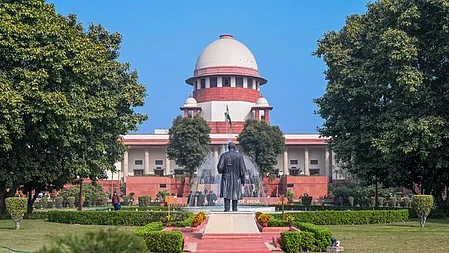


The National Council of Educational Research and Training (NCERT) has removed a Class 8 social science textbook from its website after the Supreme Court expressed strong objections to a chapter discussing judicial corruption, sources said on Wednesday.
According to officials, the government was displeased with the inclusion of the contentious subject in the curriculum. The council is now examining whether the disputed portions should also be excised from copies that have already been printed.
Several schools in Delhi said they had not yet received any formal communication on whether the chapter should be taught.
A three-judge bench led by Chief Justice of India Surya Kant, along with Justices Joymalya Bagchi and Vipul M. Pancholi, took suo motu cognisance of what it termed “objectionable” references to the judiciary in the NCERT text. The matter was mentioned for urgent hearing by senior advocates Kapil Sibal and Abhishek Singhvi.
The CJI reportedly objected strongly to the chapter, asserting that no one would be permitted to defame the judiciary or undermine its institutional integrity.
The new textbook described corruption, mounting case backlogs and a shortage of judges as challenges facing the judicial system. It cited approximate figures of 81,000 pending cases in the Supreme Court, 62.40 lakh in high courts and 4.70 crore in district and subordinate courts.
The chapter also referred to internal accountability mechanisms and the Centralised Public Grievance Redress and Monitoring System (CPGRAMS), noting that more than 1,600 complaints were received through this route between 2017 and 2021.
It quoted former CJI B.R. Gavai, who in July 2025 said instances of corruption and misconduct had adversely affected public confidence. “However, the path to rebuilding this trust lies in the swift, decisive and transparent action taken to address and resolve these issues... Transparency and accountability are democratic virtues,” he was quoted as saying.
Also Read: A dark chapter in the history of NCERT
Government sources said while NCERT is an autonomous body, those responsible for drafting and approving the chapter should have exercised greater discretion. If corruption was to be discussed, they argued, it should have covered all three organs of the state — the executive, legislature and judiciary — rather than focusing on one institution.
They also maintained that while data on complaints against judges is publicly available in parliamentary records and the National Judicial Data Grid, the Union law ministry had not been consulted for verification. The quote attributed to former CJI Gavai was said to have been taken out of context, with sources claiming he was unhappy about its use.
A government functionary added that if students were to be sensitised about corruption, the chapter could have encouraged them to file complaints through existing mechanisms instead of singling out one institution. Officials emphasised that the Supreme Court and 25 high courts already have in-house procedures to deal with allegations against judges, in keeping with the judiciary’s constitutionally mandated independence.
Earlier this month, law minister Arjun Ram Meghwal informed the Lok Sabha that 8,639 complaints had been received against sitting judges between 2016 and 2025. The highest number — 1,170 — was recorded in 2024 by the office of the Chief Justice of India.
Former law minister Ashwani Kumar welcomed the apex court’s intervention, saying the prompt suo motu action would help counter what he described as propaganda against the judiciary.
NCERT chairman Dinesh Prasad Saklani did not respond to requests for comment, while another senior official declined to speak, citing the matter’s pendency before the court.
With PTI inputs
Join our official telegram channel (@nationalherald) and stay updated with the latest headlines