


A Band-aid for a deep injury
It will take more than a two-year extension to correct the colossal blunder that is the Agnipath scheme
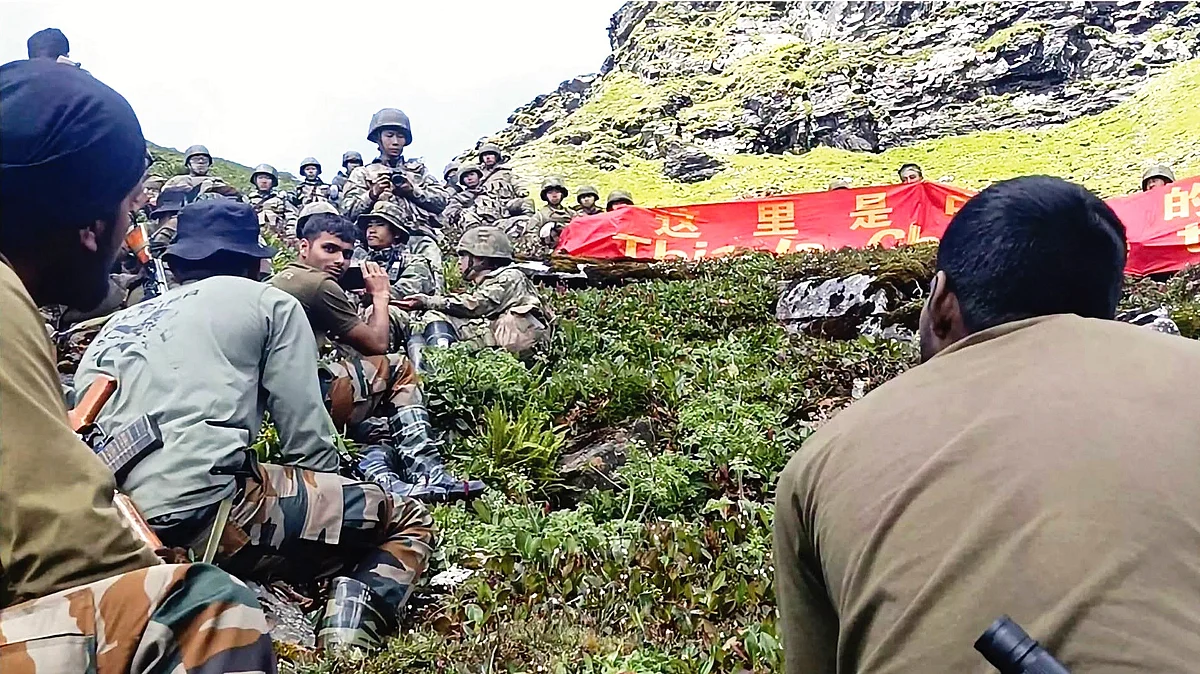


Vijay Kumar, who served in the Indian Army’s Corps of Military Police for 24 years before retiring to his village Charkula in Uttar Pradesh, is a disillusioned man. A third-generation fauji, he has two sons who joined the army. The elder enlisted as a jawan for a fixed tenure of 24 years; the younger, Adesh Kumar, signed up as an Agniveer under the four-year Agnipath scheme. After training, Adesh was posted to Arunachal Pradesh. On 24 March, he was killed in crossfire between Chinese and Indian forces.
Kumar has many questions about his son’s death. “We were told there have been no exchanges of fire between Indian and Chinese soldiers. If so, how did my son get injured? I am suspicious of the circumstances under which he died. He died on a holiday, the very day he was to go on leave for his brother’s wedding. When his body was brought home, no one from the government came to offer us a word of comfort.”
He adds, “We were given his insurance money and dues as an Agniveer, and informed he would receive the remaining amount after the court of inquiry. When regular soldiers die, they are treated as martyrs and given a befitting send-off. Not so with Agniveers. What status do they have, if any?”
Sohan Singh and his wife Chandravati live in Mathura district with their two sons. The elder is a regular jawan on permanent commission, the younger an Agniveer. Chandravati says, “Where are the employment opportunities? Young boys opt for whatever they can get. While my elder son received several marriage proposals and is now married, we have not received a single proposal for our younger son. No one wants an unemployed son-in-law.”
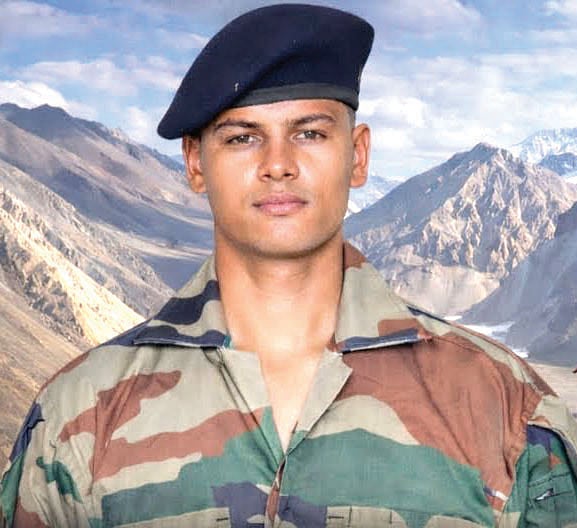
As many as 20 families have sought ‘martyr’ status for Agniveer sons killed in combat or accidents. In January 2024, Ludhiana’s Charanjit Singh lost his 23-year-old son Ajay in a landmine blast near the LoC in J&K’s Rajouri district. Singh, a labourer, said, “My son’s sacrifice deserves the same respect and dignity given to regular soldiers.” Though he received Rs 40 lakh from insurance and another Rs 48 lakh from the army, he believes a martyr’s family should receive the pension and medical benefits given to permanent soldiers. Families see this disparity as unbecoming of the armed forces. As Charanjit Singh’s sister asked, “Was my brother a lesser mortal?”
Military expert Pravin Sawhney, editor of defence magazine Force, points out, “We have a huge boundary with China and Pakistan. We say our border with China is 3,488 km long, but the Chinese claim it is only 500 km. In Arunachal Pradesh, our border extends for over 3,000 km. There have been faceoffs between the Chinese and Indian armies at multiple locations, and tensions continue to simmer. The government can deny it, but recent comments by Shatrujeet Kapur, director general of the Indo-Tibetan Border Police, confirm that these skirmishes are occurring.”
Sawhney adds: “On 23 October 2021, the Chinese government passed a boundary law declaring territorial disputes a matter of national sovereignty [it went into effect on 1 January 2022]. They continue their salami slicing, and we must hold on to everything we have on the ground. Denying these faceoffs will further embolden the Chinese.”
When the army needs manpower but the government wants to cut corners, what does it do? It introduces what Sawhney calls a “ridiculous scheme”, where two categories of soldiers perform “similar jobs” but receive dissimilar treatment. “This immediately affects esprit de corps, camaraderie and regimental bonding. Command will falter. When a scheme creates disharmony, why will an Agniveer lay down his life for his regiment?” he asks.
Disparity in service norms was among the reasons military experts opposed the Agnipath scheme in 2022. Four years later, with the first batch due to complete its tenure by end-November 2026, the government has announced an overhaul. The remaining Agniveers — 75 per cent of recruits — who were due to retire will receive a two-year extension.
Commenting on this rollback, Captain Yogendra Singh Yadav, a Kargil war hero and Param Vir Chakra awardee, wrote on social media: ‘Following the extension, will Agniveers now get promotions and increments? If they excel in sports, will they be allowed to train for another two years? Why was Agnipath introduced only in the army, and not the other security forces (namely the CRPF, Border Security Force and ITBP)? The armed forces are a nation’s final line of defence, yet the government was willing to experiment. Warfare has shifted to a technological, multi-domain model. When direct entry is available in other security forces at inspector, subedar and havaldar levels, why not recruit qualified B.Techs and M.Techs into the army under this scheme?’
Former chief of army staff V.N. Malik also believes Agnipath has pushed younger people towards paramilitary services rather than the army. Disparity within the services is untenable, he says, warning that without training and integrating these recruits into the army, “we will have a major problem on our hands”.
Several military experts argue that the revised scheme has not addressed fundamental flaws. Lack of continuity will undermine operational readiness and combat experience, particularly since regular soldier recruitment has stopped altogether. With troop strength at around 12.48 lakh, the army faces a shortage of 1 lakh to 1.8 lakh soldiers. The shortfall is most acute among JCOs and NCOs (around 92,410). The deficit among officers is around 16 per cent, with thousands of vacancies for captains and majors.
India’s defence forces are not a laboratory for an experimental employment scheme. The earlier recruitment system was built on experience, continuity, competence and commitment, ensuring operational effectiveness, preserving regimental ethos and offering reasonable career progression.
Lt General Zameeruddin Shah (retd) calls Agnipath “a colossal blunder”. He says, “I spent 20 years in my regiment. I knew every jawan, where he came from, his village, family background, even his sons’ names. If one-third of the men change every year, the entire ethos gets diluted. The regimental system brought together individuals from the same area, speaking the same language and following similar social norms. That was a great unifier. Constant shuffling will change everything.”
Former admiral Arun Prakash is equally blunt: “Given the possibility of our unstable northern and western borders becoming ‘live’ at short notice, any systemic change affecting combat effectiveness must be introduced cautiously and progressively.”
Rear Admiral Sudhir Pillai (retd), like several military strategists, argues that modern warfare has evolved into multi-domain digital conflict driven by AI, autonomous systems and network integration. The more sophisticated the machine, the more experienced its operator must be. Military effectiveness depends on recruits becoming skilled operators and supervisors, capable of providing technical support and solving problems with the immediacy that can mean the difference between life and death.
Another crucial question is what happens when Agniveers leave the service. Even with a two-year extension, what skills will equip a 26- or 27-year-old to find private-sector employment? Reserving 50 per cent vacancies in CAPFs and Assam Rifles for former Agniveers raises its own problems, given differences in duties and long working hours. Several state governments had promised jobs when the scheme was launched, but that enthusiasm has waned given their inability to create employment.
Whatever official spin the government puts on its latest face-saver, this tactical retreat has evidently taken place on Prime Minister Modi’s orders. He knows how unpopular the scheme is. With elections approaching in Uttarakhand, Uttar Pradesh, Himachal and Punjab, he needs to blunt the opposition. This expediency comes at the cost of the army’s combat effectiveness. The country’s security has been imperilled by the foolhardy introduction of an untried recruitment system.
Join our official telegram channel (@nationalherald) and stay updated with the latest headlines