


Physicist Ashoke Sen becomes first Indian to win Oskar Klein Medal
ICTS-Infosys Madhava Chair Professor honoured for pioneering contributions to string theory
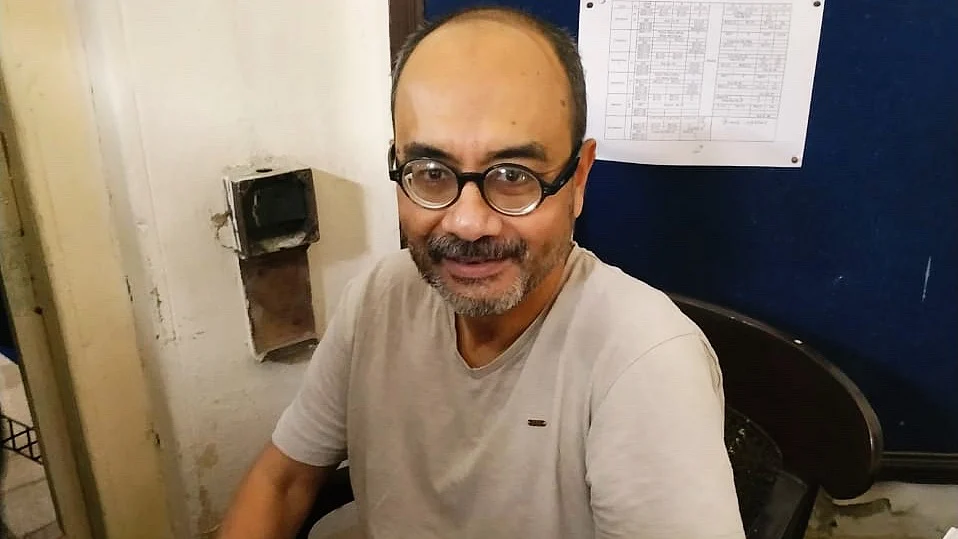


Ashoke Sen becomes the first Indian physicist to receive the Oskar Klein Medal.
The award recognises his contributions to string theory, S-duality and black hole entropy.
Sen’s previous honours include the Breakthrough Prize in Fundamental Physics and the Padma Bhushan.
Physicist Ashoke Sen has been awarded the Oskar Klein Medal for 2026, becoming the first Indian to receive the honour, the Bengaluru-based International Centre for Theoretical Sciences (ICTS) said on Saturday, 24 October.
Sen, an ICTS-Infosys Madhava Chair professor, is internationally recognised for his pioneering work on S-duality, the precise counting of black hole entropy and string field theory — contributions that have helped shape modern string theory, the institute said on its website.
He delivered the 2026 Oskar Klein Memorial Lecture, titled 'Gravity from Strings and Strings from Gravity', at Stockholm University’s AlbaNova Centre on 22 October.
Sen received the Breakthrough Prize in Fundamental Physics in 2012 for his contributions to establishing the unifying structure of string theory, followed by the Dirac Medal in 2014. His other honours include the Infosys Prize in Mathematical Sciences in 2009, the Shanti Swarup Bhatnagar Prize in 1994 and the ICTP Prize in 1989.
He was awarded the Padma Shri in 2001 and the Padma Bhushan in 2013, and was elected a Fellow of the Royal Society in 1998, the ICTS said.
Congratulating Sen, ICTS director Rajesh Gopakumar said, “On behalf of all of us, very warm congratulations to Ashoke. It has been no less than wonderful having Ashoke with us and setting the tone for excellence here at ICTS.”
Named after Swedish theoretical physicist Oskar Klein, the medal recognises distinguished contributions to physics. Established in 1988, it has previously been awarded to Nobel laureates Chen-Ning Yang, Steven Weinberg and Hans Bethe, who received the honour in its first three years, respectively.
The medal is awarded annually by Stockholm University and the Nobel Committee for Physics of the Royal Swedish Academy of Sciences, according to the ICTS.
With PTI inputs