


Aviation safety body alleges long history of faults in crashed Air India Dreamliner
Claims of electrical faults and an earlier in-flight fire emerge as investigation into last year’s Ahmedabad disaster continues
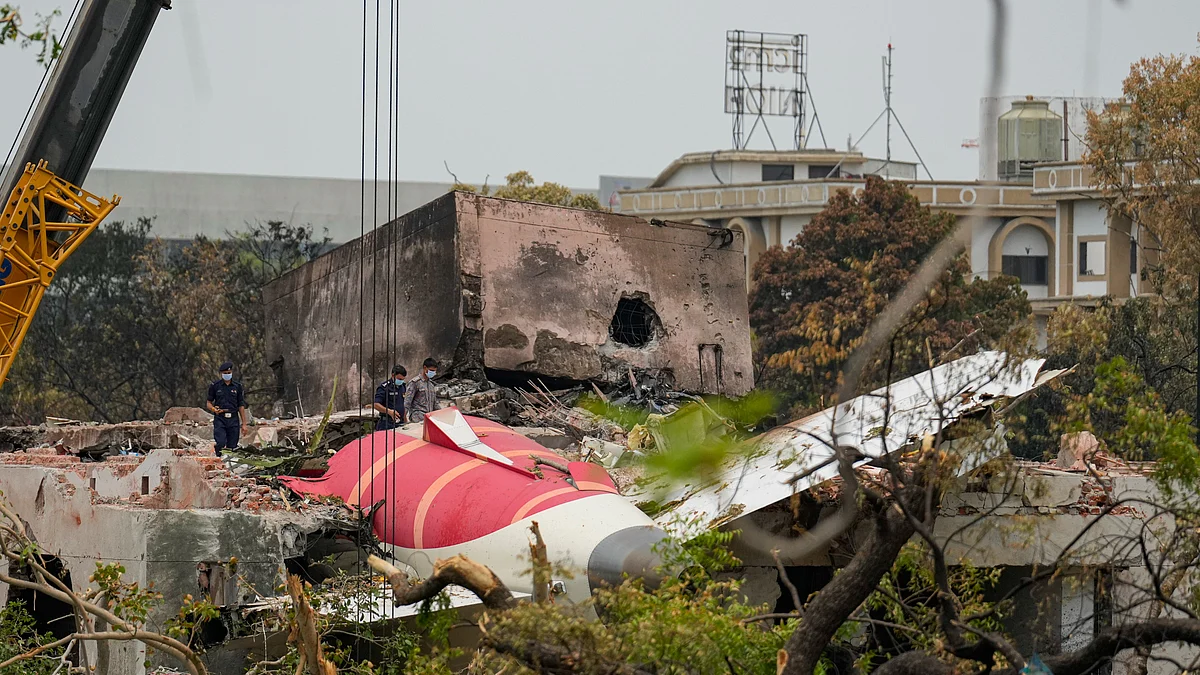


A US aviation safety organisation has alleged that the Boeing 787 Dreamliner that crashed in India last year suffered from a long history of technical problems, including an in-flight fire, raising fresh questions as the official investigation continues.
The aircraft, operated by Air India, went down shortly after take-off from Ahmedabad on 12 June while flying to London, killing all 260 people on board. India’s Aircraft Accident Investigation Bureau (AAIB) is leading the inquiry, with assistance from US authorities, but its final findings are yet to be released.
According to a BBC report, the Foundation for Aviation Safety (FAS) has submitted a presentation to the US Senate’s Permanent Subcommittee on Investigations, outlining concerns it says are based on internal documents obtained by the group.
The Foundation claims the aircraft experienced repeated system failures from its first day in service with Air India, citing what it describes as engineering, manufacturing, quality and maintenance shortcomings. It alleges a pattern of electronics and software malfunctions, circuit breakers tripping, damaged wiring, short circuits, power losses and overheating of electrical components.
One of the most serious claims relates to an incident in January 2022, when the aircraft allegedly suffered a fire in a P100 power distribution panel while descending into Frankfurt Airport. The damage was reportedly discovered after landing and was severe enough to require replacement of the entire panel. The P100 unit is one of five responsible for distributing high-voltage electrical power generated by the engines across the aircraft.
The Boeing 787 relies far more heavily on electrical systems than earlier passenger jets, after designers replaced many mechanical and pneumatic systems with lighter electrical alternatives. The aircraft type faced early safety challenges, including battery fires in 2013 that led to a temporary worldwide grounding. The P100 power panel itself had been redesigned in 2010 following a fire on a test aircraft.
The renewed focus on possible technical faults comes amid controversy surrounding the AAIB’s preliminary report, released a month after the crash. That report stated that fuel control switches were moved from “run” to “cut-off” shortly after take-off, cutting fuel supply to the engines. It cited cockpit voice recordings in which one pilot questioned why the switches had been moved, with the other responding that he had not done so.
Those findings triggered speculation that pilot action may have caused the accident, prompting strong objections from pilots’ groups, safety advocates and some technical experts. They argue that concentrating on pilot error at this stage is premature and risks diverting attention from potential mechanical or system-related causes.
The Federation of Indian Pilots (FIP) has been particularly critical of the investigation, accusing authorities of bias towards blaming the crew. The group has objected to what it describes as harassment of the captain’s family, including the summoning of a nephew who is also a pilot but not involved in the flight. The FIP has called for a judicial inquiry, saying the current probe departs from a safety-focused, fact-finding approach.
The Foundation for Aviation Safety, led by former Boeing manager Ed Pierson, has described the preliminary report as inadequate. It says its concerns extend beyond the Air India aircraft and include a review of around 2,000 failure reports involving other 787s operating in the United States, Canada and Australia. Some of those reports relate to water leaks into wiring bays, an issue previously highlighted by the US Federal Aviation Administration.
Boeing has consistently maintained that the 787 Dreamliner is safe and has a strong operational record. Prior to the Ahmedabad crash, the global Dreamliner fleet had been in service for nearly 15 years without a fatal accident.
India’s Supreme Court has previously emphasised that air accident investigations are intended to prevent future disasters rather than assign blame. As the inquiry continues, there remains no public consensus on whether pilot actions or technical failures were responsible for the tragedy.
Join our official telegram channel (@nationalherald) and stay updated with the latest headlines