


Census 2027: States told to appoint functionaries by Jan 2026
India is preparing for its first fully digital, geo-tagged population count in 2027
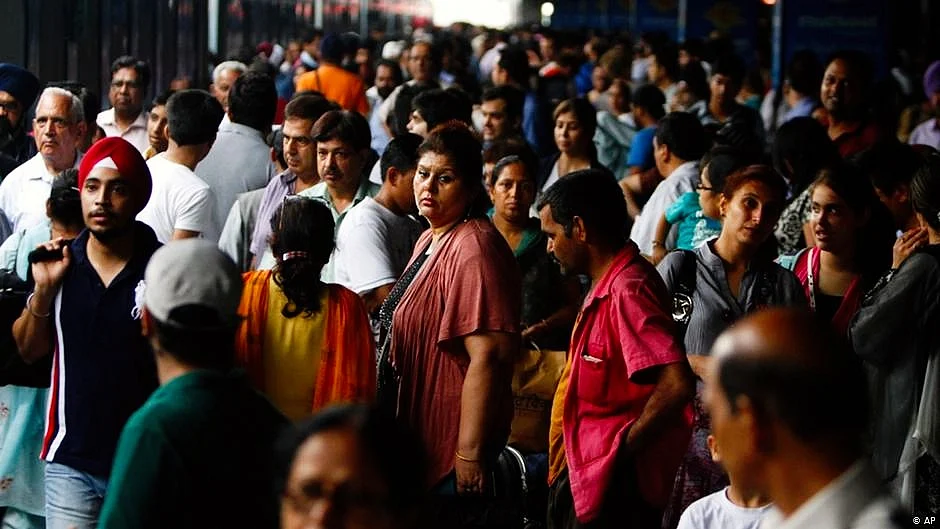


The Registrar General of India (RGI) has instructed all states and Union Territories to complete the appointment of census functionaries by 15 January 2026, setting in motion the administrative machinery for Census 2027, India’s first fully digital and geo-tagged population count.
The directive, issued through a recent circular, marks a major preparatory milestone in what will be the largest data-collection exercise in India’s history. The RGI has sought a budget of Rs 14,618.95 crore for the overall exercise.
The circular emphasises that enumerators and supervisors — frontline personnel responsible for gathering household and demographic information — must be identified well in advance. These functionaries will form the backbone of an exercise deploying around 30 lakh field personnel nationwide.
An enumerator will cover 700–800 people, with one supervisor overseeing every six enumerators. States must also maintain a 10 per cent reserve force to manage absenteeism and emergencies.
Under Rule 3 of the Census Rules (1990), teachers, clerks, and other state or local government staff can be appointed as enumerators, while supervisors are required to hold a higher rank. District collectors, district magistrates, divisional commissioners and municipal commissioners will serve as senior census officers responsible for operations within their jurisdictions.
A major departure from all previous Censuses is that nearly 34 lakh enumerators and supervisors will use their own smartphones equipped with new mobile applications to conduct both phases of the Census — House Listing and Housing Census (April–September 2026) and Population Enumeration (February 2027). These apps, available in English and regional languages on both Android and iOS, are being recalibrated after having been initially developed for the postponed 2021 Census.
According to senior officials, the use of personal devices will allow enumerators to collect and upload data directly to central servers in real time.
Also Read: A census that counts them all
Should enumerators collect information on paper for any reason, they will be required to manually enter it into a web portal — eliminating the need for traditional scanning or secondary data entry.
For the first time, Census data will therefore be digitised at the point of collection, significantly reducing delays and error margins.
The RGI is also building a Census Management and Monitoring System (CMMS) portal to track appointments, assign enumeration blocks, monitor supervisory circles and provide real-time updates on field progress. States have been told that early registration of functionaries on the CMMS is essential to avoid bureaucratic bottlenecks as the start date approaches.
Census 2027 is set to introduce several other firsts, including geo-tagging of every residential and non-residential building in the country. Using Digital Layout Mapping (DLM), enumerators will assign latitude-longitude coordinates to structures within their designated Houselisting Blocks (HLBs), integrating India’s Census architecture with GIS-based systems for the first time.
The upcoming Census will also include caste enumeration, following a Cabinet Committee on Political Affairs decision on April 30. While caste was last captured comprehensively in 1931, the 2011 Socio-Economic Caste Census (SECC) was conducted separately and in paperless mode using BEL-supplied tablets. The 2027 exercise will mainstream caste data into the national Census for the first time.
Citizens will also have the option of self-enumeration through a web portal, available in English, Hindi and regional languages, further supporting the digital-first approach.
Responding to concerns about how migrant workers — who constitute a large proportion of India’s internal population movement — will be counted, minister of state for home affairs Nityanand Rai informed the Lok Sabha on Tuesday that Census 2027 will retain and expand standard migration questions.
Data will be collected for each individual based on place of birth, place of last residence, duration of stay at the current residence, and reason for migration. Rai noted that the Census traditionally records information for individuals wherever they are found during enumeration, ensuring that both long-term migrants and temporary residents are accounted for.
The questionnaire will be formally notified through the Official Gazette ahead of field operations.
The Census will proceed in two phases:
1. House Listing & Housing Census (April–September 2026)
States may conduct this phase over a continuous 30-day period within these six months, depending on local convenience. Data collected will include housing conditions, household amenities and assets.
2. Population Enumeration (February 2027)
The reference date will be 00:00 hours of 1 March 2027, with enumerators visiting every household to record population, socio-economic indicators and caste details.
However, in Ladakh, the snow-bound areas of Jammu & Kashmir, and the Himalayan states of Himachal Pradesh and Uttarakhand, both phases will be held earlier — in September 2026 — owing to weather constraints. For these regions, the reference date will be 00:00 hours of 1 October 2026.
The RGI’s directive underscores that the scale and technological ambition of Census 2027 require states to accelerate preparations. With smartphone-based enumeration, geo-tagging, expanded migration questions, caste data, and real-time monitoring, officials say the exercise marks a fundamental shift from earlier decadal counts.
The circular concludes with a reminder: timely appointments and digital registration of personnel will determine whether India’s first fully digital Census can meet its demanding schedule and produce reliable, real-time demographic data for policy planning.
With agency inputs
Join our official telegram channel (@nationalherald) and stay updated with the latest headlines