


Delhi air quality approaches ‘severe’ levels as smog returns across the city
Thick smog blanketed much of the capital, significantly reducing visibility
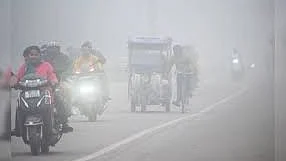


Delhi’s air quality deteriorated sharply on Wednesday morning, with multiple locations recording pollution levels in the ‘severe’ category, raising fresh concerns for public health. Data from 40 Central Pollution Control Board (CPCB) monitoring stations showed that at least 14 areas had an Air Quality Index (AQI) above 400 at 7:05 a.m.
According to the CPCB’s Sameer app, the city’s overall AQI was 376 around 7 a.m., edging closer to the ‘severe’ threshold and marking a slight increase from Tuesday’s average of 372. The reading places Delhi’s air quality in the ‘very poor’ category, approaching hazardous levels.
Thick smog blanketed much of the capital, significantly reducing visibility. Chandni Chowk recorded one of the highest AQIs at 431, firmly in the ‘severe’ bracket. Other areas breaching the severe limit included Anand Vihar (405), Ashok Vihar (403), Bawana (408), Dr Karni Singh Shooting Range (406), Jahangirpuri (406), Jawaharlal Nehru Stadium (405), Okhla (404), RK Puram (420), Rohini (417), Vivek Vihar (415), and Wazirpur (406).
Only NSIT Dwarka reported air quality in the ‘poor’ range, while the remaining 25 stations recorded ‘very poor’ levels. Nehru Nagar and Chandni Chowk were among the most heavily polluted areas.
The city has seen a steady rise in pollution over the past few days, following an AQI of 279 on 30 November (‘poor’), 304 on 1 December, and 372 on 2 December. Residents have reported irritation of the eyes, nose, and throat, along with breathing difficulties, as dense smog returns to the city.
Health experts warn that prolonged exposure to such toxic air can exacerbate respiratory and heart conditions, and may even cause long-term respiratory problems in otherwise healthy individuals.
Pollution levels in neighbouring regions were also alarming, with Noida’s Sector 125 station recording an AQI of 406, while Greater Noida reported 372.
Delhi’s air quality had improved briefly over the weekend, aided by strong northwesterly winds on Sunday (30 November) that dispersed pollutants and ended a 24-day streak of ‘very poor’ air quality. However, the respite was short-lived, and the capital is once again facing hazardous conditions.
The CPCB’s AQI scale ranges from 0 to 500, with six categories indicating increasing levels of pollution and corresponding health risks.
With IANS Inputs
Join our official telegram channel (@nationalherald) and stay updated with the latest headlines