


Delhi-NCR air quality remains ‘poor’; cold wave grips region
According to CPCB, most parts of Delhi linger in the ‘poor’ category, with Akshardham at an AQI of 294 and ITO at 256
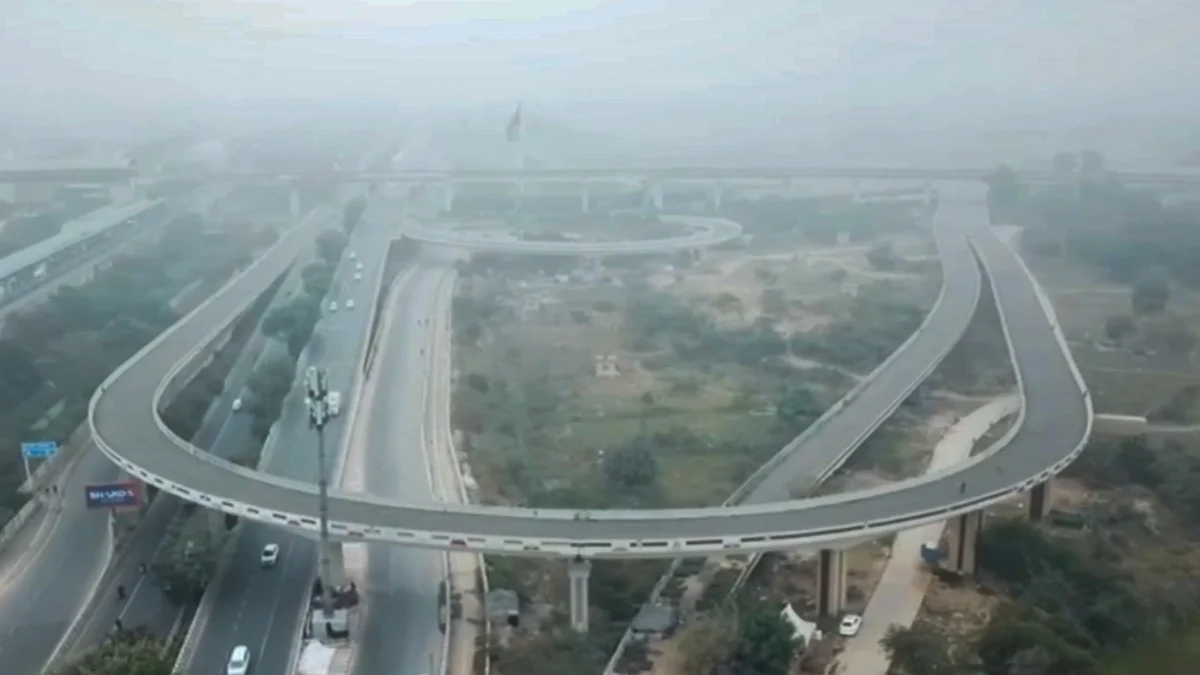


Delhi woke on Monday to a city wrapped in a chill as a biting cold wave gripped the national capital, with temperatures plunging sharply by 4.5 degrees Celsius to settle at a frosty 6.5 degrees — well below the seasonal norm.
Yet it was not just the cold that cast a shadow over the metropolis; the air itself remained heavy, as the city continued to reel under poor air quality.
According to the Central Pollution Control Board (CPCB), most parts of Delhi lingered in the ‘poor’ category, with Akshardham recording an AQI of 294 and ITO at 256. But for many areas, the air was far more stifling. Eleven monitoring stations, including Anand Vihar, Ashok Vihar, and Chandni Chowk, reported ‘very poor’ conditions, with AQI readings soaring past 300 — Chandni Chowk reaching a hazardous 343. Other hotspots included Dilshad Garden, Jahangirpuri, Nehru Nagar, Okhla Phase II, Rohini, Sirifort, Vivek Vihar, and Wazirpur, painting a stark picture of a city struggling to breathe.
The smoggy pall did not spare neighbouring towns. Noida’s air quality dipped to 242, while Gurugram, which had briefly tasted moderate air, slid back into the poor range with an AQI of 244.
Authorities had earlier lifted parts of the Graded Response Action Plan (GRAP) restrictions after brief relief brought by rainfall and gusty winds, but GRAP-1 and GRAP-2 measures remain in effect as a precaution.
Meteorologically, the India Meteorological Department (IMD) forecasts that the cold wave will linger in isolated pockets of the capital till 6 January. Morning skies are expected to be clear, veiled occasionally by shallow to moderate fog. Maximum temperatures are likely to hover between 17 and 19 degrees Celsius, while the minimum will remain slightly above the norm, ranging from 7 to 9 degrees. Night temperatures varied across the city—Safdarjung recorded 7.4°C, Palam 6.8°C, Ayanagar 6.6°C, Lodhi Road 7.6°C, and the Ridge a comparatively warmer 8.9°C. High humidity, touching 92% at 8:30 am, further sharpened the morning chill.
Beyond Delhi, the cold wave has cast its icy grip across the northern plains. Kashmir’s valleys, deep in the heart of the “Chilla-e-Kalan” — the harshest forty-day winter stretch — face freezing nights, even as snowfall remains absent from the plains. Light rain or snow is predicted in higher reaches of Kashmir and Himachal Pradesh on 5 and 6 January, while Uttarakhand may see precipitation on 6 January.
The icy tendrils extend to isolated pockets of Punjab, Haryana, and Chandigarh, expected to remain under cold wave conditions until 8 January, while western Rajasthan will shiver until January 9 and eastern Rajasthan until 10 January.
As the capital shivers under poor air and piercing cold, Delhiites face a dual challenge — braving the frost while navigating through a haze that cloaks the city in a lingering winter gloom.
With IANS inputs
Join our official telegram channel (@nationalherald) and stay updated with the latest headlines