


Delhi’s air quality remains in ‘very poor’ category, cold wave conditions persist
Nehru Nagar records an AQI of 426, followed closely by Anand Vihar at 422, Vivek Vihar at 408 and Siri Fort at 404
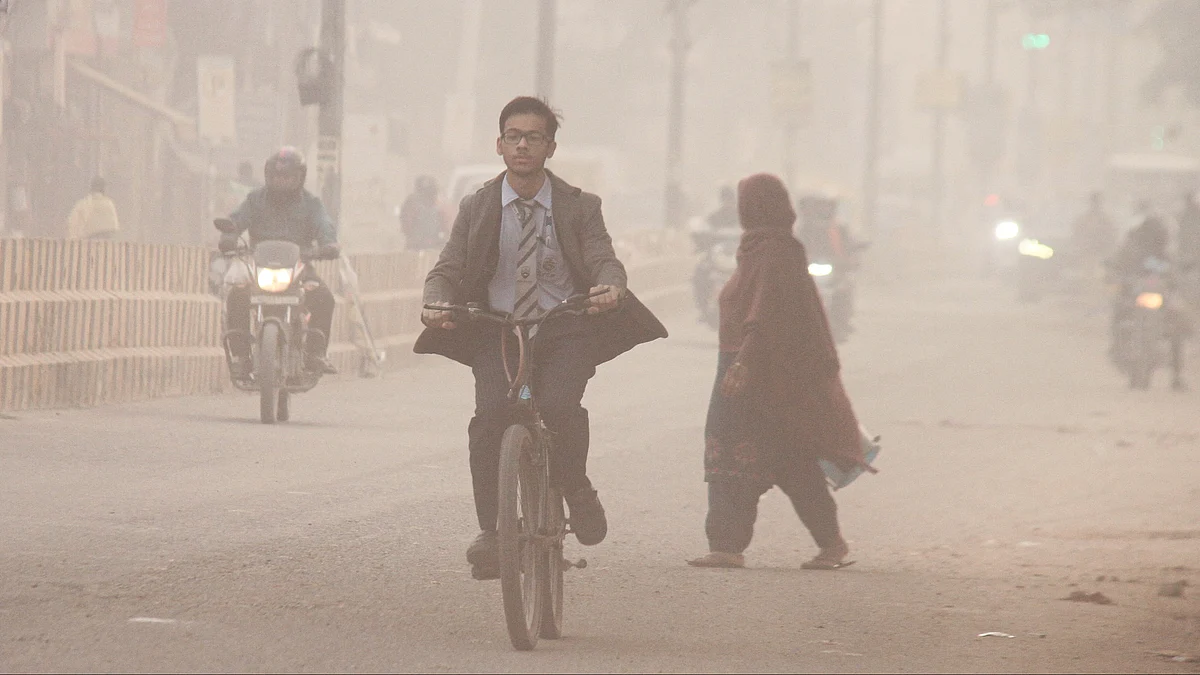


Delhi woke up to a familiar winter double whammy on Saturday — choking air and biting cold — as the capital’s air quality stayed firmly in the ‘very poor’ zone and cold wave conditions tightened their grip.
According to data from the Central Pollution Control Board’s (CPCB) Sameer app, the city’s Air Quality Index (AQI) stood at 358 at 6:05 am, only marginally worse than Friday morning’s reading of 318, which was also classified as ‘very poor’. Several pockets of the city slipped into the ‘severe’ category, underscoring the scale of the pollution crisis.
The national capital shivered through Saturday as the mercury dipped to 4.2ºC — a sharp 2.7 degrees below the seasonal average — the India Meteorological Department said.
Nehru Nagar recorded an AQI of 426, followed closely by Anand Vihar at 422, Vivek Vihar at 408 and Siri Fort at 404. Other areas hovered on the edge of severe pollution, with Patparganj (400), Dwarka Sector-8 (399), Okhla Phase-2 (398), JLN Stadium (394), RK Puram and Chandni Chowk (390), Rohini (372), Punjabi Bagh and Mundka (368), Ashok Vihar (359), and Bawana (346) all reporting ‘very poor’ air. Even relatively open zones such as IGI Airport’s Terminal-3 (325) and Alipur (302) offered little respite.
Only a few locations, including Burari Crossing (300) and Pusa IMD (290), managed to remain in the ‘poor’ category.
The capital had already recorded its lowest minimum temperature of the year so far earlier this week, and forecasters warn that the chill is far from over. The IMD expects cold conditions to intensify across North India until 15 January and has issued a yellow alert for light to dense fog during morning hours.
Partly cloudy skies and foggy conditions are likely to persist until 13 January, while daytime temperatures in Delhi are expected to struggle to rise beyond 15 degrees Celsius in the coming days.
As winter deepens, residents are once again bracing for a season marked by hazardous air and piercing cold — an annual reminder of the capital’s enduring environmental challenges.
With IANS inputs
Join our official telegram channel (@nationalherald) and stay updated with the latest headlines