


Delhi’s air quality remains poor; IMD issues yellow alert for fog
Sky will stay mostly cloudy, with light rain, thunderstorms, lightning, and gusty winds of 30-40 kmph expected on the night of 31 January
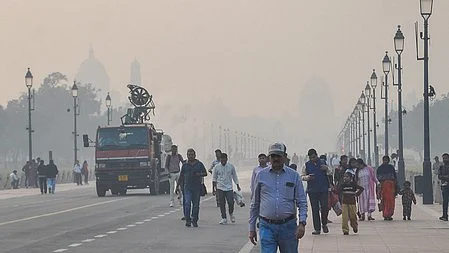


The air quality in Delhi remained in the ‘poor’ category on Thursday, with several areas recording AQI levels above 300, signaling worsening conditions in parts of the city.
According to the Central Pollution Control Board (CPCB), Anand Vihar recorded an AQI of 334, Jahangirpuri 337, Chandni Chowk 312, Rohini 311, Patparganj 306, and Dwarka Sector-8 317, placing them in the ‘very poor’ range. Other locations, including Bawana (288), Burari Crossing (264), Jawaharlal Nehru Stadium (282), Narela (244), North Campus, Delhi University (260), and IIT Delhi (210), fell into the ‘poor’ category.
As per AQI standards, readings between 0-50 are ‘good’, 51-100 ‘satisfactory’, 101-200 ‘moderate’, 201-300 ‘poor’, 301-400 ‘very poor’, and 401-500 ‘severe’. While there has been a slight improvement compared to previous days, air pollution continues to pose health risks, particularly for vulnerable groups.
The India Meteorological Department (IMD) issued a yellow alert for Thursday, warning of moderate fog across the city. Shallow to moderate fog is expected during morning hours over the next six days, except 31 January and 1 February, with moderate fog forecast for 29, 30, and 31 January. No severe weather warnings have been issued.
The IMD forecast predicts maximum temperatures around 18°C and minimum temperatures dipping to 7°C in the coming days. The sky is expected to remain generally cloudy, with a possibility of very light rain accompanied by thunderstorms, lightning, and gusty winds of 30-40 kmph on the night of 31 January. Light rain spells are also expected on 1 February. Light rain and gusty winds over the weekend may temporarily lower temperatures, after which the mercury is expected to rise gradually, with minimums around 13°C and maximums reaching 19°C.
Meanwhile, the sub-committee on the Graded Response Action Plan (GRAP) under the Commission for Air Quality Management (CAQM) revoked all Stage III actions across Delhi-NCR on 22 January, citing improved air quality and favourable forecasts. Officials attributed the partial improvement to strong winds and rainfall, which helped disperse pollution particles.
Despite these developments, health experts continue to advise residents to take precautions, including wearing masks outdoors, to limit exposure to polluted air.
With IANS inputs
Join our official telegram channel (@nationalherald) and stay updated with the latest headlines