


Excise policy case: Delhi HC issues notice on ED plea against trial court remarks
Additional solicitor general says the trial court makes sweeping remarks against ED even though the case concerns only CBI probe
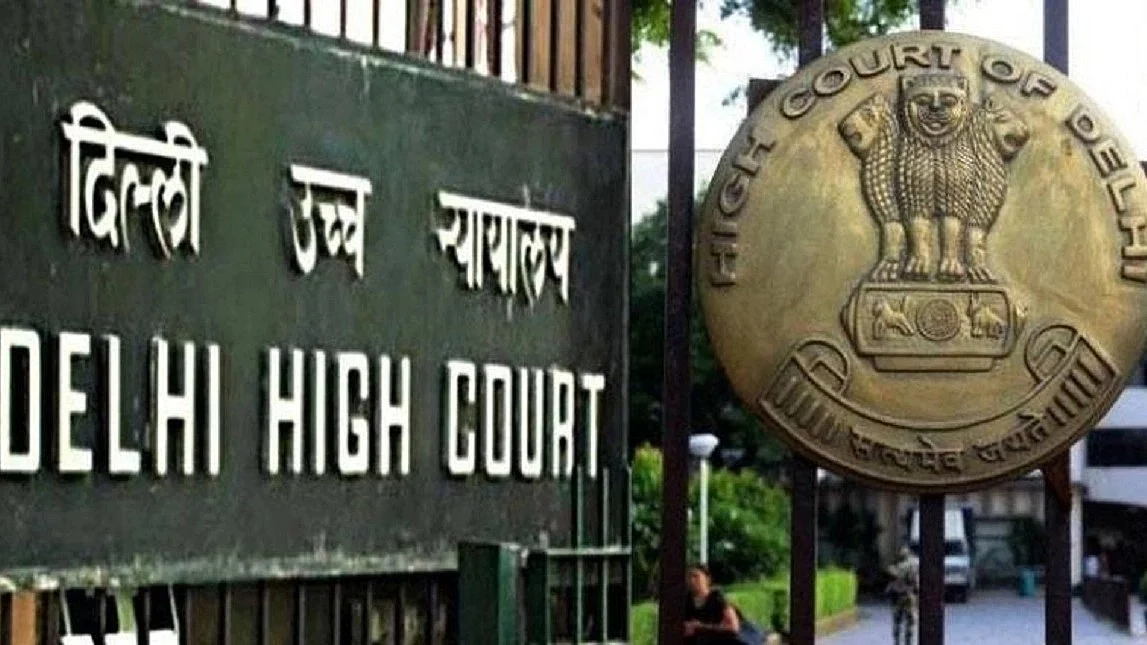


In a fresh development in the contentious excise policy case, the Delhi High Court on Tuesday issued notice on a petition filed by the Enforcement Directorate (ED) seeking the expunction of certain adverse observations made against it by a trial court while discharging all accused in the case, including prominent leaders of the Aam Aadmi Party.
The matter came up before a single-judge Bench of Justice Swarana Kanta Sharma, who directed the respondents — including AAP leaders Arvind Kejriwal and Manish Sisodia — to file their responses to the ED’s plea. The court also indicated that the petition would be heard alongside the challenge mounted by the Central Bureau of Investigation (CBI) against the discharge order passed by the trial court at the Rouse Avenue Courts.
“I will issue notice in this matter and keep it on the same day as the other case. When I decide that case, I will be reading the entire judgment,” Justice Sharma remarked during the hearing, signalling that the High Court would examine the trial court’s order in its entirety.
Appearing on behalf of the ED, additional solicitor general S.V. Raju argued that the trial court had made sweeping and critical remarks against the federal anti-money laundering agency even though the proceedings before it related only to the CBI’s investigation. He stressed that the case being heard was not one under the Prevention of Money Laundering Act (PMLA), and therefore the ED had no direct role in the matter before the trial court.
“PMLA is not before the judge. It is a CBI case. Proceeds of crime was not before the judge. He (Kejriwal) was not arrested for money laundering in the CBI case,” ASG Raju submitted, adding that the agency had been criticised without being granted an opportunity to present its case. Such remarks, he argued, amounted to condemnation without hearing and could prejudice the ED’s position in ongoing investigations.
Justice Sharma, however, observed during the hearing that the comments in question appeared to be of a general nature. “These are general observations. I am sure this has nothing to do with the case in question,” she remarked, while clarifying that the High Court would examine whether such remarks ought to have been made in the first place.
When the Centre’s law officer insisted that even general observations might cast a shadow over the ED in future proceedings, the court noted that the trial court’s entire judgment was already under scrutiny before it. “This entire judgment anyway is under challenge. When I decide that case, I will be reading this,” the judge said.
The development follows Monday’s proceedings, during which the Delhi High Court issued notice on the CBI’s criminal revision petition challenging the decision of the trial court to discharge all 23 accused in the case linked to the now-scrapped excise policy introduced by the then AAP-led Delhi government. The court had also stayed the trial court’s direction ordering departmental action against a CBI officer who had investigated the case, along with the critical remarks made against the investigating agency.
In its latest petition, the ED has specifically sought the deletion of several paragraphs from the 27 February order passed by the Special Judge at Rouse Avenue Courts. The agency contends that the remarks were “extraneous to the subject matter” of the proceedings and were recorded despite the ED not being a party to the case.
According to the plea, these observations could cause “grave prejudice” to the ED’s ongoing probe under the PMLA and violate the principles of natural justice, as the agency had not been heard before the remarks were recorded.
However, the respondents pushed back against the ED’s argument. Senior advocate Vikram Chaudhari, appearing for one of the respondents on advance notice, maintained that the remarks formed part of the broader reasoning in the trial court’s judgment and were not directed personally against the ED.
Senior advocate N. Hariharan also argued that the agency had selectively quoted portions of the judgment while ignoring its broader context. “They have taken one paragraph from here and another from there. The entire judgment has to be seen in context,” he told the court.
When ASG Raju urged the High Court to clarify that the trial court’s remarks should not be relied upon in future proceedings, counsel for the respondents opposed any interim direction.
Justice Sharma, however, asserted the court’s authority to decide the issue after hearing all parties. “Nobody can stop me from passing an order. No one can dictate to me what order to pass. I will pass an order that I think is right,” she observed.
The matter will now come up for further hearing on 19 March, when the high court is expected to examine both the ED’s plea and the CBI’s challenge to the discharge order in the high-profile excise policy case.
With IANS inputs
Join our official telegram channel (@nationalherald) and stay updated with the latest headlines