


GRAP tackles symptoms, not root causes of Delhi’s air pollution: experts
Environmentalists say emergency curbs offer short-term relief but fail to deliver lasting clean air
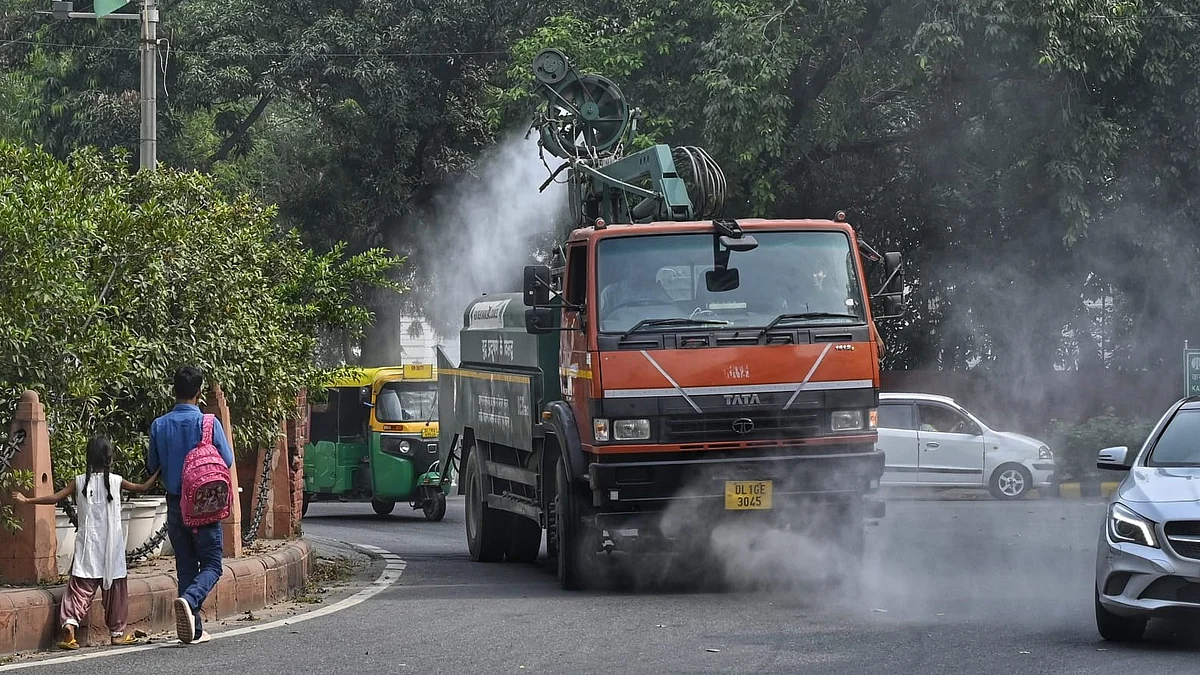


As Delhi continues to grapple with recurring episodes of severe air pollution, environmental experts have cautioned that emergency measures such as the GRAP (Graded Response Action Plan) offer only temporary relief and do little to address the structural causes of the capital’s worsening air quality.
While acknowledging that GRAP serves as an important crisis-response framework, specialists say it has not translated into sustained reductions in pollution levels and risks becoming a substitute for long-term reform.
“GRAP is a well-designed emergency policy of the Commission for Air Quality Management (CAQM), but it has failed to bring about a meaningful decline in pollution,” environmental strategist Sunil Dahiya said, pointing out that the plan relies on an outdated emissions inventory and lacks a system to assess whether measures actually reduce overall pollution loads across the NCR (National Capital Region).
GRAP operates through four escalating stages, each prescribing stricter curbs as the Air Quality Index (AQI) deteriorates. However, Dahiya said the tools meant to support the system — including the Decision Support System (DSS) and the Real-Time Advanced Air Source Management Network (R-AASMAN) — are not integrated in a way that allows authorities to evaluate the effectiveness of interventions in real time.
The DSS, developed by the IITM (Indian Institute of Tropical Meteorology), provides modelling inputs to policymakers, while R-AASMAN identifies pollution sources in collaboration with the Delhi Pollution Control Committee. Experts say the absence of a feedback loop between these systems weakens evidence-based policymaking.
Calling for a shift from emergency firefighting to long-term planning, Bharati Chaturvedi, director of the Chintan Environmental Research and Action Group, said GRAP was never intended to be a permanent solution.
“GRAP is like applying an ointment to a fracture. It was introduced to give temporary relief while deeper reforms were being implemented. If authorities do not move beyond GRAP, Delhi will face the same crisis year after year,” she said.
Chaturvedi underlined the need for decongesting roads, expanding public transport, eliminating biomass and waste burning, and strengthening regulatory institutions. She also stressed that pollution control agencies require better staffing, funding and scientific capacity to design long-term interventions.
Earlier curbs, limited gains
In November 2025, the CAQM revised the GRAP framework, advancing several curbs to earlier alert stages so that restrictions now kick in sooner as pollution worsens.
Under the revised norms:
Measures earlier enforced at Stage II (‘poor’ AQI) now apply at Stage I, including ensuring uninterrupted power supply to discourage diesel generator use, deploying traffic personnel at congestion points, issuing public pollution advisories and increasing CNG and electric bus services.
Actions that once fell under Stage III now apply at Stage II, such as staggering office hours in Delhi, Gurugram, Faridabad, Ghaziabad and Gautam Buddh Nagar.
Curbs that earlier came into force only at Stage IV are now triggered at Stage III, including allowing offices to operate with 50 per cent staff while the rest work from home.
Despite these changes, experts say the gains remain marginal.
Harjeet Singh, strategic advisor to the Fossil Fuel Non-Proliferation Treaty initiative, called for an airshed-level governance model that transcends political boundaries and focuses on pollution sources rather than short-term containment.
“Systemic change means managing emissions at their source — transport, industry and construction — not merely responding when air quality turns hazardous,” he said, advocating large-scale investment in public transport and year-round enforcement against industrial polluters.
CAQM defends approach
Responding to the criticism, a senior CAQM official said the authority regularly reviews GRAP and is working to strengthen both its design and implementation.
“We are examining areas where the measures can be made more stringent, while also focusing on better enforcement of existing norms. Implementation effectiveness is being assessed to ensure the framework delivers results on the ground,” the official said.
The official added that the commission is exploring ways to back GRAP with stronger compliance mechanisms and tighter coordination among agencies in Delhi and neighbouring states.
Pollution levels remain alarming
The debate comes as air quality in the national capital remains poor even in mid-January. On Wednesday morning, Delhi’s AQI slipped into the ‘very poor’ category, with data from the Central Pollution Control Board (CPCB) showing that five of 39 monitoring stations recorded ‘severe’ air quality, while 32 stations remained in the ‘very poor’ range.
According to a recent analysis, Delhi recorded the highest annual average PM10 concentration in the country in 2025 at 197 micrograms per cubic metre, nearly three times the national standard of 60 micrograms.
Under CPCB norms, AQI levels are classified as:
0–50: Good
51–100: Satisfactory
101–200: Moderate
201–300: Poor
301–400: Very poor
401–500: Severe
With winter pollution episodes becoming more frequent and prolonged, experts say Delhi now faces a crucial choice — continue relying on emergency curbs or invest decisively in structural reforms that address the sources of pollution and ensure cleaner air year-round.
With PTI inputs
Join our official telegram channel (@nationalherald) and stay updated with the latest headlines