


Here's why ongoing Iran war may raise MRI costs
Experts warn shortages could delay scans, increase prices; India heavily dependent on imports
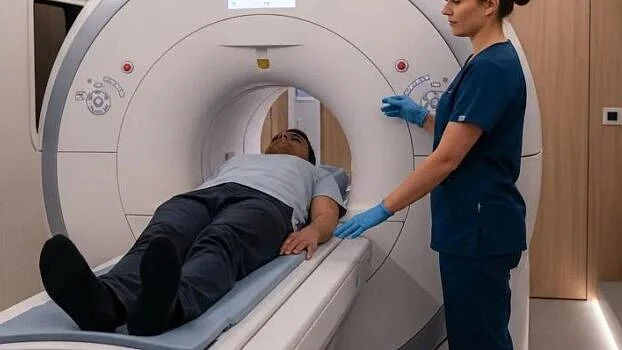


MRI scans — critical for diagnosing cancers and neurological disorders —could become more expensive and harder to access if helium supplies are disrupted due to the ongoing West Asia conflict, industry experts told The Indian Express.
Helium is essential for operating MRI machines, as it is used to cool superconducting magnets to extremely low temperatures. Any disruption in supply can directly impact both availability and cost of diagnostic services.
Supply disruption and global impact
According to industry estimates, recent strikes on Qatar’s Ras Laffan facility have led to production halts, removing around 30 per cent of global helium supply from the market.
India relies almost entirely on imports to meet its helium demand, with about 30 per cent sourced from Qatar and the rest from the United States and Australia, making it vulnerable to global disruptions.
Pavan Choudary of the Medical Technology Association of India (MTaI) said helium remains a “silent infrastructure” of diagnostics that is often overlooked.
“The West Asia conflict has now made this hidden dependency impossible to ignore,” he said.
Impact on patients and healthcare providers
Harsh Mahajan, founder of Mahajan Imaging & Labs, said shortages could translate into higher costs or reduced availability of MRI scans.
“If helium becomes scarce or expensive, it will impact MRI operations… leading to longer waiting times or increased costs for patients,” he said.
MRI machines require temperatures of nearly minus 269°C to function, maintained using liquid helium. While newer machines use helium more efficiently, they still depend on it for installation and periodic servicing.
India currently has an estimated 2,500–3,000 MRI machines, with 200–300 new units being added annually as demand grows.
Broader healthcare supply chain impact
Experts said the impact may not be immediate but could emerge in the coming weeks, particularly affecting smaller diagnostic centres.
Himanshu Baid said rising input costs and supply constraints are already being observed.
Anant Singhania said prices of active pharmaceutical ingredients (APIs) have surged by 200–300 per cent, with suppliers fulfilling only 40–50 per cent of orders.
Siddhartha Bhattacharya said healthcare providers are resorting to strategic stocking to manage disruptions.
Experts said large hospital networks may absorb rising costs, but smaller facilities could face challenges in maintaining services without passing on costs to patients.
The situation highlights the wider impact of geopolitical tensions on critical healthcare infrastructure and supply chains.
Join our official telegram channel (@nationalherald) and stay updated with the latest headlines