


India slowing trade deal talks with US amid fresh tariff probe: Report
New Delhi adopts ‘wait and watch’ stance as Washington investigates manufacturing capacity among trading partners
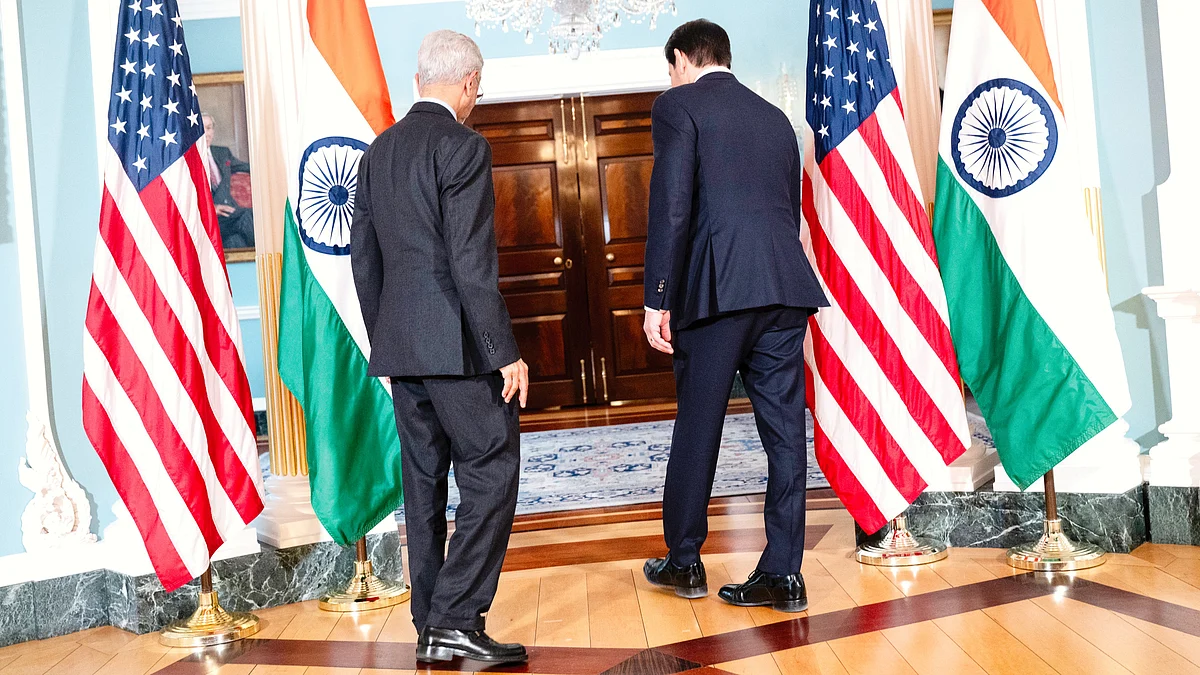


India is likely to delay signing a trade agreement with the United States for several months after fresh investigations launched by President Donald Trump’s administration created new uncertainty in negotiations, four Indian government sources have reportedly told Reuters.
According to the Reuters report, New Delhi had initially expected to conclude an interim trade arrangement with Washington as early as March, followed later by a comprehensive agreement.
The two sides had reached a preliminary understanding last month after Trump agreed in early February to reduce steep tariffs imposed on Indian imports. In return, India was expected to make several commitments, including scaling back purchases of Russian oil, lowering import duties on certain American goods and significantly increasing imports from the United States.
However, the timeline for formalising that arrangement may now slip by several months, the sources said. All four officials, who either have direct knowledge of the negotiations or have been briefed on them, spoke to Reuters on condition of anonymity because they were not authorised to discuss the matter publicly.
India’s commerce ministry denied that engagement between the two sides had stalled. A ministry spokesperson said discussions were continuing toward what it described as a “mutually beneficial trade agreement”, though no details were provided about when a deal might be signed.
A White House official likewise told Reuters that Washington remains engaged with New Delhi and continues to work toward finalising the agreement.
According to Indian officials cited by Reuters, momentum in the negotiations slowed after the US Supreme Court in late February struck down the Trump administration’s earlier tariff measures. Since then, substantive discussions have largely paused, particularly as Washington’s attention shifted toward the escalating war with Iran.
Another complicating factor has been a new US investigation into what Washington describes as “structural excess capacity and production” in manufacturing sectors across 16 trading partners, including India.
One of the Indian sources told Reuters that the probe was viewed in New Delhi as a pressure tactic aimed at forcing countries to sign trade deals after the court ruling disrupted the tariff framework. “We are not in a hurry to sign any deal,” the official said. “The new investigation is a pressure tactic to force countries into signing deals after the court order. It’s a spanner in the works.”
Instead, India is expected to adopt a cautious “wait and watch” approach while US tariff policy evolves.
Trump had earlier withdrawn a punitive 25 per cent tariff imposed on India after claiming New Delhi had agreed to curb purchases of Russian crude. However, India has not stopped buying Russian oil altogether and has only slowed its imports, according to the sources cited by Reuters.
Also Read: A trade deal and a $500 billion question
Washington is now urging India to increase its purchases of US energy supplies to help ease global shortages triggered by the conflict in West Asia.
The US investigation has been launched under Section 301 of the Trade Act of 1974. Indian officials said New Delhi plans to present its case to the Office of the United States Trade Representative if given the opportunity, or otherwise consider further steps such as approaching the World Trade Organization once the findings are known.
Meanwhile, the US ambassador to India, Sergio Gor, said Washington expects New Delhi to honour commitments made during the earlier understanding. Speaking at an event organised by the India Today group on Friday, Gor said Trump still had several mechanisms available to impose tariffs if necessary.
“We fully expect the nations that we’ve made deals with to honour those deals,” he said, adding that India was likely to do so because the arrangement would be mutually beneficial.
Following the Supreme Court ruling, Trump introduced a temporary 10 per cent tariff on imports from all countries until 24 July. Under the earlier framework described in a joint statement between Washington and New Delhi as an “interim agreement”, Indian exports to the US were expected to face tariffs of around 18 per cent.
Indian officials are now seeking clarity from Washington on whether those rates would apply once negotiations resume, or whether a different tariff structure will emerge.
Join our official telegram channel (@nationalherald) and stay updated with the latest headlines