


India’s first geosynchronous imaging satellite lifts off successfully
The 51.7-metre-tall GSLV-F17 lifts off at 2.55 am carrying the 2,367-kg EOS-05 satellite
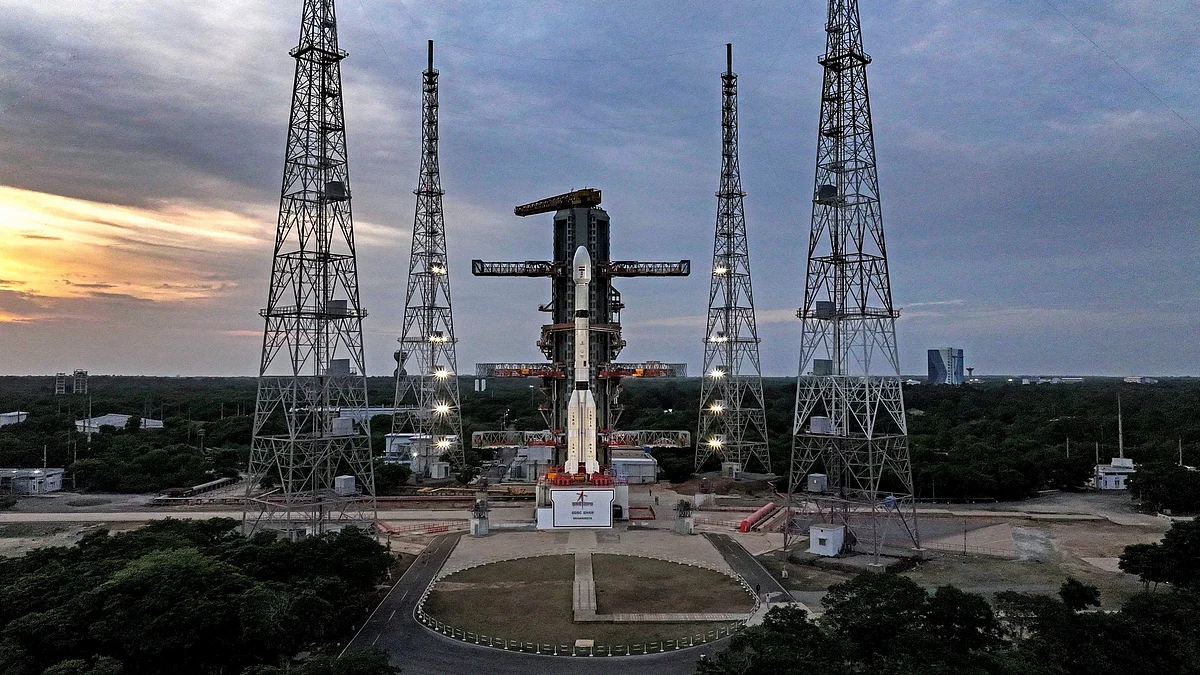


India on Friday successfully launched the Indian Space Research Organisation’s (ISRO) state-of-the-art Earth observation satellite EOS-05, the country’s first imaging satellite designed for deployment in geosynchronous orbit, marking a significant milestone in India’s Earth observation capabilities.
The satellite was launched aboard the GSLV-F17, the 19th flight of India’s Geosynchronous Satellite Launch Vehicle, from the second launch pad at the Satish Dhawan Space Centre in Sriharikota.
The 51.7-metre-tall, three-stage rocket lifted off at 2.55 am, carrying the 2,367-kg EOS-05 satellite. The launch followed a smooth 27-hour countdown, which began at 11.30 pm on Wednesday.
Despite the pre-dawn timing and rain, a large number of members of the public gathered at the spaceport to witness the launch and cheer the mission.
Unlike most Earth observation satellites that operate in low Earth orbit (LEO), EOS-05 is intended to operate at an altitude of roughly 36,000 km above the Earth in geosynchronous orbit.
At this altitude, a satellite takes approximately the same amount of time to complete one orbit as the Earth takes to rotate once. This allows the spacecraft to remain aligned with the same broad region of the Earth for extended periods, making it particularly useful for continuous and near-real-time observation.
EOS-05 is expected to strengthen India's capabilities in applications such as agriculture, disaster management and other Earth-monitoring activities by providing high-quality imagery and data.
The satellite was placed inside the rocket’s nose cone and was targeted for delivery into a sub-geosynchronous transfer orbit (Sub-GTO) before it reaches its operational orbit.
The GSLV-F17 is a 51.7-metre, three-stage launch vehicle with a cryogenic upper stage. The rocket has a lift-off mass of approximately 420.5 tonnes.
The launch is particularly significant for ISRO as it comes after a series of setbacks involving previous missions carrying Earth observation satellites.
The GSLV-F17/EOS-05 mission is intended as a replacement for the GSLV-F10/EOS-03 mission, which failed shortly after launch in 2021.
During that mission, an onboard computer aborted the flight approximately 307 seconds after lift-off. A subsequent investigation of post-flight data indicated that an anomaly in the Cryogenic Upper Stage was responsible for the failure.
Friday’s launch also comes after an almost eight-month gap in ISRO's launch programme.
On January 12 this year, the PSLV-C62 mission, carrying 16 satellites, failed to place its payloads into their intended orbits after an anomaly occurred in the rocket's critical third stage.
It was ISRO's only launch of the year before Friday's GSLV mission.
The January setback followed another unsuccessful attempt in May 2025, when the PSLV-C61 carrying EOS-09 failed to complete its mission. ISRO attributed that failure to a motor pressure issue, with a fall in chamber pressure observed in the motor case.
Against this backdrop, the successful GSLV-F17 mission assumes added importance for ISRO, particularly as the space agency seeks to maintain reliability across its launch vehicle programmes.
Ahead of the launch, ISRO Chairman V. Narayanan visited the Tirumala Tirupati Lord Venkateshwara Swamy Temple and offered prayers for the success of the mission.
With EOS-05, ISRO is looking to expand the country's Earth observation capabilities beyond conventional low-Earth-orbit platforms and demonstrate the utility of operating an imaging satellite from geosynchronous orbit.
The mission also represents an important confidence boost for India's space programme following the launch setbacks of 2025 and January this year.
With PTI inputs
Join our official telegram channel (@nationalherald) and stay updated with the latest headlines