


LPG crisis: The economics of Delhi's migrant exodus
Workers head back to Bihar as high LPG costs and shortages strain household budgets and small businesses in Delhi-NCR
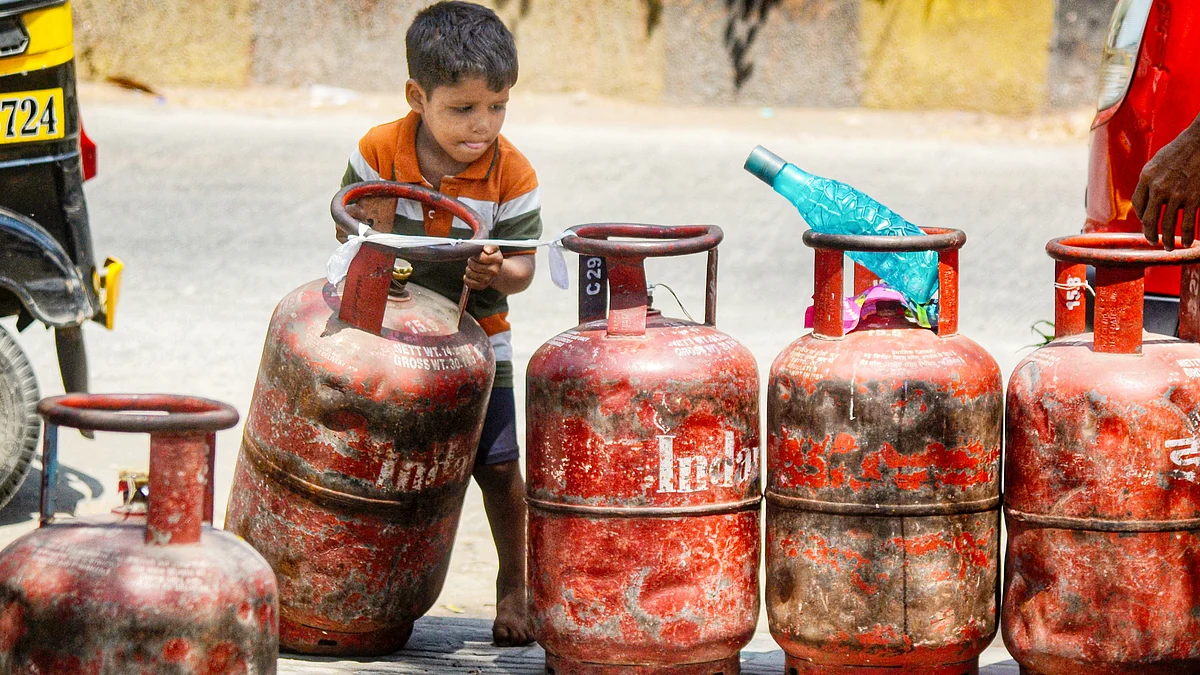


Even as the Union government maintains that domestic LPG is adequately available and being supplied without disruption, there appears to be a growing number of migrant workers returning to Bihar from the Delhi–NCR region. Trains headed to Bihar are carrying many workers who say they are leaving the capital because cooking gas is either unavailable or being sold at prohibitively high retail rates. The shortage is also beginning to affect small traders and street-food vendors.
In the general coach D-2 of the Amrit Bharat Express running between New Delhi and Patna's Rajendra Nagar Terminal, Mohammad Zia-ul-Haq was travelling back to Bihar with six friends. Haq worked as a tailor in Delhi and earned around Rs 17,000 a month. He said he and his friends had been refilling cooking gas in small quantities at Rs 400–450 per kg. “With rising prices and the difficulty in obtaining LPG, it has become hard to survive in Delhi,” he said.
Haq and other workers travelling with him said they had been facing continuous difficulty in accessing gas for the past 15 days. Cooking gas is not easily available in small quantities, and where it is, the price is extremely high. According to Zia, about half of a group of 10–15 friends had already returned to Bihar earlier, while the remaining six left for Patna on the night of 3 March. From there, they plan to travel onward to Vaishali.
Following the US and Israeli attacks on Iran, concerns have grown in India over disruptions in cooking gas supply. Railway stations such as New Delhi and Anand Vihar are seeing an increasing number of migrant workers boarding trains back to their villages in Bihar, many citing fuel shortages as the reason.
Some referred to Prime Minister Narendra Modi’s address in Parliament on 23 March, saying the situation reminded them of the Covid period, and that it was wiser to return to the village “while there is still a little money left in the pocket”.
In the same coach, three elderly women seated near the toilet also acknowledged that they were returning to their village because of the gas shortage, though they declined to speak on camera. Sonu Kumar, who works as a manager in Delhi’s transport sector, said he had returned to the capital after Holi but had since faced persistent LPG supply problems. “Availability of gas has become a serious issue in Delhi,” he said.
Passengers Bikesh Kumar and his friend Aman Kumar Singh said due to the non-availability of LPG cylinders, they had been eating only one meal a day for the past 15 days. Their families advised them to return to the village, where they have a house, an LPG connection and fewer worries about food.
Dheeraj Kumar, who works in iron reinforcement (sariya), lived in Delhi with four friends and earned around Rs 18,000 a month. He said they had to buy gas in small quantities at Rs 400 per kg. “Cooking for four people became very difficult. We had to refill a five-kg cylinder four to five times a month. After buying such expensive gas, little money was left for food,” he said.
The difficulties are not limited to daily-wage workers. Saeed Khurshid from Kanpur, a BTech student living in Ghaziabad, said LPG shortages had affected the mess facility in his hostel. “Students normally receive three meals a day, but now items have been reduced. One meal consists only of dal and rice. Roti and vegetables have been removed from the menu. Students are unhappy and have protested over the past two days demanding that rotis be restored,” he said.
The LPG shortage is also affecting small businesses. Tajdar Ahmed, who runs a biryani shop in the Shakur Basti slum area outside New Delhi railway station, said many workers had returned to their villages, directly affecting sales. Managing a 25-year-old establishment, Ahmed said he earlier sold chicken biryani at Rs 240 per kg but has now had to raise the price to Rs 280 per kg.
Ahmed said he now closes his shop by 5 pm, with most traders in the area operating only one shift to reduce costs. Some run their shops during the day, others at night. He has also had to reduce the workload of one helper. According to him, sales have dropped by nearly 50 per cent, and whatever little profit remains is being spent on purchasing gas.
Haji Sahib, who runs a tea, samosa and sweets stall in the same locality, said commercial cylinders were either unavailable or extremely expensive. “Running the stall has become very costly. We need one cylinder every day, but supply is irregular. I have had to pay the salaries of three workers from my own pocket,” he said, adding that the government had yet to find a solution even after a month.
Meanwhile, according to a statement issued by the ministry of petroleum and natural gas on 2 April, the secretary (petroleum) reviewed the nationwide fuel supply situation. During the meeting, states clarified that there was no disruption in LPG supply that could adversely affect migrant workers, and that supply remained stable across the country.
Join our official telegram channel (@nationalherald) and stay updated with the latest headlines