


Marking the end of the Nitish era, madrasa educated Samrat Chaudhary to become first BJP CM in Bihar
An OBC face of the saffron party and a political dynast, Chaudhary rose to prominence within the ranks, due to his proximity to Amit Shah
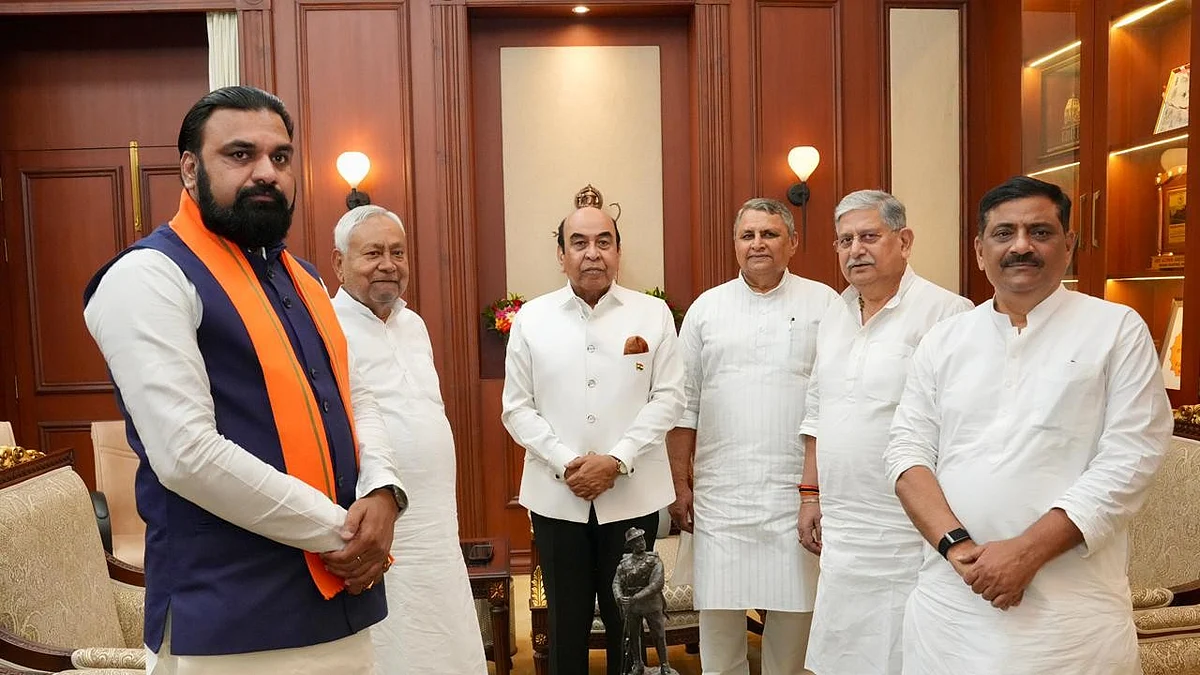


In a significant political shift, BJP leader and former deputy CM Samrat Chaudhary, who received his primary education in a Madarasa, has been appointed as the new Chief Minister of Bihar.
He will be the first BJP leader to hold the top post in the state, where the party has largely shared power with the JD(U) since 2005, barring brief interruptions.
Chaudhary’s elevation signals the end of the long political dominance of JDU founder and socialist stalwart Nitish Kumar, who resigned earlier in the day.
His resignation was accepted by Governor Syed Ata Hasnain. Chaudhary is expected to take oath on Wednesday.
A political dynast, Chaudhary is the son of Shakuni Chaudhary, a veteran OBC leader and founding member of Samata Party led by George Fernandes.
Notably, Nitish Kumar was also part of this political formation. Before his elevation, Chaudhary held the crucial Home portfolio in Bihar.
Though his appointment was widely anticipated,given his proximity to Union Home Minister Amit Shah,he was formally elected leader of the BJP Legislature Party in the presence of Union Minister Shivraj Singh Chouhan.
His name was proposed by Deputy Chief Minister Vijay Sinha and supported by senior leaders including Mangal Pandey, Dilip Jaiswal, and Renu Devi.
Seen as a prominent OBC face of the saffron party, Chaudhary has played a key role in mobilising support from the Kushwaha (Koeri) community, which, along with the Kurmi community, constitutes around 7–8% of Bihar’s population.
Celebrations erupted in his native district Munger following the announcement. According to media reports, he received his early education at a madrasa in Munger.
However, his elevation has also sparked political controversy. Prashant Kishor, founder of the Jan Suraj campaign, had, during the time of assembly elections, alleged that Chaudhary was an accused in the Tarapur case, involving the killing of six people.
Kishor had also claimed that court records show Chaudhary was released on the grounds of being a minor—an assertion he says contradicts the age declared by Chaudhary in his 2020 election affidavit.
Chaudhary’s name has also been linked to the 1999 Shilpi Jain–Gautam Singh gangrape and murder case in Patna, which was investigated by the CBI. He has denied wrongdoing and has previously alleged that the case was politically manipulated during the tenure of Lalu Prasad Yadav to shield other accused.
Political observers view Chaudhary’s rapid ascent as part of the BJP’s strategic response to the Congress’ renewed outreach among OBC communities.
With 89 MLAs, the BJP has emerged as the single-largest party in the Bihar Assembly, ahead of the JD(U), which secured 85 seats—clearing the path for Samrat Chaudhary’s elevation and signalling the beginning of a new political phase in Bihar.
His appointment has also triggered speculation about the political future of Nishant Kumar, son of former Chief Minister Nitish Kumar. Nishant has so far dismissed reports of being part of his cabinet, adding a layer of uncertainty to the post-Nitish political landscape.
Join our official telegram channel (@nationalherald) and stay updated with the latest headlines