


Menstrual hygiene is fundamental right of girls in schools: Supreme Court
Apex court asks states, UTs to provide free sanitary napkins, segregated toilets and menstrual health education in all schools
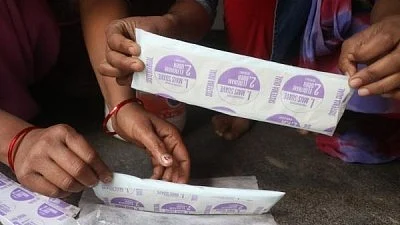


The Supreme Court has said its 30 January judgment on menstrual hygiene is meant for the classrooms where girls hesitate to seek help and for the teachers who cannot help due to lack of resources.
In a landmark verdict to ensure gender justice and educational equity, a bench comprising Justices J.B. Pardiwala and R. Mahadevan declared that the right to dignified menstrual health was part of the fundamental right to life and education under the Constitution.
The court ordered that free sanitary pads be provided to girls studying in classes 6 to 12 in all government and private schools across the country. The court also directed all schools to provide separate toilets for different genders and ensure complete privacy. The rights of students with disabilities should also be fully considered.
This decision came during the hearing of a public interest litigation (PIL) regarding menstrual hygiene filed by Jaya Thakur, a social activist from Madhya Pradesh. The Supreme Court clarified that this is not merely a facility, but a fundamental right of female students to have a safe, clean and dignified environment. The court also stated that free biodegradable sanitary pads should be available inside school toilets. These pads should be provided to the students through vending machines or by designated responsible officials on the school premises to avoid any hesitation or embarrassment.
In addition, the court has directed the creation of 'Menstrual Hygiene Management Corners' in all schools to provide all necessary items and information related to menstruation so that girls feel safe and informed. The court has asked all states and union territories to submit a report within three months detailing how this decision has been implemented on the ground. The court has also asked the central government to formulate a national policy to ensure a uniform system across the country.
The petitioner had demanded that free sanitary pads and other menstrual products be provided to girls studying in schools so that no student's education is interrupted for this reason. During the hearing, the Supreme Court also directed the states and Union Territories to provide the central government with information about their respective schemes and policies related to menstrual hygiene, along with details of the funds allocated for them.
Justice Pardiwala, in his concluding remarks, reached out directly to the students affected by these systemic failures. "We wish to communicate to every girl child, who might have become a victim of absenteeism because her body was perceived as a burden, that the fault is not hers," he said.
"Before we part, we would like to say something on the issue we have addressed. This pronouncement is not just for the stakeholders of the legal system, it is also meant to be for the classroom where girls hesitate to ask for help, it is for the teachers who want to help but are restrained due to lack of resources and it is for the parents who may not realise the impact of their silence, and for the society to establish that progress is measured on how we protect the most vulnerable. These words must travel beyond the courtroom,” he said.
The bench directed the apex court registry to forward one copy each of this judgment to all the high courts, state governments and Union Territories.
It also said the copy of the judgment be also sent to ministries of health, education, drinking water and sanitation, and women and child development.
With agency inputs
Join our official telegram channel (@nationalherald) and stay updated with the latest headlines