


Nationwide strike disrupts services; workers press for labour, privatisation reforms
Union representatives argued that rising inflation and job insecurity had worsened conditions for workers in both organised and unorganised sectors
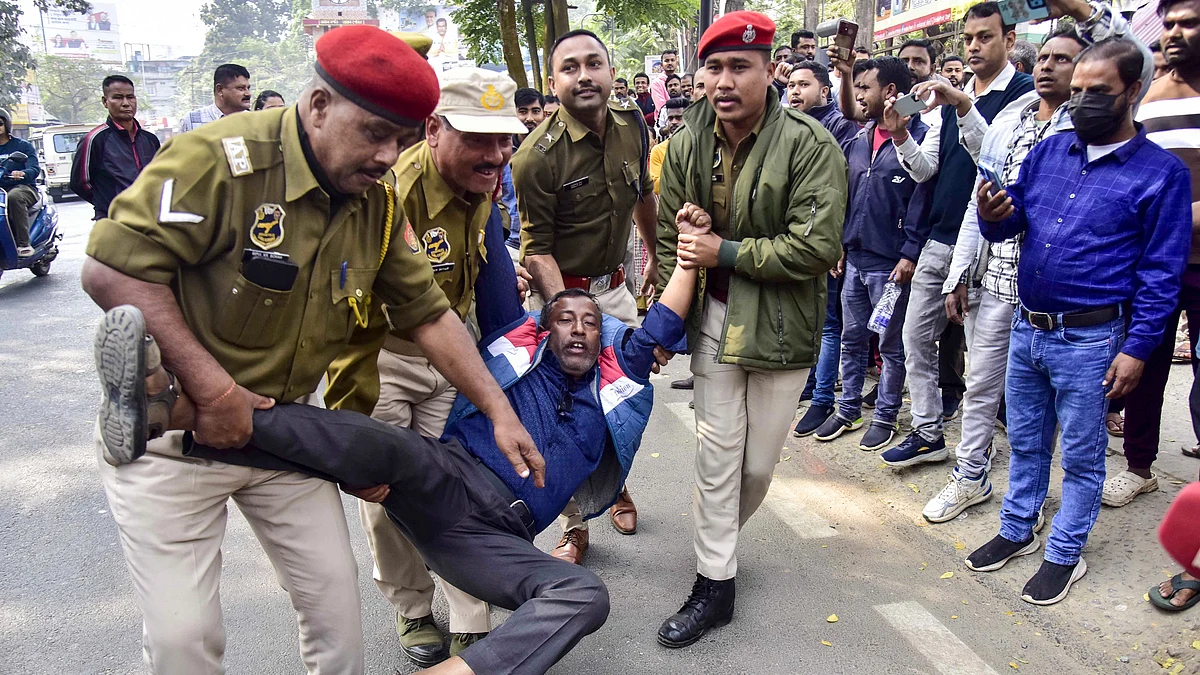


A nationwide strike called by a joint platform of central trade unions on Thursday disrupted banking operations, public transport, industrial production and government services in parts of Kerala, West Bengal, Tamil Nadu, Punjab and Bihar, while essential services continued largely unaffected in several other regions.
The strike, supported by organisations including AITUC — All India Trade Union Congress, CITU — Centre of Indian Trade Unions, HMS — Hind Mazdoor Sabha and sector-specific federations, was organised to protest labour reforms, privatisation policies and rising living costs. Worker groups held rallies, road blockades and demonstrations in industrial hubs and district headquarters, though the intensity of the shutdown varied from state to state.
Charter of demands
Trade union leaders said the agitation was centred on a common set of demands submitted earlier to the Union government. These included:
Withdrawal or review of the four labour codes
Halt to privatisation and disinvestment of public sector undertakings
Increase in minimum wages and strengthening of social security schemes
Protection of contractual, gig and platform workers
Measures to curb price rise and ensure pension security
Union representatives argued that rising inflation and job insecurity had worsened conditions for workers in both organised and unorganised sectors.
Banking and financial services affected
Public sector banking operations were partially disrupted in Kerala, West Bengal and Tamil Nadu as sections of bank employees joined the strike. Customers reported delays in cheque processing and reduced counter services in cities such as Kochi, Kolkata and Chennai. Insurance sector employees and postal unions also participated in some regions, slowing services during the day.
Private banks, digital payment platforms and ATMs remained operational in most metropolitan areas, limiting the broader financial impact.
Transport disruptions across states
Transport services witnessed varying degrees of disruption. In Kerala, several private buses stayed off the roads and autorickshaw unions supported the strike in parts of Thiruvananthapuram, Kollam and Ernakulam, leading to reduced commuter movement during peak hours.
West Bengal reported sporadic road blockades in industrial belts around Howrah and North 24 Parganas, while state-run buses operated with police protection. In Tamil Nadu, protests near industrial clusters in Tiruppur and Coimbatore slowed freight movement and affected factory commutes, though long-distance transport services continued.
Punjab and parts of Haryana saw rallies led by farmer groups and trade unions, but state-run bus services largely functioned, albeit under tight security deployment.
Industrial output and markets see partial impact
Manufacturing units in Tamil Nadu’s textile hubs and engineering clusters reported lower attendance, with some factories running reduced shifts. Industrial pockets in West Bengal and Maharashtra also recorded partial work stoppages as workers participated in demonstrations.
Wholesale markets in districts of Bihar and Jharkhand remained shut for several hours, while most markets in Delhi, Uttar Pradesh and Gujarat stayed open, limiting economic disruption in the northern belt.
Educational institutions remained open across most states, though attendance dipped in areas affected by protests. Central government offices in Delhi functioned normally, while boycott from state government employees was more visible in Kerala and West Bengal.
Healthcare services and emergency utilities continued without major disruption, with authorities deploying additional personnel to maintain essential operations.
Political responses and security arrangements
Opposition parties in several states expressed support for the strike, accusing the government of ignoring workers’ concerns. Leaders from the ruling establishment, however, criticised nationwide shutdowns, saying they affect economic productivity and daily wage earners.
Security arrangements were intensified in major cities to prevent clashes and ensure traffic movement. Officials maintained that despite localised disruptions, economic activity continued in many regions.
Trade union leaders described the strike as a “warning protest” and indicated that further nationwide mobilisations could be considered if the government does not address their demands.
Observers said the uneven participation reflected regional political dynamics and varying levels of union influence across states, even as the protest highlighted ongoing tensions over labour and economic policy.
Join our official telegram channel (@nationalherald) and stay updated with the latest headlines