


Raghu Rai, poet of the lens who captured India’s soul, dies at 83
For over five decades, Rai’s lens captured India — from bustling bazaars to corridors of power
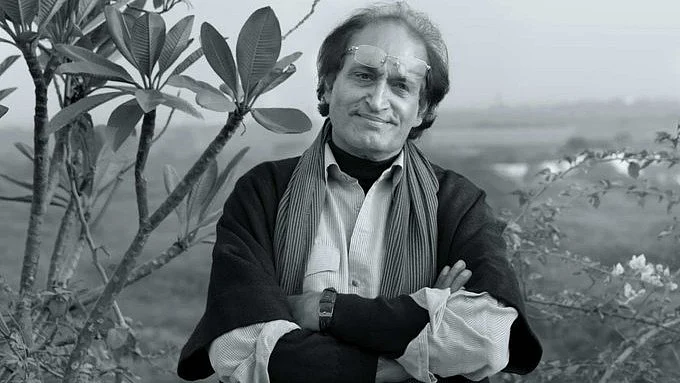


Raghu Rai, the legendary chronicler of India’s many moods and moments, passed away in the early hours of Sunday at a private hospital, bringing to a close a luminous life that helped shape the visual memory of a nation. He was 83.
For over five decades, Rai’s camera moved with quiet intensity across the country — through bustling bazaars and silent bylanes, along the fault lines of history and into the sanctum of power. His images revealed India in all its contrasts: its tenderness and turmoil, its fragility and force. Whether capturing the intimacy of everyday life or the magnitude of historic events, his work transcended documentation, becoming a profound meditation on a nation in motion.
His son, Nitin Rai, said the veteran photographer had fought a long and determined battle with cancer. Diagnosed with prostate cancer two years ago, Rai had initially responded well to treatment, even as the illness later spread to his stomach and was brought under control. In recent weeks, however, the disease advanced to his brain, compounded by age-related complications.
He is survived by his wife Gurmeet, son Nitin, and daughters Lagan, Avani and Purvai — his family the steady, unseen presence behind a life devoted to art, patience and observation.
Widely regarded as one of India’s finest photographers, Rai’s evocative black-and-white frames and deeply human storytelling earned him global recognition. His association with Magnum Photos placed him among the world’s most respected visual storytellers, while his long innings with India Today helped define the visual grammar of contemporary Indian journalism.
A recipient of the Padma Shri, Rai’s powerful coverage of the Bangladesh Liberation War remains etched in public memory, as do his iconic portraits of leaders such as Indira Gandhi — images that have come to symbolise entire eras.
Beyond awards and acclaim, it was Rai’s instinctive eye — empathetic, unhurried and unflinching — that defined his genius. His photographs did not merely freeze time; they invited reflection, stirred emotion, and endured.
Among those paying tribute was Congress president Mallikarjun Kharge, who described Rai as a towering figure in Indian photojournalism. Expressing deep sorrow, Kharge said Rai’s work had left an indelible imprint on the nation’s collective consciousness and extended condolences to his family, friends and students.
"Deeply saddened by the passing of Shri Raghu Rai, one of India’s foremost photographers and a towering photojournalist for over five decades," Kharge said in a post on X.
The last rites will be held at the Lodhi Crematorium at 4 pm on Sunday, where admirers, colleagues and loved ones will gather to bid farewell.
With Raghu Rai’s passing, India loses not just a pioneer of photography, but a quiet poet of light and shadow — one who transformed fleeting moments into timeless memory, and whose images will continue to speak long after the lens has been set down.
With PTI inputs
Join our official telegram channel (@nationalherald) and stay updated with the latest headlines