


Rahul flags E20 as next Congress campaign, says fuel is 'ruining vehicles'
Opposition steps into controversy as drivers continue posting videos of engine trouble and falling mileage
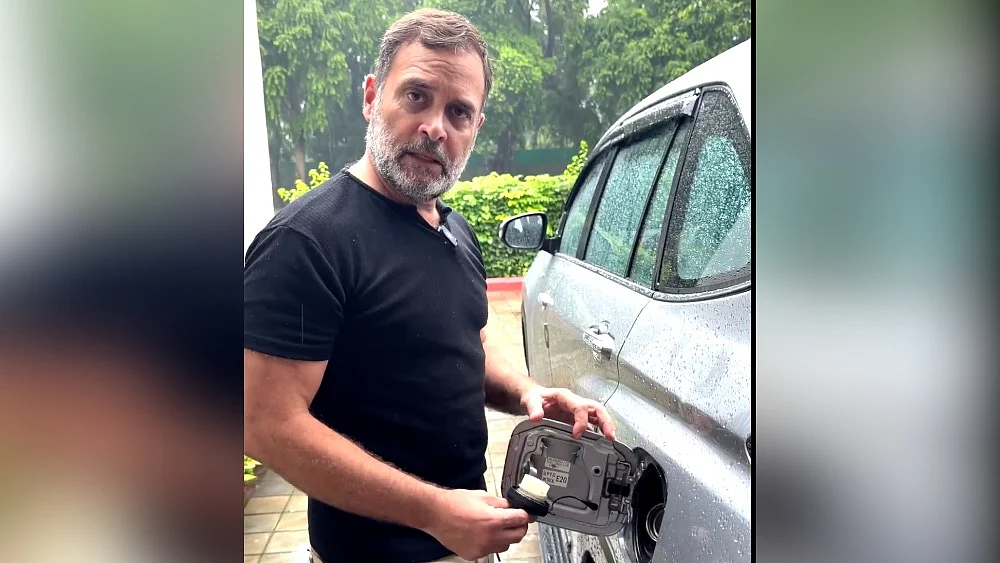


Lok Sabha Leader of Opposition Rahul Gandhi on Friday waded into the growing controversy over E20 petrol, accusing the Centre of pushing a fuel policy that was "destroying people's cars" even as social media continues to be flooded with videos of motorists alleging engine damage, poor mileage and mounting repair bills after being obliged to use the higher ethanol blend.
In a video message on social media, Gandhi described E20 as a major public issue and said the Congress would take it up aggressively. "The issue of E-20 is a very big issue... Normally, we say there's something suspicious. But here, the whole thing is rotten," he said, using a Hindi idiom (dal mein kuchh kala) to suggest the problem lay with the system itself.
"Don't worry, this issue, we are going to take it up in a massive way because this is destroying people's cars, destroying people's scooters, destroying people's lives and literally is stealing directly from them," Gandhi said.
His intervention comes as the Narendra Modi government faces mounting scrutiny over its accelerated rollout of E20 — petrol blended with 20 per cent ethanol — amid complaints from vehicle owners who say the transition has outpaced the country's preparedness.
Also Read: The hidden costs of the ethanol push
Over the past few weeks, dozens of motorists, mechanics and automobile enthusiasts have posted videos on YouTube, Instagram and X alleging a sharp drop in fuel efficiency, corrosion of fuel system components, injector failures and repeated trips to service centres after using E20. Many users have also questioned the availability of lower ethanol blends, arguing that owners of older vehicles have effectively been left with little choice.
The controversy intensified this week after the Society of Indian Automobile Manufacturers (SIAM) withdrew an advisory to the government that had warned of damage to vehicle parts from contaminated ethanol-blended fuel, saying the underlying data required further verification. The move came after the petroleum ministry rejected the concerns and said there was no evidence of widespread vehicle damage attributable to E20.
The government has consistently defended the programme, arguing that ethanol blending is critical to reducing crude oil imports, lowering emissions and improving energy security. It has maintained that E20 was introduced only after extensive testing by agencies including the Automotive Research Association of India (ARAI), the Indian Institute of Petroleum and automobile manufacturers.
Last month, the petroleum ministry told Parliament that it had not received any "widespread or substantiated" complaints from vehicle manufacturers, automobile associations or consumer groups regarding engine performance, maintenance costs or fuel efficiency linked to E20. It said laboratory studies and field trials had found no abnormal wear and tear in either E20-compatible or legacy vehicles.
The ministry also rejected widespread claims of mileage loss, rusting of fuel tanks and engine damage, saying concerns circulating on social media had been scientifically examined and were not supported by available evidence.
The official assurances, however, have done little to quell consumer anxiety.
The debate has triggered a surge in demand for premium 100-octane petrol, with many motorists opting for the significantly costlier fuel in the belief that it offers better engine performance and avoids problems they associate with E20. Industry observers say the trend reflects growing apprehension among consumers, particularly owners of older petrol vehicles.
The uncertainty is also beginning to influence buying patterns. According to the Federation of Automobile Dealers Associations (FADA), the share of petrol cars in overall passenger vehicle sales has narrowed sharply as buyers increasingly opt for CNG, hybrid and electric vehicles amid concerns over the nationwide E20 rollout, although the body said it had not received formal complaints directly linking vehicle failures to the fuel.
At the same time, the Centre has doubled down on its ethanol strategy, unveiling retail sales of E85 fuel for flex-fuel vehicles and signalling a broader transition towards higher ethanol blends as part of its energy diversification plans.
Gandhi's remarks are likely to inject fresh political heat into a debate that has so far been dominated by technical claims and counterclaims, with the Congress now seeking to portray the E20 rollout as an example of policy being pushed ahead of consumer readiness and supporting infrastructure.
Join our official telegram channel (@nationalherald) and stay updated with the latest headlines