


Renowned ecologist Madhav Gadgil passes away at 83
Champion of Western Ghats conservation leaves behind a lasting legacy in India’s environmental thought
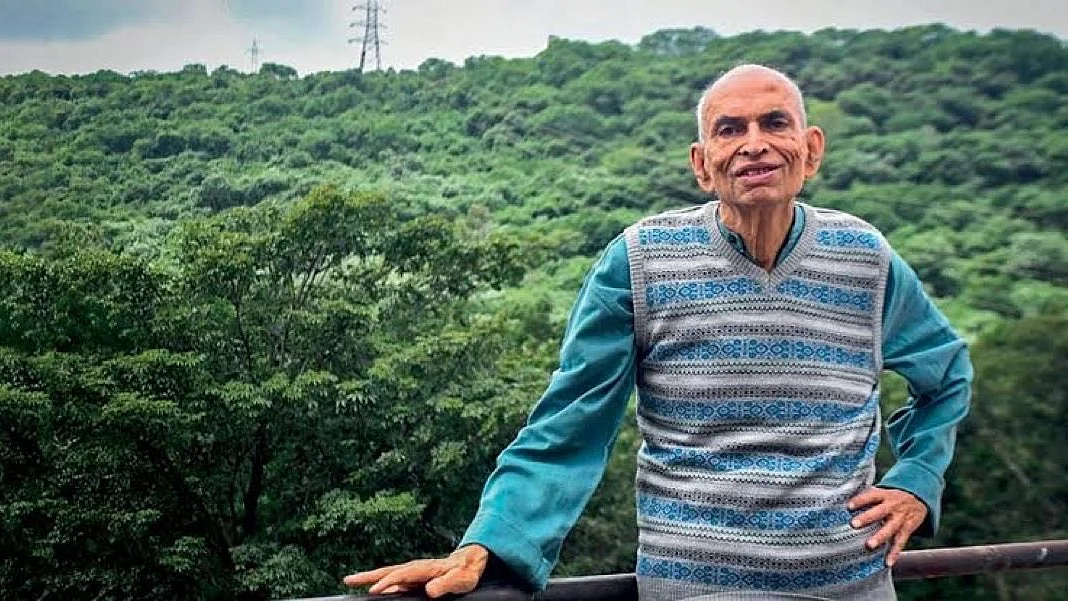


Noted ecologist and environmental thinker Madhav Gadgil, best known for his pioneering work on the conservation of the Western Ghats, passed away in Pune late on Wednesday after a brief illness, family sources said. He was 83.
Gadgil died at a city hospital late on Wednesday night. Widely regarded as one of the architects of modern ecological research and conservation policy in India, his work shaped national debates on biodiversity, development and environmental governance for over five decades.
He was the founding director of the Centre for Ecological Sciences at the Indian Institute of Science (IISc), Bengaluru, and headed the Western Ghats Ecology Expert Panel (WGEEP), which later came to be known as the Gadgil Commission.
The panel’s report, submitted in 2011, recommended that large parts of the Western Ghats be declared ecologically sensitive, triggering intense political and public debate but also marking a turning point in India’s environmental discourse.
In 2024, Gadgil was awarded the United Nations’ Champions of the Earth honour, the organisation’s highest environmental recognition, for his lifelong contribution to the protection of the Western Ghats, one of the world’s most important biodiversity hotspots.
Born in Pune on May 24, 1942, Gadgil came from a distinguished academic family. His father, Dhananjay Ramchandra Gadgil, was a prominent economist and a former director of the Gokhale Institute of Politics and Economics.
Madhav Gadgil completed his undergraduate studies in biology at Fergusson College in 1963, followed by a master’s degree in zoology from the University of Mumbai in 1965. He earned his PhD from Harvard University in 1969, specialising in mathematical ecology and animal behaviour.
After returning to India in the early 1970s, Gadgil joined IISc in 1973, where he went on to establish key academic institutions, including the Centre for Ecological Sciences and the Centre for Theoretical Studies. These initiatives laid the groundwork for contemporary ecological and interdisciplinary research in the country.
He retired from IISc in 2004 but continued to remain academically active, working with institutions such as the Agharkar Research Institute in Pune and the University of Goa.
Over the years, he also served on several national and international advisory bodies, including the Scientific Advisory Council to the Prime Minister, the National Advisory Council and the National Tiger Conservation Authority.
A prolific scholar, Gadgil authored and co-authored several influential books, notably This Fissured Land and Ecology and Equity, and published more than 250 scientific papers. Beyond academia, he was a committed public intellectual, writing regularly in both English and Marathi to promote environmental awareness among wider audiences.
His contributions were recognised with numerous honours, including the Padma Shri in 1981, the Padma Bhushan in 2006, the Shanti Swarup Bhatnagar Prize, the Volvo Environment Prize and the Tyler Prize for Environmental Achievement.
Gadgil’s last rites will be performed later on Thursday, family members said.
With PTI inputs
Join our official telegram channel (@nationalherald) and stay updated with the latest headlines