


Savarkar Sadan not 100 years old, can’t be centrally protected: ASI tells Bombay HC
Petitioner contended that the building had immense historical value due to its association with Savarkar and key events linked to India’s freedom movement
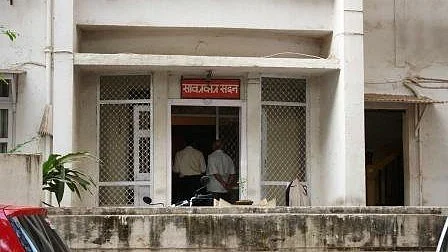


The ASI (Archaeological Survey of India) has informed the Bombay High Court that ‘Savarkar Sadan’, the former residence of Hindutva ideologue Vinayak Damodar Savarkar, cannot be declared a centrally protected monument as it does not fulfil the mandatory 100-year age requirement prescribed under law.
In an affidavit filed last week, the ASI said the structure, situated in the Shivaji Park area of Dadar in central Mumbai, could instead be protected if it is included in the heritage list of the Brihanmumbai Municipal Corporation (BMC) or notified as a state-protected monument by the Maharashtra government.
Such protection would prevent demolition of the building and ensure its preservation in the future, the ASI said, adding that central protection under the existing legal framework was not permissible.
The affidavit was filed in response to a public interest litigation (PIL) moved by Abhinav Bharat Congress, a public charitable trust, which sought a direction to declare Savarkar Sadan a “monument of national importance”.
The petitioner contended that the building had immense historical value due to its association with Savarkar and key events linked to India’s freedom movement.
The ASI, however, stated that it preserves only those monuments or sites that are formally declared of national importance by the Centre under the Ancient Monuments and Archaeological Sites and Remains Act, 1958.
It clarified that, as per statutory norms, a structure must be more than 100 years old to qualify for such declaration.
Savarkar Sadan was constructed in 1938 and therefore falls short of the age threshold, the ASI said.
Built as a ground-plus-one bungalow, the premises originally comprised three flats on the ground floor and two on the first floor. The ASI described it as a “significantly important building” from a historical perspective, though not eligible for central protection under existing law.
Savarkar lived at the residence until his death in 1966. Historical records cited in the petition indicate that the premises hosted several notable meetings, including with Subhas Chandra Bose in 1940. It also said Nathuram Godse and Narayan Apte had visited the premises in 1948.
The ASI reiterated that while it was constrained by statutory provisions, heritage protection through local or state mechanisms remained available to safeguard the structure from demolition or redevelopment.
The matter is likely to be heard next week by a bench headed by Chief Justice Shree Chandrashekhar.
Join our official telegram channel (@nationalherald) and stay updated with the latest headlines