


SC talks tough on deaths due to attack by stray dogs, says state must pay compensation for deaths
Apex court bench moots fixing responsibility on those feeding stray dogs. 'If you love these animals so much, why don’t you take them home?' they ask
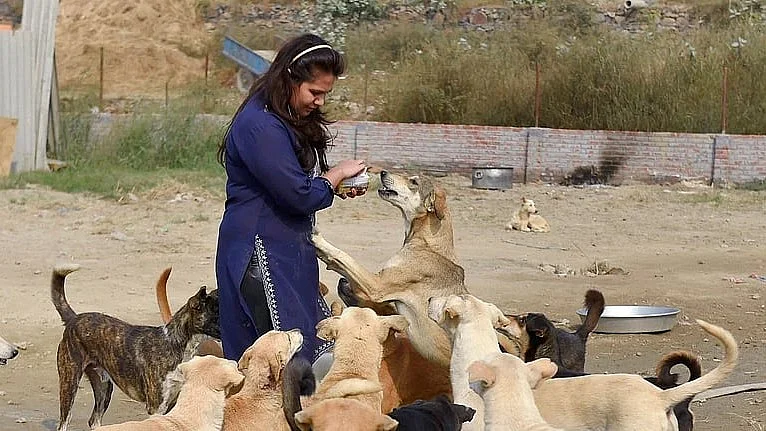


The Supreme Court has taken a strong stance on the increasing attacks by stray dogs across the country. During the hearing on Tuesday, 13 January, the court clearly stated that if children or elderly people die or suffer serious injuries due to dog bites, the state governments can be held directly responsible. The court also indicated that heavy compensation could be imposed on the governments in such cases.
During the hearing by a bench of Justices Vikram Nath, Sandeep Mehta, and N.V. Anjaria, Justice Nath made sharp remarks on the administration's inaction. He said that this problem has increased "a thousandfold" due to the negligence of the authorities. According to the court, if concrete steps had been taken in time, the situation would not have been so serious.
Justice Nath said that in every case where children or elderly people are injured or die due to dog bites, the state government will be held accountable. He also added that the role and responsibility of those who feed dogs on the streets should also be determined.
The court's remarks did not stop there. Justice Nath clearly stated that if someone is so attached to dogs, they should keep them in their homes. Creating a situation where they roam the streets and scare or bite ordinary people is unacceptable. The court acknowledged that this issue of public safety should be resolved with concrete policies and administrative action, not emotions.
“For every dog bite, death, or injury caused to children or the elderly, we are going to ask state governments to pay heavy compensation, as they have done nothing on implementation of norms in the past five years. Responsibility will also be fixed on those feeding these stray dogs. If you love these animals so much, why don’t you take them home? Why should these dogs roam freely, bite and scare people?” Justice Nath said.
This remark came when senior advocate Menaka Guruswamy was presenting arguments on behalf of two animal welfare trusts. She described the issue as emotional and said that the solution should be humane. To this, Justice Sandeep Mehta commented that so far, emotions have only been shown for the dogs. In response, Guruswamy said that she is equally concerned about the safety of humans.
Justice Mehta echoed these concerns, asking, “Who should be held accountable when dogs attack a 9-year-old? The organisations feeding them? Should we turn a blind eye to this problem?”
During the hearing, the court also made it clear that it wanted to issue concrete orders, not engage in lengthy debates. Justice Nath said that everyone was repeating the same thing, whereas now the administration needs to be held accountable so that a process can begin. Justice Mehta even said that the courtroom had been turned into a public forum, whereas it is a place for judicial proceedings.
Menaka Guruswamy also told the court that killing dogs is not the solution. According to her, sterilization is the only effective and humane method. She claimed that the funds allocated by the central government are not being used properly and that the Animal Birth Control (ABC) rules are not only limited to birth control but also prohibit the unnecessary confinement of animals.
Guruswamy cited parliamentary debates, saying that the policy of killing dogs has already proven to be a failure and that cruelty or extermination cannot be justified by any argument.
The court’s remarks came during hearings on several petitions seeking modification of its 7 November 2025, order directing authorities to remove stray dogs from institutional areas and public roads. The apex court lamented that attempts to proceed with the case over the past four days were repeatedly obstructed by activists and NGOs, preventing the bench from hearing the Centre and states.
The suo motu case, initiated on 28 July 2025, followed media reports highlighting the dangers of stray dog bites, particularly rabies cases among children in the national capital.
It is clear from the Supreme Court's observations that the court wants to issue concrete guidelines on this serious social problem, not just engage in debates. Balancing the increasing dog attacks on the streets, the sluggishness of the administration, and the safety of the general public, the court's next order is considered crucial. Now it remains to be seen how seriously the state governments take this warning and what concrete steps are taken at the ground level.
With PTI inputs
Join our official telegram channel (@nationalherald) and stay updated with the latest headlines