


Who needs a safe house?
Tamil Nadu confronts the dark world of ‘honour killings’ and caste-based violence
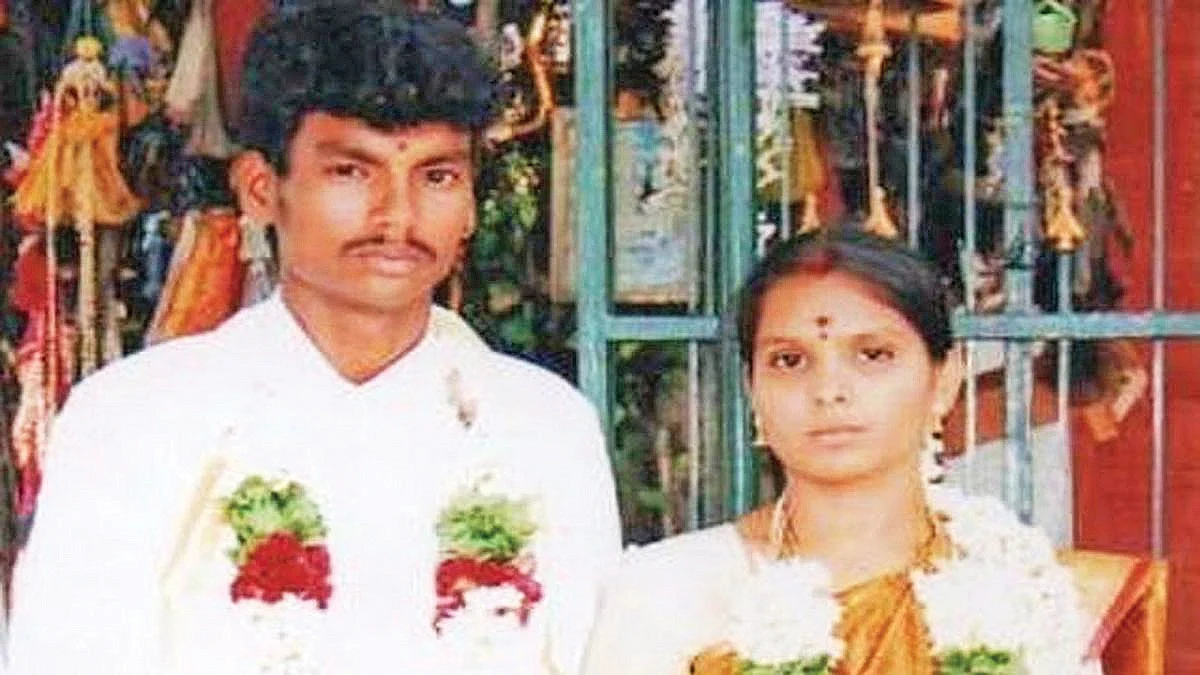


In Udumalpet, Tiruppur district, Kausalya Sankar and her husband V. Shankar were attacked in plain sight on 13 March 2016. Shankar, a 22-year-old Dalit engineering graduate, was hacked to death. Kausalya, then 19, suffered serious head injuries. CCTV footage of Shankar collapsing as the killers fled shocked the whole country.
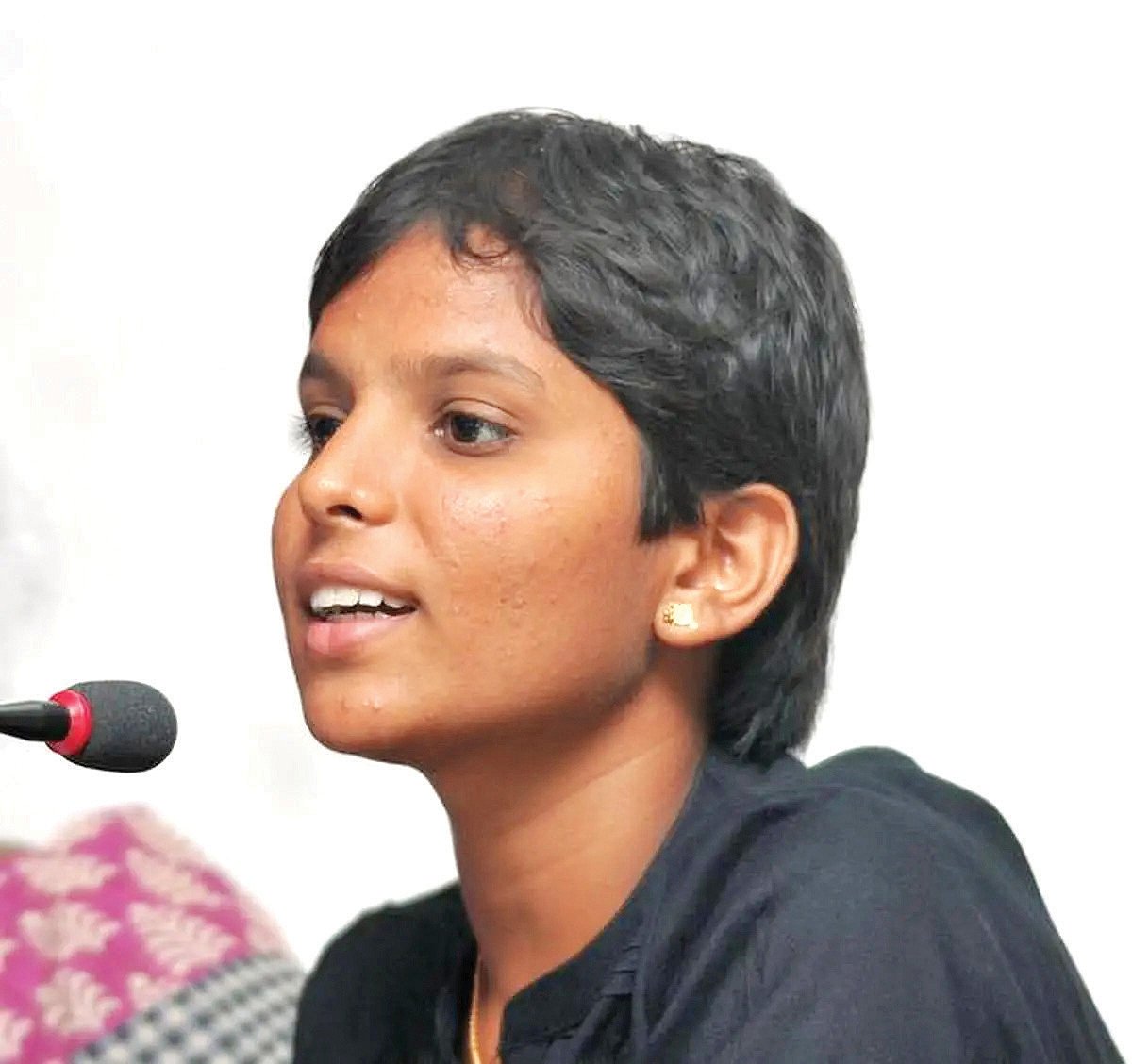
Kausalya, who married against the wishes of her family, survived and went on to become one of Tamil Nadu’s most visible voices against caste violence. Her legal crusades following Shankar’s death are milestones in a state where honour killings continue despite its progressive moorings and socio-political advancements.
She welcomed the Joseph Vijay government’s recent decision to establish safe houses in every district (all 38 of them) for individuals and families vulnerable to or affected by honour killings, caste killings and related violence. “When a couple goes against the wishes of their parents to get married, they have nowhere to go. If only we had such a safe house, I would not have lost my husband,” Kausalya told National Herald.
Her words remind us of the chasm between constitutional rights and the reality confronting couples who dare to cross caste boundaries.
Social justice minister Vanni Arasu announced the decision in the Assembly on 28 August, saying it heard representations from survivors and activists, and was in line with the Supreme Court’s landmark judgement in the well-known Shakti Vahini case.
In Shakti Vahini v. Union of India (2018), the court affirmed that consenting adults have the right to choose their partners, free from interference by family, caste or community. It directed states to establish district-level special cells and 24-hour helplines to address threats and harassment, with the police required to take immediate preventive action.
Where necessary, couples were to be shifted to safe houses, particularly those facing threats over inter-caste or inter-faith relationships. Authorities could provide protection and, if requested, assistance with marriage and registration. Safe-house stays were envisaged for one month, extendable monthly up to one year based on the threat.
Tamil Nadu plans to provide additional counselling, legal aid and rehabilitation support. It is also considering a special law against honour killings. A committee headed by retired Supreme Court judge K.N. Basha has been examining measures to prevent such crimes; legislation will follow the committee’s recommendations.
Arasu said funds would be allocated in two weeks and facilities would start functioning very soon. Tight security would be provided for newly-weds until tensions de-escalated and families became less hostile. The period would also help couples find proper jobs and homes of their own.
Safe houses could become a critical intervention because the danger often begins long before a murder. Couples are threatened, abducted, confined, assaulted or separated by their families. In many cases, the police are approached only after the threats become acute. For a young couple forced out of home, there is often no place to go.
****
Tamil Nadu has a troubling history of violence. The 2003 abduction and murder of Dalit youth Murugesan and his Vanniyar wife Kannagi in Cuddalore became one of the state’s defining cases, exposing police complicity and investigative failures. It took 22 years for the Supreme Court to uphold the convictions of the 11 accused in 2025.
In 2014, the Vimaladevi case revealed how the machinery meant to protect was itself the source of danger. Vimaladevi, a caste Hindu woman, had married Dalit youth Dhilipkumar. A crowd from her community gathered at the police station, where the cops separated the couple despite their insistence that they were married. Vimaladevi later died under suspicious circumstances.
These allegations were recorded by the Madras High Court, which transferred the investigation and ordered systemic measures, including district special cells and a 24-hour helpline.
In 2015, Dalit engineering graduate Gokulraj was abducted from a temple in Tiruchengode for being with a woman from the Kongu Vellalar community. His body was found the next day. In 2022, a special court convicted 10 people, and the Madras High Court later upheld convictions against eight.
Shankar’s case remains particularly salient because Kausalya survived to testify and campaign against caste violence. Her father was sentenced to death by a trial court, and later acquitted by Madras High Court. Kausalya’s appeal against that acquittal is still pending before the Supreme Court.
The problem has not disappeared. In July 2025, 27-year-old Dalit software engineer Kavin Selvaganesh was killed in Tirunelveli allegedly for his relationship with a dominant-caste woman. The investigation was transferred to the CB-CID and the case remains before the courts.
****
The data reveal an even deeper problem: Tamil Nadu does not have a dependable official count of ‘honour killings’, which are not a separate offence in Indian criminal law. Motives are recorded as murder, suicide, abduction or other. Official statistics therefore reveal less than what civil society organisations find.
Evidence, a Madurai-based rights organisation, says 59 people were murdered in 53 honour-killing incidents in Tamil Nadu between 2017 and 2025. It recorded 14 deaths in 2023, 11 in 2024 and seven in 2025. The organisation submitted FIRs and case documents relating to all 53 incidents to the Basha Commission in March.
Between 2016 and 2020, research by Evidence had identified 55 suspected honour killings. Over 25 years (1999-2024), only six cases had resulted in convictions: Shankar-Kausalya, Kannagi-Murugesan, Gokulraj, Amirthavalli, Kalpana and Abirami.
Arokiasamy Vincent Raj, also known as ‘Evidence’ Kathir for his work with the organisation, argues that the low conviction record cannot be separated from the way such crimes are investigated: “Honour killings are the product of social engineering. Political pressure and casteism in the criminal justice system both play roles.” He points out that caste killings also occur beyond the Dalit-dominant caste binary, among backward communities and between different marginalised groups.
Henri Tiphagne, human rights advocate and director of People’s Watch, has repeatedly maintained that caste violence remains a serious rights issue despite Tamil Nadu’s social justice legacy. In 2024, Tiphagne and Raj had criticised political parties for failing to address the rise in honour killings and caste conflicts, particularly in the southern districts. Tiphagne’s larger concern has long been institutional accountability, especially when the police fail to protect vulnerable people or investigate complaints impartially.
****
Tamil Nadu is often presented as India’s laboratory of social justice, shaped by Periyar’s anti-caste movement, rationalism, affirmative action and a tradition of challenging hierarchy. It has also recorded high levels of inter-caste marriages and built institutions around social justice.
Yet caste remains deeply embedded in land ownership, marriage, local political power and family structures. As young Dalits gain education, employment and mobility, caste boundaries become more contested, particularly when women from dominant or intermediate castes choose Dalit partners. Raj says the woman’s body is still seen as the site through which caste purity is maintained. Patriarchy and caste therefore reinforce each other.
Safe houses cannot dismantle those ingrained structures and prejudices. But they can save a threatened couple from becoming homeless or feeling helpless. They can give survivors the breathing space to recover, pursue legal action and rebuild their lives.
Join our official telegram channel (@nationalherald) and stay updated with the latest headlines