


Bengal voters ask: Has EC left out names cleared by judges?
Voters allege names cleared under SIR scrutiny remain missing, raising questions over transparency of electoral roll revisions
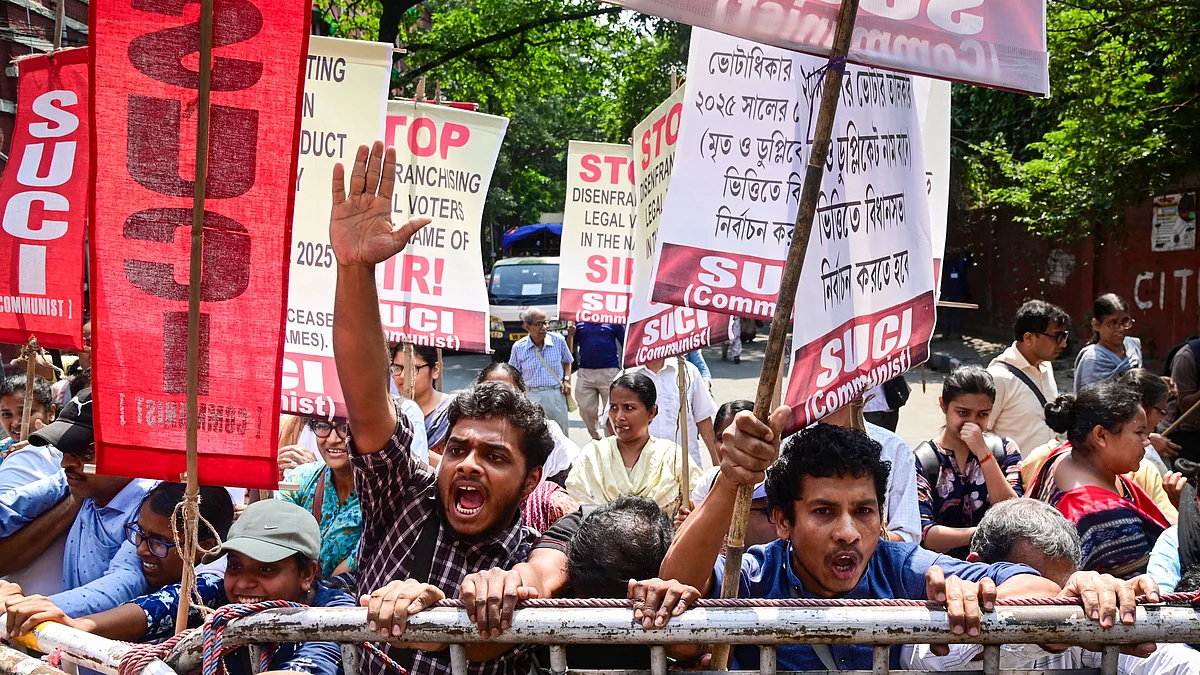


A growing number of voters in West Bengal are questioning whether the Election Commission of India (ECI) has fully uploaded the names cleared during the Special Intensive Revision (SIR) process, even after judicial scrutiny. Many say they submitted all required documents, attended hearings, and waited in expectation, only to find their names missing from the supplementary voter list.
The concern is no longer limited to isolated complaints. Teachers, government employees and even election personnel are among those who claim they were marked “pending” or “deleted” despite years of voting history and valid documentation. For many, the core question remains: if a voter has already been verified through a court-supervised process, why is the name still missing from the final roll?
Several aggrieved voters have alleged that the Commission may not be publishing the list exactly as cleared by judicial officers. While the verification process was meant to ensure fairness and accuracy, critics say the final voter list appears incomplete. Across villages, towns and local election offices, one question is being repeatedly raised: 'Is the Commission actually uploading the list provided by the judges?'
One such case is that of Azizul Haque, a teacher at Krishnanagar Collegiate School in Nadia district. A registered voter in Krishnanagar South since 1997, Haque has also served as presiding officer during elections. He submitted his passport, academic certificates and other supporting documents during verification and did not expect any problem. Yet, when the supplementary list was published, his name appeared in the 'deleted list' even as other members of his family remained on the roll.
“How can I be treated as invalid when I have worked in elections for so long?” he asked, echoing the frustration expressed by many facing similar situations.
Tapas Mukherjee, a schoolteacher from Howrah, said he was shocked to find his name missing despite living in the same area for years and maintaining all necessary documents.
“I am a genuine voter, but now I am being forced to prove my identity again and again. My family’s names are on the list, but mine is missing. This has caused me deep mental stress. I think the ECI has purposefully deleted the names despite being cleared by the judges,” he said, adding that ordinary voters are suffering because no clear explanation has been provided for the deletions.
Another case is that of Sheikh Mohammad Irfan Habib, a WBCS officer posted in Birbhum district’s minority development department. A registered voter in Raina in Purba Bardhaman district, Habib also found his name listed under the deleted category. For people in government service who have themselves been part of the electoral process, the experience has been particularly unsettling.
In Belda village in Khanakul’s Balpai area, Sheikh Ziabul Islam said his parents and other family members continue to be listed as voters, but his own name is missing. According to him, of 155 voters marked 'pending' in his polling booth, only 19 were cleared while 136 were rejected. Residents have held protests and blocked roads, alleging that their complaints are not being heard.
“Now people are suspecting that so many names cannot be deleted by the judges and it is the ECI that is behind the process,” he said.
Former Chief Election Commissioner Y.S. Quraishi has also raised questions about the manner in which the revision exercise is being conducted. “As a transparent constitutional body, the Election Commission has nothing to hide. Yet such irregularities are occurring these days, information is being concealed,” he said, questioning whether such a large-scale revision was necessary so close to an election. He also pointed out that voter list revision is a continuous exercise and that the rolls are already “99 per cent accurate”.
The controversy has intensified because the Commission has not clearly stated how many names were removed after verification. Various figures are circulating in public debate, but the absence of a clear and comprehensive explanation from the EC has deepened suspicion among voters who feel they are being kept in the dark.
The issue has also acquired a political dimension. Many voters believe the revision process has been applied in Bengal in a manner not seen elsewhere. The state has a long tradition of high voter turnout, often significantly higher than the national average, making even limited exclusions politically sensitive. For many, the concern goes beyond losing the right to vote in one election — it is about repeatedly having to prove citizenship or eligibility.
BJP leaders, too, are facing questions on the campaign trail. During campaigning in Barrackpore, BJP candidate Kaustuv Bagchi was confronted by a woman voter whose daughter’s name had been deleted after marriage and a change of surname. The candidate responded, “If you entrust us with power, this problem will cease to exist.” The response, however, did little to calm public concern.
BJP state president Samik Bhattacharya has said, “It is the Election Commission’s responsibility to conduct fair elections. It is the Election Commission’s responsibility to provide the people of West Bengal with a flawless voter list, removing intimidation and allowing them to participate in elections in a fear-free environment.” Critics, however, argue that the party cannot entirely distance itself from a process it had earlier supported.
Chief minister Mamata Banerjee has also sharply criticised the Commission’s handling of the revision exercise. “Come out with the final list if they have the guts,” she said at a recent rally, insisting that genuine voters must not be denied their democratic rights. She has also claimed that several names were restored only after pressure and protests from the ground.
The Supreme Court has observed that being unable to vote in one election does not permanently deprive a person of voting rights. But for voters whose names have already been deleted, such reassurance has provided little comfort.
'Why not allow all under-review voters to cast their vote first, and then examine doubtful cases later?' is a question increasingly being raised in public discussions.
For now, uncertainty and distrust persist. In homes, markets and tea stalls across Bengal, the same concern continues to be voiced: if the judges cleared the names, why are so many still missing from the list? Until the ECI provides a clear explanation, that question is unlikely to fade.
Join our official telegram channel (@nationalherald) and stay updated with the latest headlines