


What loot in Hindutva hotspots looks like
A common pattern is emerging — from Ayodhya to Varanasi to Ujjain, Vrindavan, Kedarnath, Badrinath...
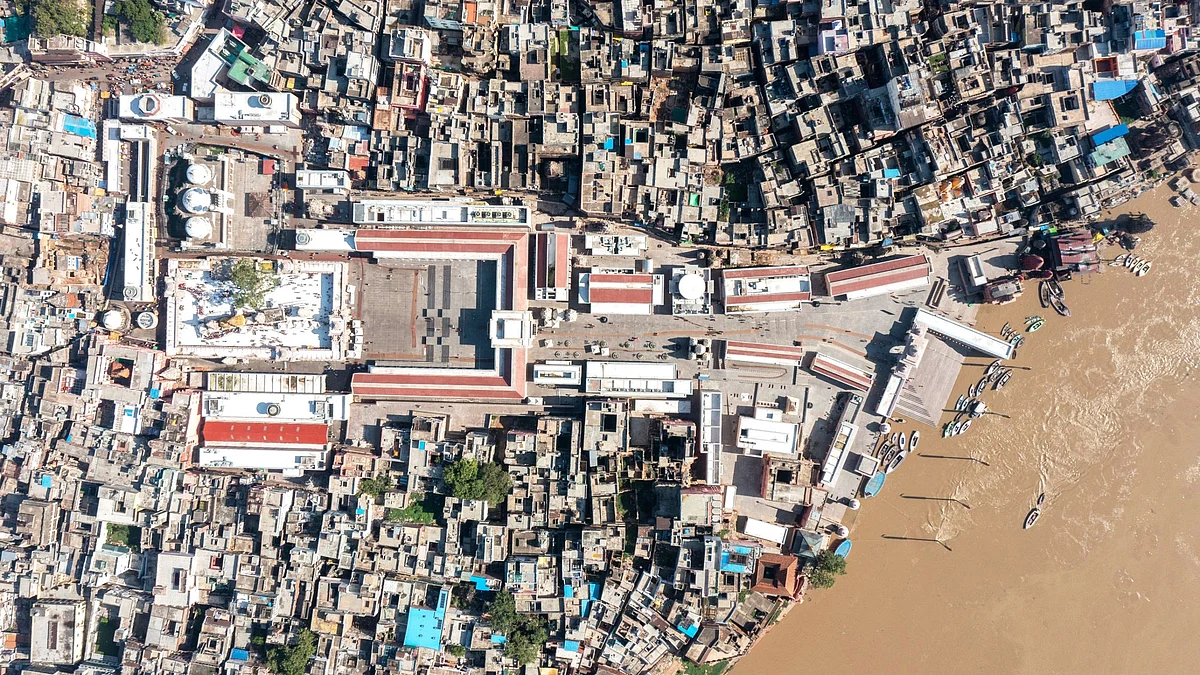


Redevelopment’ is the name of the game under which vast tracts of land around our ancient temples are being snapped up. Vested political interests are then selling them at inflated prices to the same trusts that manage these temples. Be it Kashi Vishwanath in Varanasi, Ram Janmabhoomi in Ayodhya, Mahakaleshwar in Ujjain or Banke Bihari in Vrindavan, the controversies extend far beyond isolated allegations.
Opposition parties, religious leaders, social activists and even factions within the Hindutva establishment have accused influential political figures, temple trusts and bureaucrats of exploiting public faith for private gain. Land speculation, opaque financial deals, misappropriation of funds have become standard features of swindles coming to light across Hindutva hotspots.
The most damning charges concern the donations at Shri Ram Janmabhoomi Teerth Kshetra, the trust that runs the Ram Mandir in Ayodhya. Conservative estimates peg the embezzlement at Rs 200 crore, but locals in Ayodhya believe the scam runs into more than Rs 5,000 crore. Opposition leaders allege that the money was siphoned off to influential leaders whose names have not yet been revealed.
The project has been mired in controversy from the start. The Nirmohi Akhara, one of the oldest and most powerful Ramanandi orders, had accused the Vishwa Hindu Parishad of misusing over Rs 1,400 crore received from devotees since the early 1990s. Instead of being spent on temple construction, this money was used to fund their own institutional buildings and enhance the political standing of their leaders.
It is well known that Modi-appointee Champat Rai — who resigned as general-secretary of the trust — and Uttar Pradesh chief minister Yogi Adityanath do not see eye to eye. Yogi was waiting to strike. On 13 June, he ordered the setting up of a Special Investigation Team.
Also Read: Something is rotten in the land of Ram
On the same day, in a classic case of loot-and-scoot, Gopal Rao (who was in charge of construction at Ram Mandir) reportedly caught a train with sacks stuffed with gold and silver bars. He was subsequently seen hobnobbing with senior RSS functionaries in Bengaluru. His nephew Somesh Anand is reportedly the ‘mule’ transporting bags of gold and silver from Ayodhya to Karnataka.
Meanwhile, Opposition parties have intensified their allegations of questionable land transactions. Rajya Sabha MP Sanjay Singh has submitted documents related to 11 land deals to the Special Enquiry Team set up to probe the matter.
The team is now examining expenditure on Ram Mandir events, including Rs 113 crore spent on the consecration ceremony (presided over by Prime Minister Narendra Modi) and Rs 10.12 crore spent on the flag-hoisting ceremony in November 2025.
Swami Avimukteshwaranand Saraswati, the Shankaracharya of Jyotirmath, pointed out that only lower-level functionaries have been arrested so far, while “those responsible for larger wrongdoings” are going scot-free.
Uttar Pradesh Congress chief Ajay Rai went a step further and accused the ruling BJP of undermining Hindu religious sites, notably in Varanasi, Vrindavan and Mirzapur, and transforming them into tourist attractions.
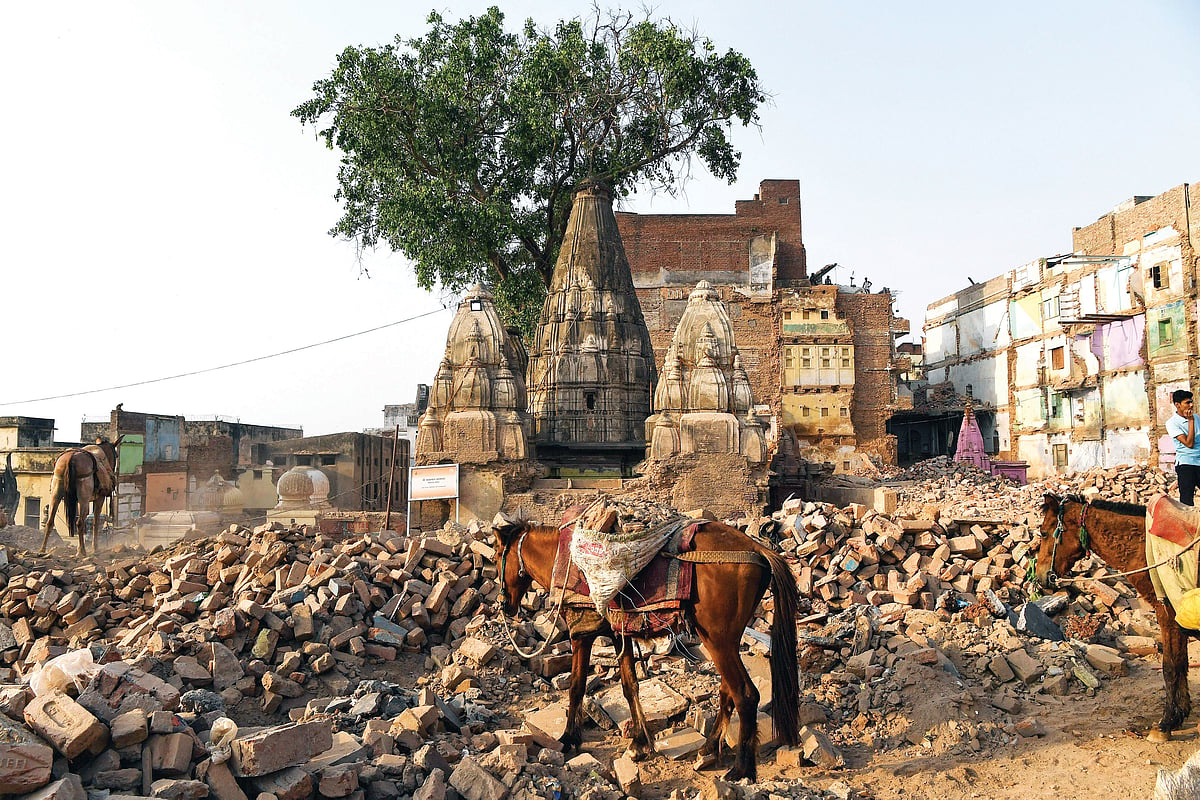
Rai argues that religious buildings have been demolished under the guise of development projects like the Kashi Vishwanath Corridor, which was expanded from 3,000 sq. ft to 500,000 sq. ft. The BJP-led government has, he says, prioritised commercialisation over organisations — including the RSS-led Bharatiya Kisan Sangh — preserving cultural heritage, destroying the livelihoods of communities that have long served these sacred locations.
A similar process is underway in Ujjain which is being primed as the next religio-tourist destination with the Simhastha Mahakumbh expected to be held here in 2028. Preparations have triggered a wave of land acquisition around the Mahakaleshwar Temple. Shops, homes and even a 200-year-old mosque have been demolished to make way for parking facilities and the Ujjain Mahakal Lok Corridor.
Madhya Pradesh chief minister Mohan Yadav’s grandiose announcement that his government would acquire 2,378 hectares to build infrastructure for the Simhastha Kumbh provoked such strong resistance from farmers’ organisations — including the RSS-led Bharatiya Kisan Sangh — that Yadav was forced to withdraw the notification on 17 November 2025.
A public spat between Yadav and BJP MLA Chintamani Malviya has recently resurfaced. When Malviya reportedly bought 45,000 sq. ft land (in the name of Utopia Bottle and Resort Pvt Ltd) next to the Mahakal temple, a complaint was made to the Lokayukta, the Economic Offences Wing and the high court that what was at present a parking lot for the temple was going to be the site of a five-star hotel.
Malviya retaliated by pointing out that after Yadav assumed office in December 2013, his family and their real estate companies had bought at least 137 plots — adding up to over 168 acres in two years. He warned of a powerful cartel trying to monopolise all the land deals in Ujjain.
A Bhopal-based political observer pointed out, “The Mahakal Lok Corridor is being built at a cost of Rs 1,200 crore. Another Rs 400 crore has been allotted from government funds for ‘development’ work. The commission for politicians and bureaucrats at 35 per cent works out to Rs 350 crore. The work done is so substandard that the statues and murals that were installed in the temple complex last year collapsed after one heavy shower.”
The government’s obsession with corridors has now been extended to the Banke Bihari temple in Vrindavan. The Supreme Court has green-signalled both the construction of the Banke Bihari corridor and the use of temple funds to the tune of Rs 500 crore to acquire land. The state government’s own budgetary allotment for land acquisition and initial construction is Rs 762 crore.
Authorities are surveying properties (300+) and negotiating compensation amounts with affected residents and shopkeepers (100+) whose shops will be demolished. Neeraj Gautam, head of the Banke Bihari Market Association, believes this corridor will be a repeat of what happened in Varanasi: “Braj’s culture will be erased.”
While the government claims the corridor will help pilgrims and improve safety, locals fear it will damage Vrindavan’s spiritual and cultural heritage. Their fears are not unfounded given the kind of makeovers our religious dhams are receiving. The ‘face lifts’ given to Kedarnath and Badrinath have resulted in the mushrooming of multi-storeyed concrete buildings totally inappropriate for an ecologically fragile region.
Both have also seen variations of the same loot-and-scoot script. In 2023, the 100-crore gold plating on the walls of the sanctum sanctorum of the Shiva temple in Kedarnath was stolen overnight. The culprits haven’t yet been brought to book. Swami Avimukteshwaranand and local priests publicly claimed that up to 228 kg of gold had gone missing.
The first week of July brought another exposé — temple donations had gone missing from the Badrinath shrine. A temple employee has since been suspended, and the amount is believed to run into crores.
Largescale violations of land use regulation are being witnessed across Vrindavan. Commercial buildings and luxury hotels have sprung up on hundreds of acres designated for ashrams and temples. All under the nose of the Mathura-Vrindavan Development Authority which has taken no steps to end this blatant misuse. Social activists contend that the easiest way to grab land is to claim it will be used for ‘religious purposes’. By doing so, the government ensures their Hindu vote bank does not get alienated.
The situation at the Shri Krishna Janmabhoomi temple in Mathura is no better. Local seer Dinesh ‘Phalahari’ Maharaj publicly alleged massive embezzlements of donations on a scale comparable to the Ram Mandir in Ayodhya and demanded an immediate CBI enquiry.
For the devout, this is the ultimate betrayal: a government claiming to champion Hindu interests has instead been converting sacred spaces into high-value real estate projects. The rhetoric is that of religious renaissance; the reality is commercialisation and corruption that benefits those in power.
Join our official telegram channel (@nationalherald) and stay updated with the latest headlines