


Why Dinesh Trivedi?
Neither career diplomat nor intelligence expert, his appointment as India’s high commissioner to Bangladesh is really mystifying
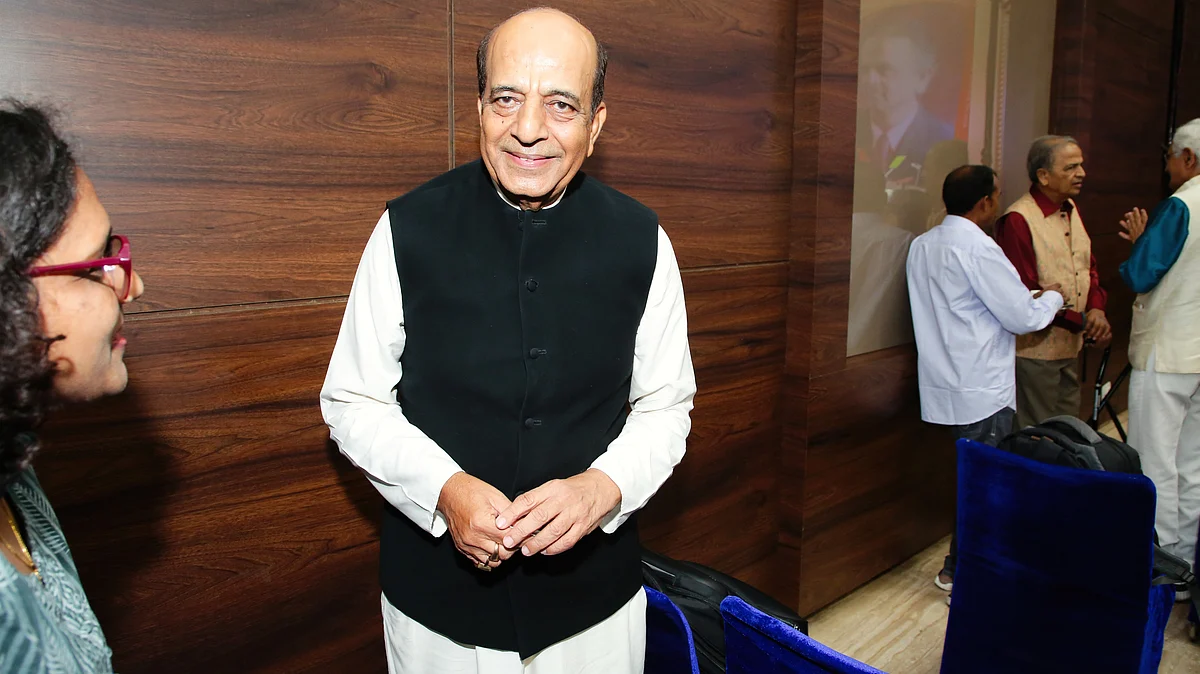


Those following relations between India and Bangladesh are taken aback by the Modi government’s decision to send Dinesh Trivedi, a political appointee, to Bangladesh as India’s next high commissioner. The appointment awaits a formal agreement from the Bangladesh government.
There hasn’t been a political appointee as head of the Indian mission in Dhaka in 50 years. The last such choice was Samar Sen, who was a career diplomat but took up the post after retiring from the Indian Foreign Service (IFS) as India’s permanent representative (PR) to the United Nations in New York. Sen was born and brought up in Dhaka and had first-hand experience of the place.
His predecessor Subimal Dutt, the first Indian high commissioner to Bangladesh after its independence from Pakistan in 1971, was also originally from East Bengal (Chittagong). Dutt went on to become India’s longest serving foreign secretary before being summoned from retirement to undertake the delicate new assignment in Dhaka.
A promotion to the coveted top job of foreign secretary is often guided not by whether a candidate has served as ambassador, high commissioner or permanent representative in the West, but by whether he or she has fulfilled such a role in a neighbouring country.
In this context, Dhaka has often been a stepping stone to the corner office in the ministry of external Affairs (MEA). Think K.P.S Menon (junior), Muchkund Dubey, Krishnan Srinivasan, Krishnan Raghunath and Harsh Shringla.
A change of guard in Dhaka was due. Pranay Verma had served more than three-and-a-half years there as high commissioner. The MEA is said to have proposed Sandeep Chakravorty, India’s current ambassador to Indonesia, as Verma’s successor. Chakravorty had in his CV a previous stint in Bangladesh as deputy high commissioner.
But this failed to impress the PMO. A tussle for control of external affairs between the MEA and the national security establishment in the PMO has been an ongoing and unfortunate saga. The PMO scanned political circles and settled on Trivedi.
A Gujarati businessman, Trivedi went to school and college in Kolkata, before obtaining an MBA in the United States. He is a much-travelled politician, having moved from the Congress to the Janata Dal to the Trinamool Congress (TMC) before landing in the BJP.
The TMC nominated him first as minister of state for health and family welfare in 2009 and then railway minister with cabinet rank in 2011 in the Congress-led UPA government under Manmohan Singh. He quit Mamata Banerjee’s outfit in 2021 to join the BJP. Compelled to resign as a TMC member of Parliament in the Rajya Sabha, Trivedi has since been cooling his heels.
While Trivedi is at least not uneducated — unlike many BJP politicians, including repeat Class 8 failures and 'haffidavit' walas — his qualification for the new post is difficult to fathom. “Modi obviously wanted to reward Trivedi,” said a former Indian high commissioner to Bangladesh. “Is the pat for turncoat Trivedi a slap for Mamata?”
While another former Indian high commissioner to Bangladesh called the logic “unclear”, a high-level source familiar with the decision-making process had a different take.
National security advisor Ajit Doval may have prevailed by pointing out the failure of the Indian high commission in Dhaka to understand the seriousness of the discontent with Sheikh Hasina, which culminated in her ouster, the source said.
That failure is not in dispute. But that was surely more a shortcoming on the part of intelligence gathering by the Research & Analysis Wing rather than diplomats stationed in Dhaka. In fact, in his briefing to the Parliament’s standing committee on external affairs soon after Hasina’s toppling, minister for external affairs S. Jaishankar is said to have accused the United States of being behind it all.
If that was the MEA’s post facto conclusion, how were IFS personnel to blame? And, in what way is Trivedi a solution? He possesses neither a background in diplomacy nor in intelligence. The departure from having a foreign affairs specialist as Indian high commissioner in Bangladesh does not, to say the least, make sense.
A mishandling of ties at a time that the BNP (Bangladesh National Party), not the Awami League, is installed in government could potentially be disastrous. Pakistan and its Inter-Services Intelligence (ISI) made unprecedented inroads into Bangladesh in the 18 months of the interim govern-ment in Dhaka since Hasina’s exit and the entry of the current prime minister Tarique Rahman. China has gained considerable ground as well.
The re-establishment of previous security cooperation, the reconstruction of mutual confidence and the smooth renewal of the Ganga Waters Treaty are urgent issues. If Ajit Doval thinks these can be tackled by remote control, he is sadly mistaken.
Ashis Ray was formerly editor-at-large of CNN. He is the author of The Trial that Shook Britain. More of his writing can be found here
Join our official telegram channel (@nationalherald) and stay updated with the latest headlines