


Why peace still eludes Manipur
The failure of state institutions has encouraged warring groups to turn to their own vigilante outfits for protection
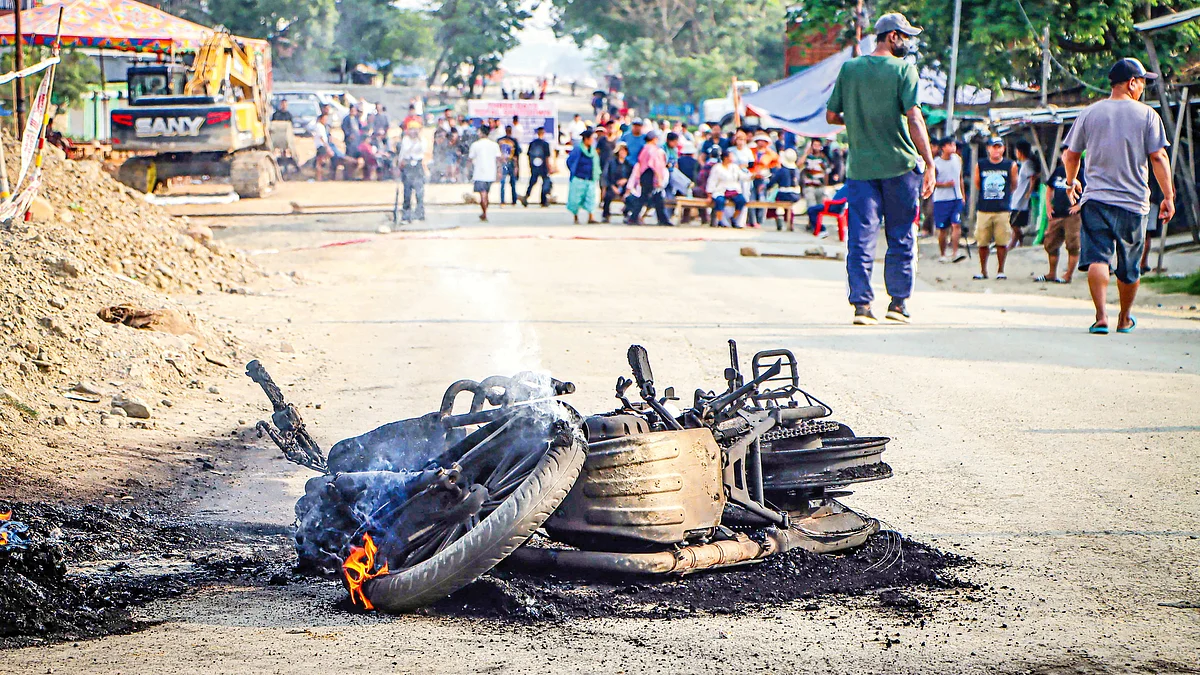


On 13 May, three church leaders from the Kuki-Zo community were killed by unidentified gunmen. Vumthang Sitlhou, Kaigoulen and Paogoulen of the Thadou Baptist Association were ambushed while travelling from Churachandpur to Kangpokpi after attending a peace meeting. All three have been involved in ongoing Kuki-Naga peace talks.
Kuki Inpi Manipur (KIM), the top socio-political organisation of Kukis across northeast India, Bangladesh and Myanmar, condemned the attack. It blamed the ambush on the Kamson faction of Zeliangrong United Front (ZUF), a Naga insurgent group based in Imphal valley. The Zeliagrong people are indigenous to the tri-junction of Assam, Manipur and Nagaland.
Although Nagas have a long history of territorial disputes with Kukis, they remained neutral in the Kuki-Meitei conflict, which has claimed hundreds of lives and displaced over 60,000 since May 2023. The killing of two Tangkhul Naga men on 18 April in Ukhrul led to Naga-Kuki clashes. People died on both sides and several tribal villages were burnt.
Naga civil society groups blamed Kuki militants, but Manipur watchers point to the tacit role of Meitei groups in stoking the violence to engineer a split between the state’s hill-dwellers. As a human rights activist said, on condition of anonymity, “Manipur’s Meitei political elite is using Naga anxiety to corner the Kukis.”
Rev. Sitlhou’s death must be seen in this context. He was a unifying figure and negotiator at the Kohima peace talks in early May. Local media reported that Sitlhou and colleagues were on the verge of signing a peace agreement with the Nagas, a process the clashes have stymied.
Also Read: Managing conflict, not resolving it
Around 40 civilians, including women, an infant and two Catholic trainee priests, were taken hostage. As of 20 May, 31 Naga and Kuki civilians had been released while six Naga men remained in captivity.
Demanding their release, the United Naga Council (UNC) launched an indefinite blockade on NH2, resulting in a pile-up of nearly 2,000 trucks carrying essential supplies to Manipur. The KIM, on its part, imposed a shutdown across Kuki-inhabited areas.
A 10-member team from the Council of Baptist Churches in Northeast India has started mediating between the communities. They have met chief minister Yumnam Khemchand Singh and visited Senapati and Kangpokpi districts to broker peace even as security forces, including Assam Rifles and the state police, conduct search and rescue operations.
****
“It’s a stupid game of thrones,” says Paolienlal Haokip, BJP legislator from the ST reserved constituency of Saikot in Churachandpur district. In other words, power play between former chief minister N. Biren Singh and the current incumbent, who is believed to be close to the RSS.
Haokip blames Biren Singh for the impasse, saying he has a vested interest in keeping Manipur on the boil. “The mastermind has minions among Tangkhul Nagas,” he told National Herald, suggesting a clandestine nexus between Biren Singh and a prominent Naga armed group. “Biren Singh wants to prove to New Delhi that he is indispensable to restoring peace in Manipur. Even after confessing his role in the communal violence!”
The failure of Manipur’s state institutions has encouraged warring groups to turn to their own vigilante outfits for protection.
Sourabh Sen is a Kolkata-based independent writer and commentator on politics, human rights and foreign affairs. More of his writing here
Join our official telegram channel (@nationalherald) and stay updated with the latest headlines