


Wayanad’s seedman, fondly called Nellachan, is no more
Cheruvayal Raman, the man who gave life to the seeds that give everyone nourishment, passed away in Kozhikode on 14 October
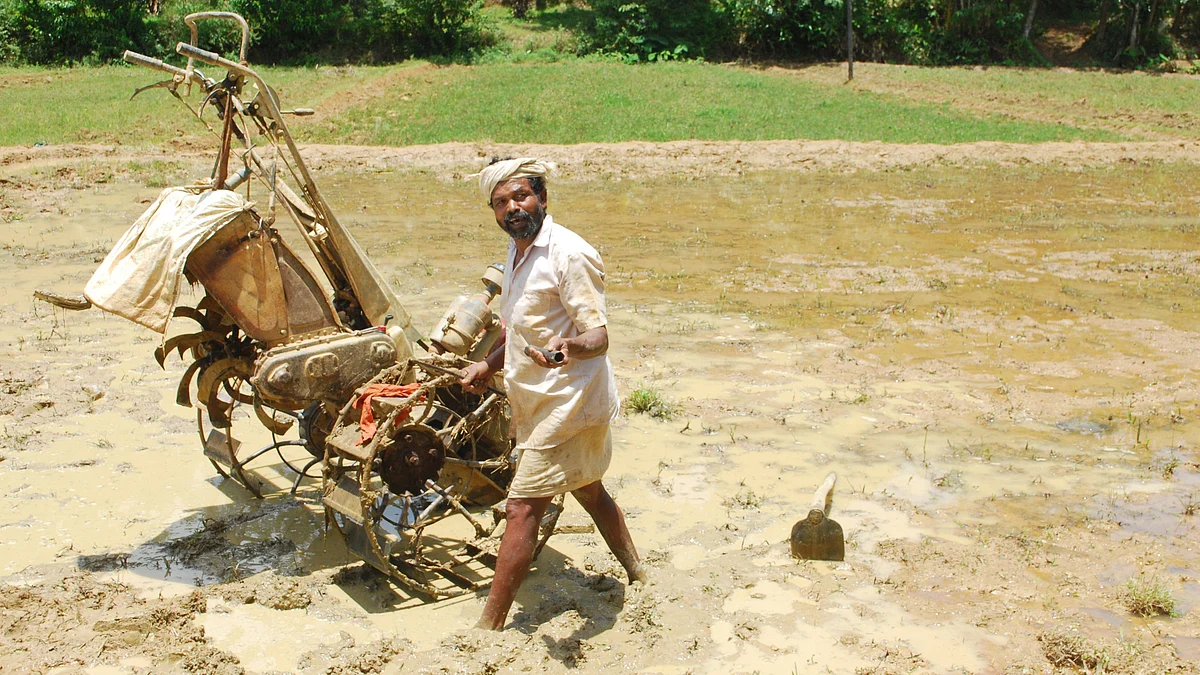


When Cheruvayal Raman was offered a government job in 1969 for a monthly salary of Rs 150, he could hardly refuse. The job was his opportunity to step away from the uncertainties of agriculture. He had registered with the employment exchange in Kannur the previous year.
But Raman had forty acres of land to think about. His uncle owned 22 acres of paddy fields and another 18 acres of dry land. When Raman told him about the appointment, the old man remained silent. Then he asked a question that would shape the rest of Raman’s life.
“If you leave, who will look after all this? Won’t it all dry up? If you don’t want it, abandon everything and go!”
Raman abandoned the job instead. “This land was not the job the government had given me,” he would recall.
He never really left those paddy fields.
Cheruvayal Raman, Wayanad’s beloved Nellachan, died at the Kozhikode Medical College Hospital on 14 October. He was 76. With him has passed a remarkable custodian of agricultural memory.
Raman’s journey as a seed conservator began with six traditional rice varieties left behind by his uncle. He was troubled by the thought that a family that had cultivated 40 acres of land had preserved so little of its original seed heritage.
Kerala had once possessed an extraordinary diversity of rice varieties. Wayanad alone was home to more than a hundred traditional varieties, adapted to different soils, water conditions and seasons. As chemical-intensive farming and high-yielding varieties spread, many of these indigenous seeds disappeared from cultivation.
Raman travelled across Wayanad, searching for surviving varieties and persuading farmers to share what they had preserved. He also collected seeds from Kozhikode and Kannur. Over the years, his collection grew to around 55 traditional varieties, carefully cultivated on his own land.
But he was more than a conservator of seeds. He was preserving a way of life, an agricultural civilisation from the ravages of development and modernity.
Raman was not preserving his seeds as a relic. He wanted them returned to the soil. He distributed them free to people willing to cultivate them, asking that they preserve the varieties and return seeds from their harvest so the collection would grow.
For him, seeds were a living inheritance to be entrusted to the next generation.
*
Raman understood the promise of the Green Revolution. His opposition to chemical-intensive farming was not born of ignorance but a profound concern about what might be lost when agricultural success is measured in yield alone.
He refused to use chemical fertilisers and pesticides, relying instead on cow dung, organic waste and natural manure. He worried about the disappearance of frogs, insects, fish and other organisms from agricultural landscapes. His memory of the Mananthavady river, once abundant with fish and giant freshwater prawns, were inseparable from his grief over Wayanad’s ecological decline.
He believed the soil had life, that farming was a relationship with nature rather than an exercise in extracting the maximum possible harvest.
“If hybrid seeds give you one tonne of rice, I may get only half a tonne. That is enough,” he would say. “Nature prefers half a tonne that allows everyone to live over one tonne that allows only me to survive.”
He was often dismissed as a fool for choosing traditional varieties that yielded less than modern alternatives. Raman accepted the criticism with a smile. “Everyone says I am a fool. But nature likes my foolishness.”
He continued to thresh paddy by beating harvested sheaves with a stick rather than relying on a tractor. His methods were rooted in respect for the seeds and the ecological relationships that sustained them.
“Seeds should not be born in universities,” he once argued, pointing to the millions of seeds scattered by wind, carried by water and dispersed by birds and animals. Nature was sustaining life long before human beings started classifying and manipulating seeds in laboratories.
Raman was not dismissing science. He was reminding us that scientific knowledge must retain the humility to marvel at the complexity of the living world.
*
When she visited his home in September 2025, Raman warmed to Wayanad MP Priyanka Gandhi Vadra. She spent time listening to him and learning about his seed collection and farming practices. The relationship took root. He called her his daughter; she addressed him as achchan (father).
In a tribute following his death, Priyanka recalled that Raman had spoken to her about a month earlier and asked her to visit him again. “When I heard about his passing today, my heart sank,” she wrote. She’d promised to return but had to cut short her Wayanad trip because of events in Delhi. She remembered him as wise, dignified and bold, a man who wanted better lives for his people and refused to accept discrimination and injustice. “He showed me his awards and honours with sadness in his eyes,” Priyanka recalled. “He said they would mean nothing to him until his people could live better lives.”
Rahul Gandhi, who had also met Raman during his time in Wayanad, remembered him as ‘our beloved Ramettan’. In his condolence message, he wrote: “He devoted his life to preserving Wayanad’s indigenous paddy seeds, keeping generations of Adivasi knowledge alive.”
Kerala Chief Minister V.D. Satheesan described Raman as “the guardian and gene bank of rare traditional paddy varieties”. He said Raman had safeguarded Kerala’s agricultural heritage for future generations.
*
Wayanad was once a landscape of flourishing paddy fields, traditional farming communities and extraordinary biodiversity. The gradual disappearance of its fields and indigenous varieties represents a loss that no tribute, no award can repair.
Raman received awards galore in his lifetime, include a Padma Shri in 2023 and most recently the first Oommen Chandy Memorial Agricultural Award, recognising his lifelong contribution. But the greatest tribute to Cheruvayal Raman would be to ensure his work outlives him. His seed varieties must live and multiply and the way of life he embraced survive the march of modern farming.