


Bangladesh and the Makkah Pact
In its current shape, the alliance is more a political signal than a military commitment on all sides. The partners do not face the same threats
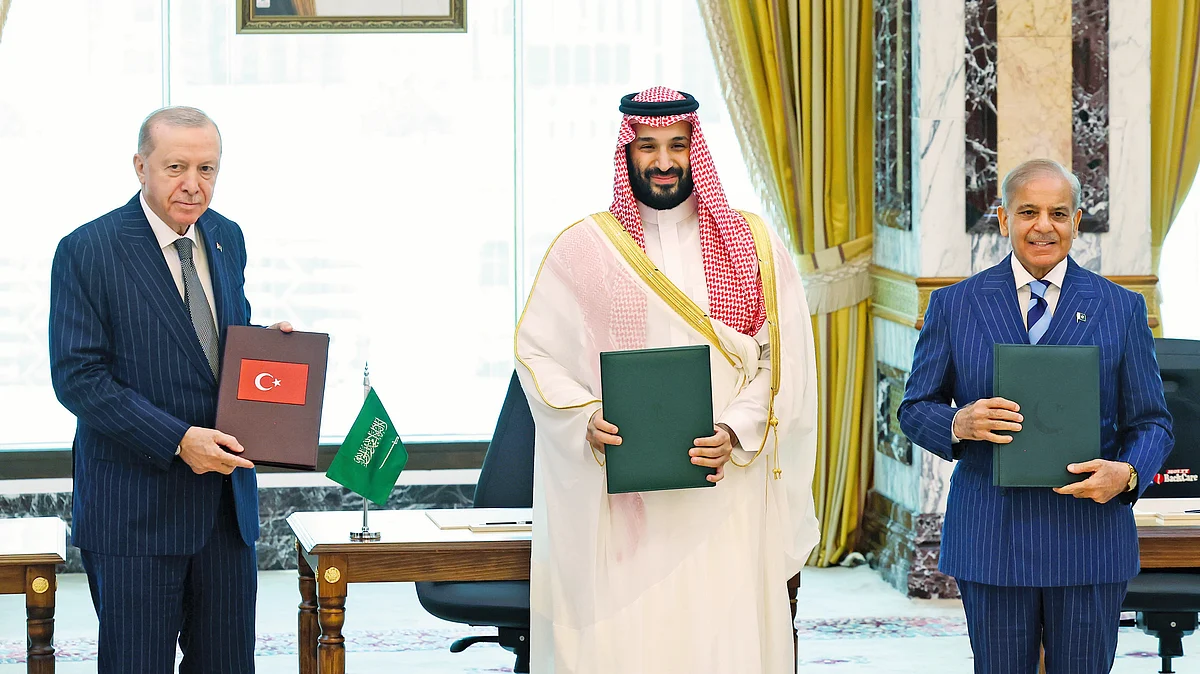


Bangladesh has not yet taken a firm decision to join the Makkah Joint Defence Agreement, but its government is publicly advertising its interest nevertheless.
“If there is a security arrangement among Islamic nations in [West Asia], it is not unusual for us to consider participating. It is being viewed positively,” said Humayun Kabir, Bangladesh’s state minister for foreign affairs. The pact’s members, Kabir added, were keen on Bangladesh’s participation. A foreign ministry source subsequently confirmed that Saudi Arabia had invited Prime Minister Tarique Rehman to Riyadh.
The agreement, signed in Makkah on 7 August by Saudi Arabia, Turkey and Pakistan, treats an armed attack against one member as an attack against all. Its architects see it as consistent with the UN Charter. Yet any arrangement combining Saudi financial influence, Turkey’s military-industrial capacity and Pakistan’s armed and nuclear status is more than an exercise in Muslim solidarity.
Dhaka’s apparent enthusiasm is best understood as the product of three overlapping calculations: domestic politics, deteriorating confidence in its regional security environment and a desire to extract greater value from the Muslim world.
The domestic attraction is straightforward. Bangladesh is one of the world’s largest Muslim-majority countries. Association with an alliance formed in Makkah and led by three influential Muslim states is politically marketable, particularly for a government whose support base is more receptive than its predecessors to closer relations with Pakistan and the Gulf.
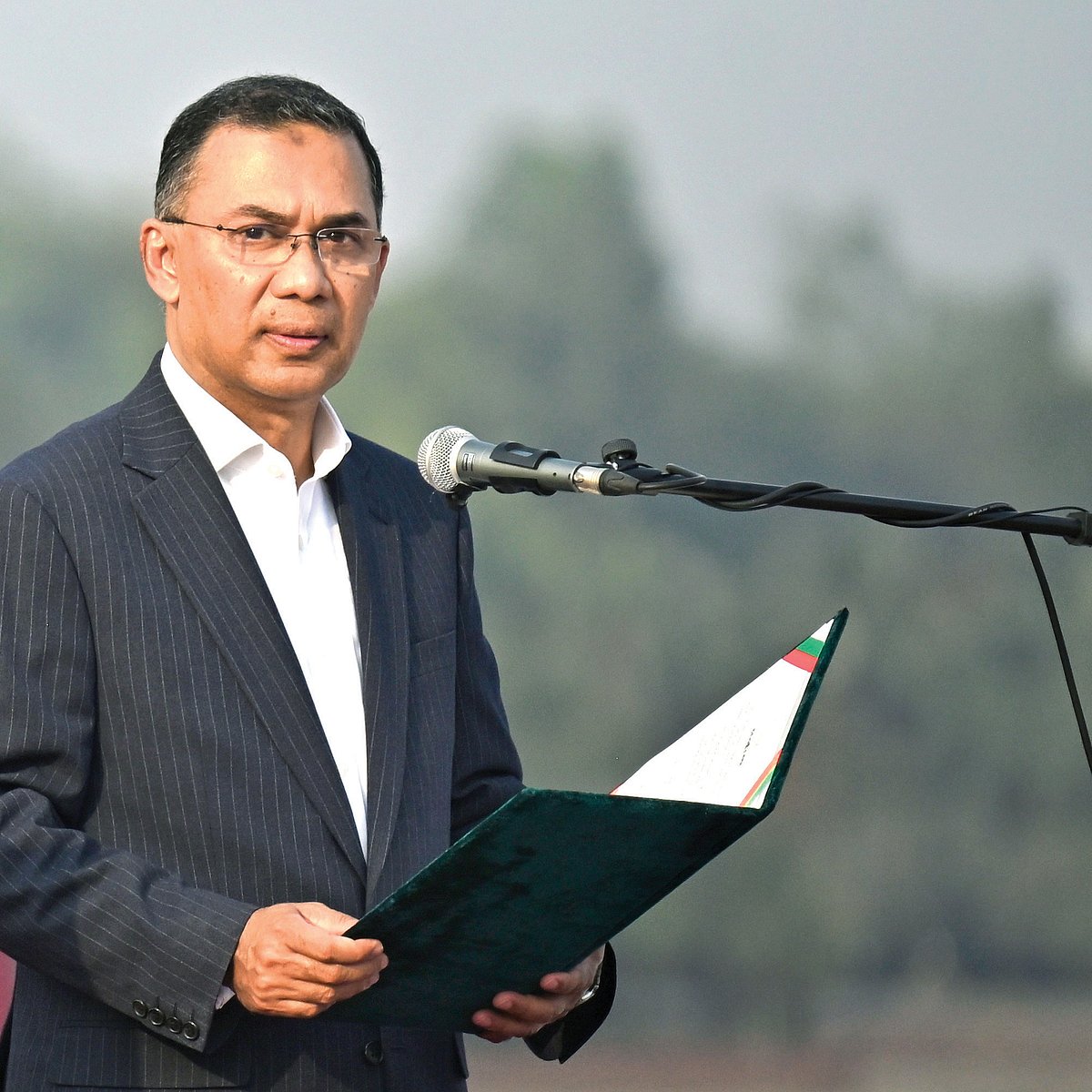
The Rahman government can also present an invitation as evidence that Bangladesh has acquired international standing. Kabir’s emphasis on foreign leaders seeking the prime minister’s participation is revealing. Membership is being discussed not only as a security instrument but as recognition: Bangladesh would be entering the room as a substantial Muslim power rather than waiting at the door as a recipient of aid or exporter of labour.
Also Read: India’s knotty Sheikh Hasina problem
This need not amount to ideological foreign policy. Saudi Arabia was Bangladesh’s largest source of remittances in the 2025-26 fiscal year — about $5.85 billion, according to Bangladesh Bank. Millions of Bangladeshis work across the Gulf. Riyadh is important to Dhaka’s energy security, overseas employment and investment ambitions. Turkey has become an increasingly valuable source of defence equipment and political support. Pakistan offers military links and, under the present government, a relationship that Dhaka appears determined to normalise.
The second calculation concerns India. Relations between Dhaka and New Delhi remain strained thanks to India sheltering former Prime Minister Sheikh Hasina, Bangladesh’s unanswered extradition request and allegations of forcible push-ins across the border. Hasina’s political intervention from Indian soil disrupted Prime Minister Rahman’s planned visit, despite attempts by both governments to prevent the situation from spiralling.
Joining an alliance that includes Pakistan would send New Delhi a message that Bangladesh has strategic alternatives. That is part of the appeal. For decades, Bangladeshi governments have attempted to manage the asymmetry created by geography: India surrounds most of the country, influences its river systems and sits astride many of its cheapest transport routes.
Dhaka cannot eliminate this imbalance. It can, however, build relationships elsewhere. The Makkah Pact would provide greater symbolic leverage than material protection. Neither Saudi Arabia nor Turkey are likely to confront India over a Bangladeshi dispute. Pakistan’s involvement is more politically charged and therefore less serviceable. Even so, the perception of external backing can increase Dhaka’s diplomatic elbow room.
There are other practical attractions. Turkey has developed competitive drone, missile, naval and electronic-warfare industries. Pakistan offers training, operational experience and access to weapons systems developed with China. Saudi Arabia supplies capital and purchasing power.
Bangladesh could use the association to obtain technology transfers, joint production, intelligence cooperation, cyber capabilities and improved maritime surveillance in the Bay of Bengal.
That opportunity matters because Dhaka is trying to modernise its military while avoiding dependence on a single supplier. It is already moving towards negotiations with China for J-10CE fighter aircraft and attack helicopters, in what could become one of its largest defence purchases in years. Yet the pact would give Bangladesh additional procurement channels without having to abandon Beijing.
But diversification does not require a mutual-defence treaty. This distinction is where Dhaka’s calculation becomes dangerous.
The Makkah pact’s public provisions leave unanswered the questions that would determine its usefulness. It has no known integrated command comparable with NATO, no established multinational force structure and no history of joint contingency planning.
Its members have different adversaries. Pakistan’s overriding concern is India; Saudi Arabia’s the Gulf; Turkey’s ranges from Syria and Israel to Russia and the eastern Mediterranean.
Bangladesh could therefore acquire obligations in conflicts unrelated to its security. Would the treaty apply to another India-Pakistan war, including clashes over Kashmir? Would an Iranian attack on Saudi territory require a Bangladeshi military response? What would Dhaka be expected to do in a Turkish confrontation involving Syria or Israel? Conversely, would the three founders actually intervene if Bangladesh faced military coercion on its Myanmar border?
Until those questions are answered, the agreement offers Bangladesh the appearance of protection while carrying the possibility of entrapment.
The economic risks are less dramatic but more immediate. Bangladesh earned roughly $48 billion from merchandise exports in 2025-26. Its garment industry remains heavily dependent on western consumers: the EU is its largest trading partner; US imports from Bangladesh reached $9.5 billion in 2025.
The country needs investment from Japan and China, energy from the Gulf and workable relations with India. Its commercial model rests on maintaining access across rival political blocs, not choosing between them.
Formal membership would not automatically cost Bangladesh its western markets. Saudi Arabia and Turkey retain close economic and security relationships with Washington. Turkey is a NATO member. China would probably tolerate an arrangement that includes Pakistan. Nor is the pact officially directed against India, Iran or Israel.
The greater danger is cumulative political exposure. If the pact became implicated in confrontation with Iran or Israel, Bangladesh would face pressure from western capitals. If it acquired an anti-India character, New Delhi could respond through trade, visas, connectivity, border management or regional diplomacy. If Saudi Arabia and Turkey pulled in different directions, Dhaka would have to choose who to ally with.
That would overturn the logic of Bangladeshi foreign policy. The country has traditionally converted strategic ambiguity into economic advantage. It buys weapons from China, exports garments to the west, receives remittances from the Gulf, accepts infrastructure finance from Japan and manages an unavoidable relationship with India.
This flexibility is not indecision. It is an asset suited to a densely populated, trade-dependent state without the economic strength to absorb geopolitical retaliation.
No crisis has yet tested the founders’ collective-defence promise, allowing Dhaka to treat membership as diplomatic alignment rather than a commitment to fight.
The prudent course would be association without automaticity: observer status, joint exercises, intelligence exchanges, cyber cooperation, maritime security and defence production. Full accession should wait until the treaty defines what constitutes an attack, whether military action is automatic, how disputed territories are treated and whether each member retains the sovereign right to determine its response.
The Makkah Pact may eventually develop into a credible security framework. At present, it is an ambitious promise whose political value exceeds its demonstrated military capacity. Bangladesh has good reason to engage with it. It has not yet shown that those reasons are sufficient to join it.
Faisal Mahmud is a Dhaka-based journalist. More by him here
Join our official telegram channel (@nationalherald) and stay updated with the latest headlines