


COVID-19: To save lives or livelihood? That’s the dilemma
Whether to extend the lockdown and divert resources to save lives? Or, should the attempt be to end the lockdown, revive the economy and protect livelihood of the people?There are no easy answers
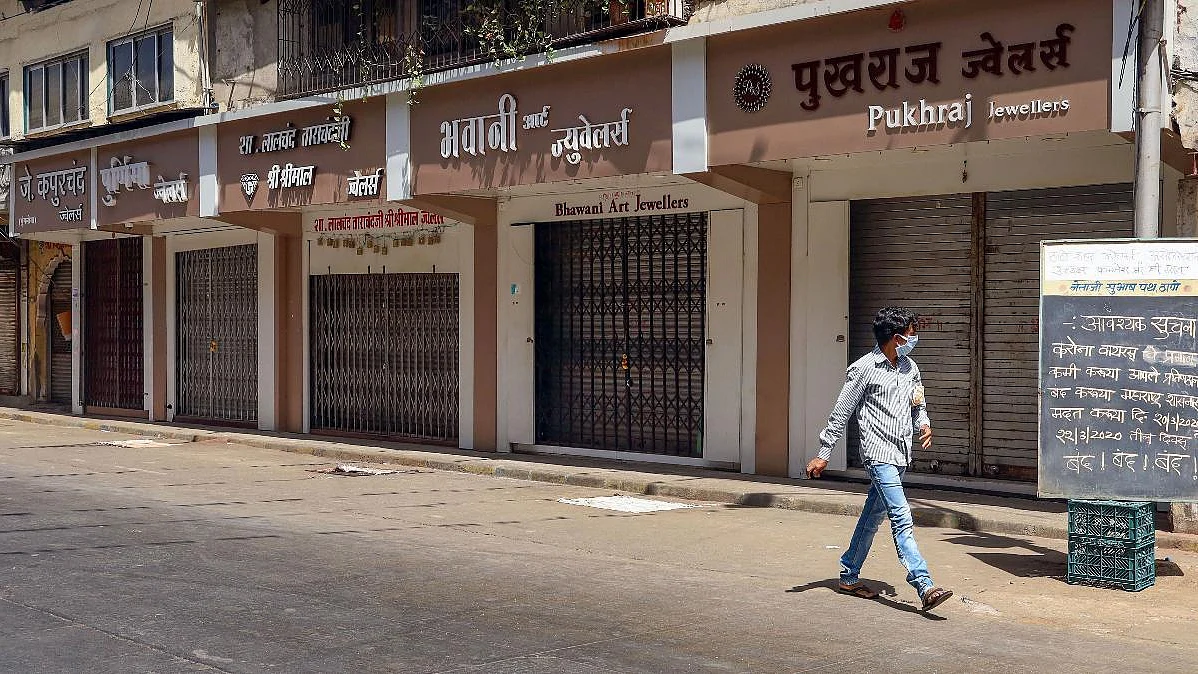


Questions hang heavy in the air; far too many with few or no answers coming from anywhere. The most press- ing question is how long the lock- down would last. Even as economists warn that a longer lockdown would cause even more havoc to employ- ment, economy and livelihood, the government’s dilemma is whether to save lives or livelihood in the short run.
Ideally, it should save both. Had the virus infected only the elderly, the choice before governments would have been easier. The unspoken understanding would be to let the old and the unproductive die. Why extend the suffering to the young?
In both China and Italy, they had to make a choice over who would live and who would die. With 50 or more patients vying for far fewer ventilators, the choice was not hard to make. In Belgium, a 90-year-old woman refused a ventilator and asked medics to use it to save someone younger.
But the difficulty is that the virus is also affecting the young. From a few- months-old babies to men in their twenties, thirties and fifties are also getting infected, and worse, dying. It is also infecting the rich and the powerful. If in the UK, it is the Prime Minister himself, in his fifties, who is on ventilator support, in India a for- mer Chief Justice of Chhattisgarh High Court and a member of the Lokpal tested positive and has been put in the ICU.
With borders sealed and airlines grounded, the rich and the powerful cannot escape abroad either. In any case, with most of the countries strug- gling to cope with the pandemic, get- ting medically treated abroad is not an option.
Worse, bureaucrats, business- men and politicians, the three classes of people who have traditionally mat- tered here, are not only running the risk of getting infected from each other but also from the army of their domestic help, security personnel and personal staff. That is one reason why withdrawing the lockdown is so tricky for the ‘Gormint’.
In any case, it is easier to ride a tiger than to get off it. If train and plane services are to be gradually resumed, how does one ensure safety and social distancing? How is it going to be cost effective to run skeleton ser- vices? Can the government, already bleeding heavily, sustain a subsidised public transport?
PEOPLE AT THE RECEIVING END
There are other questions. Will there still be a job at the end of the lockdown, will salaries be cut, are bank deposits safe, will there be high- er taxes to pay? Businessmen are worried about retaining or retrench- ing employees. Manufacturers can- not decide when it would be prudent to resume the pre-lockdown level of production. Cars can be manufac- tured but will there be buyers?
Those with no bank accounts and no savings, and now with no income or work, would be anxious about the source of their next meal. Migrant workers, who survived the long trek to their villages and still have access to food, would be asking if returning to the heartless cities is worth the risk. What most of us already do know, however, is that there is a mismatch between what the Sarkar Bahadur says and what the Sarkar Bahadur does; that ‘Gormint’ and its agents can be unpredictable, unreasonable, brutal and ruthless. Worse, the ‘Gormint’ treats people as half-wits, sharing information which appear deceptive.
The ‘Gormint’, for exam- ple, claims that while the dreaded COVID-19 has taken over 75,000 lives across the world in the last three months, India has done spec- tacularly well by restricting the number of deaths to just 124 as on April 7, 2020. That is impressive indeed when 40,000 people have already died of the disease in Italy, Spain and the United States. The worldwide death toll hovered around 75,000 while the number of infected people had reached 1.3 mil- lion and was creeping higher.
INDIANS AND DEATH
But just over 100 deaths in India? Fabulous. This is extraordinary because as they say, Jaan sasti hai. In India life is uncertain and cheap. Here today, gone tomorrow. It’s not the ‘Gormint’ but the Lord above who decides between life and death. Most Indians are fatalists and philosophical about death.
Karma and Kismet, Yama and Chitragupta decide how long we live. No point blaming the creaking public health system or the ‘Gormint’. In 2018, close to a million Indian children under the age of five (8.8 lakhs, say UNICEF) died in India.
The same year, over 13,000 women died during childbirth in Uttar Pradesh. Indeed, 1,200 Indians die every day of Tuberculosis. About 150,000 die every year in road accidents. Nobody in India bats an eyelid over these deaths. Why are they now worried over just a hundred and odd deaths? Two weeks after the unprecedent- ed, country-wide lockdown imposed on March 25, more than 5,000 COVID- 19 patients have been found in India, claims the ‘Gormint’.
Timely action by India, said the Prime Minister, had helped prevent a catastrophe. There was no evidence of community trans- mission as yet, assured the Indian Council for Medical Research (ICMR).
Health Ministry officials declared that barring the irresponsible conduct by members of an Islamic sect, the situa- tion would have been even brighter. Truth to tell, it is nice to see the Mai Baap Sarkar taking no chances with COVID-19.
Railways have set aside coaches to accommodate 80,000 COVID-19 patients in quarantine. They seem in no hurry to resume passenger train services! In Delhi alone, over 4,000 beds in normally overcrowded government hospitals have been kept ready for the virus victims. Orders have been placed for millions of Personal Protective Gear (PPE) for doctors.
The Prime Minister launched a new ‘personal’ relief fund and motivated the entire government machinery to collect donations for ‘PM Cares’ Fund. In less than a week it had mopped up Rs 10,500 crore, ten times more than the Prime Minister’s National Relief Fund started in Nehruvian times, the Gormint prim- ly informed.
But why is the ‘Gormint’, which is rarely moved by deaths as we have seen, paying such disproportionate attention to COVID-19? Why is it diverting scarce resources to fight COVID-19, which has taken a piddly toll of a hundred Indian lives so far?
COVID-19 AN EXCUSE FOR GOVT?
Is the ‘Gormint’ over-reacting because it helps divert attention from all its other failings, from the crumbling economy, from its hope- lessly warped priorities?
Has the ‘national emergency’ come as a con- venient excuse for the ‘Gormint’ to consolidate its power and unleash more draconian measures? Are even more draconian measures on the way?
Will the government be tempted to suspend what remains of democra- cy and postpone elections? To be fair, the disproportionate attention is partly because there still is no cure for COVID-19 which can surface anytime, anywhere.
At the moment, India appears to have escaped lightly but one can never be sure that the pandemic will not return with a vengeance. It is also possible that the ‘Gormint’ knows what we don’t. Perhaps the situation is even more grim than what we have been told. And the ‘Gormint’ in its wisdom may have decided to hide the real picture so that people are not demoralised. But the question remains.
Given the number and spread of COVID-19 so far, was the total lockdown of the econo- my necessary? Would a grad- ual lockdown have been more helpful? The war-like prepa- rations being made could surely have been made while gradually shutting down dif- ferent sectors.
CENTRE-STATE RELATIONS
Will the crisis triggered by the pandemic redefine Centre-state relations? During the last six years, when the Planning Commission was dismantled by the Prime Minister without notice, consultations between the Centre and states have declined. The Centre has increasingly usurped more financial power and behaved imperially and arbitrarily.
The ideal of ‘one nation-one party-one government’ was vigorously pushed while paying lip-service to cooperative federalism. The COVID-19 crisis, however, has shown that a country as large as India cannot be run from the PMO in Delhi. States would also have realised acutely that they could no longer abdicate their own responsibility and depend on the Centre for everything.
Their reduced autonomy, they would have found, have hobbled their capacity to fight the pandemic and protect their people, trade and businesses. Most states are financially bank- LIVES OR rupt and have ceded their financial autonomy to the Centre. But the Centre not only implemented a flawed Goods and Services Tax (GST) in a hurry, it has now failed to pay the states their share of the revenue.
The GST Council, which was to meet in March after the Parliament session, is unlikely to meet any time soon. The situation has also been exacerbated by arbitrary and discriminatory policies. The Centre, for example, acknowledges that 69% of all relief camps in the country set up for workers who have lost their livelihood in the wake of the lockdown, are in Kerala.
And while over six lakh such workers stranded in various parts of the country have taken shelter in these camps, almost 48% of them are again in Kerala. But the Centre allocated Rs 157 crore or 1.4% of the Rs 11,092 Crore disbursed out of the States Disaster Relief Fund to the southern state. States in their own interest will seek to redefine the relationship.
MUCH-MALIGNED PUBLIC HEALTHCARE TO THE RESCUE?
Could the Coronavirus crisis turn out to be a blessing in disguise for the much-maligned public sector? Can the crisis prompt a shift towards a welfare state from the tyranny of Indian market capitalism? Can it trigger a reorientation of the health sector and encourage universal healthcare and ‘Make in India’ of medical equipment? Will automobile manufacturers turn to making venti- lators and dialysis machines?
The pandemic has exposed limitations of the private sector in coping with a public health crisis. Although more than half of India’s 700,000 and odd hospital beds are to be found in private hospitals, the burden of treating COVID-19 patients and pre- paring for the anticipated surge lie squarely with government hospitals. It is the Public Sector, scoffed at by neo-liberals and the right wing, which is at the forefront of India’s fight against the Coronavirus.
From researchers, epidemiologists, virolo- gists to junior doctors and nurses in government hospitals are at the front- line while private hospitals are sud- denly without patients. It is telling that till a month ago, there were only 62 laboratories in India, where tests could be carried out for the Coronavirus, almost all of them in the public sector.
Mumbai had just one hospital where COVID-19 patients were being tested. Uttar Pradesh, bigger than Germany, France and the United Kingdom put together, had just two such facilies. West Bengal had one.
With just 8.5 hospital beds and 8 physicians per 10,000 people, India’s public health system (com- pared to 120 to 130 beds for 10,000 peo- ple in Japan and South Korea respec- tively), was already vulnerable. The COVID-19 crisis has now served as a reminder that our capacity to manu- facture even basic things like masks, PPEs and ventilators is inadequate.
The crisis will hopefully prompt Indian industry to manufacture more medical equipment. We need more hospitals than hotels; more paramedics than delivery boys and more pharmaceuti- cal muscle. Has the time come to nationalise the health sector and medical education?
Follow us on: Facebook, Twitter, Google News, Instagram
Join our official telegram channel (@nationalherald) and stay updated with the latest headlines