


Cuba next on Trump’s imperial hitlist
Trump’s fixation with Cuba is driven neither by ideological hostility nor security concerns, writes Ashok Swain
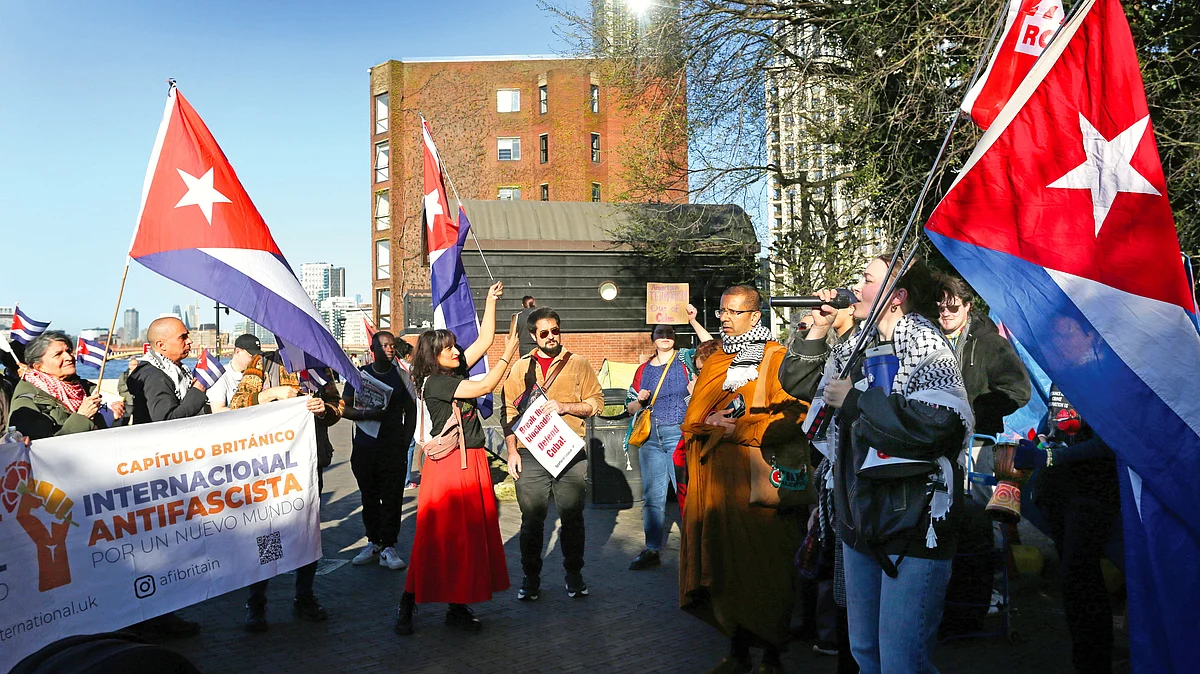


Donald Trump has not been coy about Cuba. He has openly coveted the ‘honour’ of taking the island. He has also suggested he can do what he likes with it. These seemingly unhinged remarks are not without political intention.
Trump’s fixation with Cuba is not driven by ideological hostility towards Communism, even though that language is politically useful at home. Nor is it really about security concerns. It is a fusion of geopolitical ambition and a transactional worldview.
Cuba appears, in this frame, as a nearby and weakened state whose economic distress can be leveraged into political submission. Its proximity and untapped economic potential make it particularly attractive in Trump’s calculus.
The crippling economic sanctions Cuba is battling must be seen in this context. The sanctions are meant to produce the kind of distress conditions that will make a ‘regime change’ easy. This vision of ‘regime change’ mirrors what unfolded in Venezuela. The aim is to reshape the top leadership in a way that preserves administrative continuity while aligning the system more closely with US interests.
The influence of hardline Cuban exile groups in the US and the longstanding hawkishness of secretary of state Marco Rubio has reinforced this policy direction vis-à-vis Cuba.
The bullying tactic is transparent: by tightening restrictions on energy supplies and effectively cutting off external support, Washington has brought Cuba’s economic crisis to breaking point. Cuba produces only 40 per cent of the oil it needs and the US has choked all possible imports. The resulting shortages have plunged the island nation into darkness and driven its citizens to desperation.
This is where the Venezuela parallel is revealing. The idea is not to dismantle the existing state apparatus but to replace some key figures in it so that Cuba’s economic policy may be bent to America’s advantage. The strategy, if it worked, would allow Trump to claim success without the risks, complexities or costs of attempting a fuller transformation.
The campaign will possibly be cloaked in the language of freedom and democracy, but nothing could be farther from the real agenda — to pry open the Cuban economy to American investments and commercial engagement on terms favourable to Trump’s crony capitalists.
Yet Cuba presents a more complicated landscape than Trump can perhaps fathom. Political authority in the island nation is not concentrated in a single individual but distributed across the Communist Party, the government and the military. This structure makes it more resilient to external pressure and less susceptible to abrupt internal reconfiguration. The Cuban leadership has firmly rejected any negotiation with its political system, framing such demands as a violation of its sovereignty.
The history of this pushback is crucial. Cuba’s political identity has been forged in the fire of opposition to US intervention. The memory of pre-Castro periods of domination — when Washington exercised direct and indirect control over the island — is deeply embedded in both state narratives and the public consciousness. What is now being proposed echoes those dynamics, even if couched in transactional terms.
For the moment, Cuba is on the backburner because the war in Iran has gone off-script. It has dragged on longer than the aggressors had anticipated and extracted costs way beyond their calculations. The asymmetric war has not just stretched the mighty US militarily but has also imposed humongous economic costs on the world — and forced the Trump administration to hold off on its broader imperialist agenda.
Iran’s refusal to yield to Trump’s threats and the damage it has managed to inflict upon America’s allies in the Gulf, on Israel and their sympathisers by weaponising the Strait of Hormuz has forced this recalibration of US priorities.
But the delay should not be mistaken for a change of direction. If anything, the difficulties encountered in Iran may increase the appeal of pursuing more immediate and visible success closer home.
Cuba, already weakened by sustained economic pressure, may be seen as an opportunity to achieve the kind of quick outcome that has proven elusive in Iran. A decisive move against Havana could be presented domestically as a demonstration of strength and effectiveness, deflecting attention away from the frustrations and anger of a prolonged conflict in West Asia.
Tempting as it might seem to Trump and his advisors, even this calculation would be risky. It underestimates the resilience of the Cuban state and the potential consequences of external intervention. Cuba’s political system, while under strain, remains cohesive and supported by institutions that have weathered decades of pressure. Its security apparatus is experienced, and its leadership is unlikely to capitulate under threat.
Any attempt to force change from the outside would likely provoke strong resistance, not only from the state but also from segments of the population for whom national sovereignty remains a powerful mobilising force.
The Trump administration’s regime-change forays are not winning the US any friends in the world. And a move on Cuba is more likely to generate a broader diplomatic backlash and complicate relations with allies than isolating Cuba.
In any case, efforts to impose political change from the outside often end up strengthening the very systems they aim to weaken. In Cuba’s case, external pressure has historically reinforced a siege mentality that legitimises centralised control and limits space for internal reform. By intensifying pressure, Washington risks entrenching these dynamics rather than effecting a transformation to its own advantage.
Trump may believe that Cuba can deliver a quick and symbolic victory, especially in contrast to the drawn out and costly confrontation with Iran. But to believe this is to misread the island nation’s internal dynamics and its history.
Cuba is not an empty stage on which external powers can easily script political outcomes. It is a state with its own institutions, its own political logic and a long history of resisting precisely this kind of intervention. The danger lies not only in the possibility of conflict but in the assumptions that make such a conflict appear attractive.
Ashok Swain is a professor of peace and conflict research at Uppsala University, Sweden. More by the author here.
Join our official telegram channel (@nationalherald) and stay updated with the latest headlines