


Trump and Netanyahu tried to cripple Iran only to cripple themselves
Iran’s rulers have survived, while the war’s architects face electoral setbacks and mounting constraints on their power
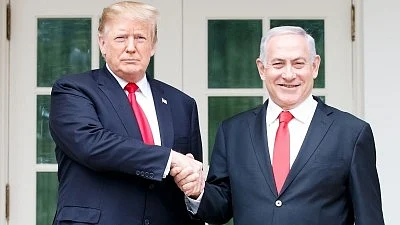


Donald Trump and Benjamin Netanyahu launched their war against Iran believing that overwhelming military power could achieve what decades of sanctions, diplomatic isolation and covert operations had failed to accomplish: cripple the Islamic Republic, break its political will and establish unchallenged American-Israeli dominance over the West Asia.
Eight months later, the irony could hardly be more devastating. The Iranian regime they sought to reduce to a lame duck has survived, while both men have suffered humiliating electoral setbacks. Netanyahu has lost his parliamentary majority, and Trump has watched the Democrats capture both the House and the Senate. The two leaders who wanted to dictate Iran’s political future now face profound uncertainty about their own.
The joint American-Israeli offensive, launched on 28 February 2026, was presented as a decisive blow against Iran’s nuclear ambitions and regional influence. Trump promised overwhelming success, while Netanyahu portrayed the confrontation as the culmination of his lifelong mission to neutralise Iran. Both assumed that military superiority would translate into strategic victory. What they failed to understand was that destroying military installations is not the same as destroying political authority. Bombs can devastate infrastructure, but they cannot manufacture legitimacy, produce a compliant government or guarantee that a battered adversary will surrender.
Iran has paid a heavy price in destruction, economic hardship and human suffering. Yet the Islamic Republic remains in power, its negotiating position has improved, and its leadership can claim to have resisted two of the world’s most formidable military powers. The war has also allowed Tehran to frame its rule in the language of national resistance. A government previously challenged by domestic discontent has found an opportunity to portray opposition to its rule as a foreign-funded threat to national survival. Trump and Netanyahu have inadvertently handed Iran’s rulers precisely the political narrative they needed.
The strategic failure becomes even more striking when measured against the domestic consequences for the war’s two architects. Netanyahu entered Israel’s 27 October election hoping that confrontation with Iran would reinforce his image as the indispensable guardian of Israeli security. Trump openly endorsed him, presenting their partnership as essential to Israel’s survival. Instead, Netanyahu’s right-wing bloc secured only 53 seats in the 120-member Knesset, leaving 67 seats with parties opposed to his continued rule. Although coalition negotiations could still allow him to remain prime minister, the electorate has denied him the commanding mandate he sought.
Also Read: Modi’s roar-turned-whimper at China border
For Netanyahu, the result represents more than an ordinary electoral setback. His political career has rested heavily on convincing Israelis that only he possesses the international connections and strategic determination necessary to protect their country. His extraordinary relationship with Trump was supposed to be his greatest electoral asset. Instead, it has become a liability. The promise of permanent security through perpetual confrontation has collided with the reality of an exhausted society, prolonged conflict, international isolation and growing doubts about his leadership.
Trump’s humiliation is arguably greater. He returned to the White House promising to put America first and avoid the disastrous foreign military adventures associated with earlier administrations. Yet he allowed himself to become entangled in another costly and seemingly endless Middle Eastern war, with expansive objectives and no convincing exit strategy. The consequences reached American households through rising energy prices and persistent economic anxiety. Voters who had supported him because they expected economic relief and restraint abroad found themselves paying for a conflict whose benefits were increasingly difficult to identify.
The 3 November midterm elections delivered their verdict. Democrats captured both the House of Representatives and the Senate, including victories in traditionally Republican territory. Trump was not personally on the ballot, but his presidency unmistakably was. His administration’s economic policies, governing style and foreign adventures all contributed to the backlash. The Iran war was not the sole cause of the Republican defeat, but it became a powerful symbol of a presidency that had lost touch with the priorities of ordinary Americans.
Perhaps the most revealing reaction came from Vice-President JD Vance, who openly identified the Iran war as the principal reason for Republican losses. His assessment went beyond an electoral post-mortem. It exposed a widening fracture within Trump’s own political movement over America’s relationship with Israel. Voters who once embraced Trump’s America First rhetoric are beginning to demand an end to the war and a reassessment of Washington’s unconditional support for Israel. Netanyahu’s greatest strategic achievement — the near-automatic alignment of American power with Israeli priorities — is beginning to unravel.
Also Read: Is the Indian diaspora finally waking up?
This is where the war’s self-defeating character becomes unmistakable. Netanyahu wanted to weaken Iran while strengthening Israel’s regional supremacy. Instead, he has helped turn Israel into an increasingly contentious issue in American domestic politics. The traditional bipartisan consensus supporting Israel was already under pressure because of Gaza. The Iran war has accelerated that erosion, bringing together progressive Democrats, disillusioned independents and sections of the Republican right who increasingly question why American taxpayers must finance Israel’s military ambitions.
Trump’s reported decision to end nearly $4 billion in annual American military assistance to Israel after 2026 is particularly revealing. Whether implemented fully or intended merely to contain electoral damage, the announcement demonstrates how politically expensive unconditional support for Netanyahu has become. Israel’s military establishment depends not simply on American money but also on access to advanced weapons, intelligence and diplomatic protection. Netanyahu’s reckless dependence on one American president has endangered the broader relationship on which Israel’s security has long rested.
The political setbacks for Trump and Netanyahu extend beyond their own countries. Their allies have also suffered electoral defeats in Brazil and Serbia in recent weeks, following Viktor Orbán’s downfall in Hungary a few months earlier. At the same time, Iran has demonstrated that surviving an assault can itself become a strategic achievement when the attacking powers have promised decisive victory. Tehran need not defeat the United States militarily to expose the limitations of American power. It merely needs to remain politically intact, preserve enough capacity to resist and wait for the costs of confrontation to erode its adversaries’ determination.
This is not evidence of Iranian invincibility. It is evidence of the extraordinary strategic miscalculation involved in believing that military superiority guarantees political submission.
Yet neither Trump nor Netanyahu appears willing to acknowledge the central lesson. Trump continues to defend the war, while Netanyahu remains tempted by further escalation. Both may calculate that another dramatic military confrontation could restore their damaged authority. Their weakened positions could therefore make them more dangerous.
From January, Trump will confront a Democratic Congress capable of investigating his decisions, challenging military expenditure and obstructing his domestic agenda. Netanyahu, meanwhile, faces the prospect of losing office or navigating coalition negotiations without a parliamentary majority and with a weakened patron in Washington.
Neither has necessarily lost power, but both have lost something essential to their political authority: the presumption that their decisions will produce victory. Trump and Netanyahu set out to make Iran a lame duck. Instead, their war has left them politically wounded, strategically diminished and increasingly constrained. They may remain in office, but the aura of invincibility surrounding their partnership has evaporated.
Ashok Swain is a professor of peace and conflict research at Uppsala University, Sweden. More by the author here
Join our official telegram channel (@nationalherald) and stay updated with the latest headlines