


'The ECI cannot become an executioner for the ruling party'
Excerpts from a chat with former Kerala chief electoral officer Teeka Ram Meena about friend and IAS batchmate Gyanesh Kumar
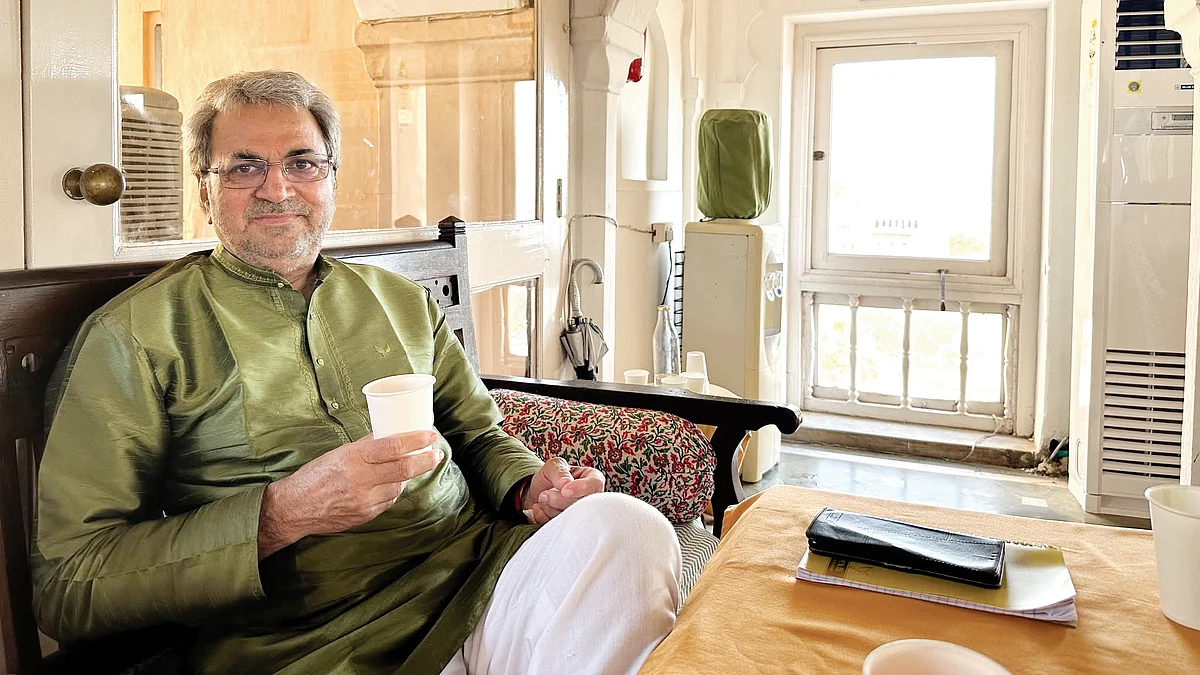


Former Kerala chief electoral officer Teeka Ram Meena should know chief election commissioner Gyanesh Kumar well — they were colleagues in the IAS (Kerala cadre, 1988 batch). He describes Kumar as an intelligent officer and a good friend, but doesn’t pull his punches for that reason, and argues that the CEC must resign “because he has lost the confidence of the people”.
Even beyond Kumar’s role in the controversial SIR exercise that has brought the Election Commission of India (ECI) into disrepute and cast grave doubts about India’s voter rolls, Meena’s larger concern is preserving the independence of this institution from the government of the day. He spoke on the phone to K.A. Shaji from his native Sawai Madhopur in Rajasthan. Excerpts:
You’ve known Gyanesh Kumar for decades — you were batchmates in the IAS. How do you rate him as an officer?
We were good friends and he is an intelligent person. But friendship is one thing and constitutional responsibility is another. The Election Commission is an extremely powerful constitutional institution. It cannot be subservient to anybody, to the government of the day or the ruling party. It cannot work to please a political master.
What makes the Election Commission different from other government institutions?
[The ECI] is entrusted with conducting elections. It must protect democracy and federalism. The Commission is accountable to the people and to the Constitution. The government or ruling party cannot tell the Election Commission how to conduct an election. The ECI must be transparent. It must be credible. It cannot become an instrument in the hands of the party in power.
Also Read: India is asking, ‘what next?’
You were chief electoral officer in Kerala. How has that experience shaped your views?
When I was CEO, I never bothered with who was ruling Kerala before taking a decision. If there was a violation, I acted. You know me from the time — we met often. If there was a violation of the Model Code of Conduct, I took action. Irrespective of whether it was the ruling party or the Opposition. The Election Commission must be neutral.
When and why did you write to Gyanesh Kumar?
[In] November last year. There were lots of complaints about the functioning of the Election Commission, particularly the SIR. I knew Gyanesh personally, so I thought it was appropriate to write to him. I raised several concerns, pointing out what I considered procedural violations. He did not reply.
I then wrote to the other two commissioners — Sukhbir Singh Sandhu and Vivek Joshi. One is a batchmate, the other a good friend. I urged them to rise to the occasion and discharge their constitutional responsibility, to follow the rule book and challenge wrong decisions.
Do you believe your letter had any impact on what happened subsequently inside the Commission?
I believe my suggestions helped them consolidate their position. After I wrote to them, they started questioning some of Gyanesh’s decisions. I am happy about that. The three commissioners must exercise their judgment independently; they cannot simply endorse whatever the CEC decides. The Election Commission is a multi-member commission; it is not Gyanesh Kumar.
You have strongly criticised the SIR. Are you opposed to a revision of the electoral rolls?
Absolutely not. Electoral rolls must be revised. There can be bogus names. There can be errors. There can be people who have died or shifted. But the most important thing is that no eligible voter should be left out. The SIR should be fair, transparent and legal. My objection is to the manner and the timing.
The eve of an election is not the time to rush through such a huge exercise.
Why this hurry? Why do it in election season? Involve the people. Involve the political parties. Follow procedure. Give people an opportunity to establish their eligibility.
You have strong objections to the changes they made in Form 6…
Form 6 is fundamental to the electoral process because it is used to include new voters. Gyanesh tinkered with Form 6 without following procedure. I consider that illegal. You cannot change the structure of Form 6 unilaterally. The Election Commission cannot do whatever it wants because it is the Election Commission. There is a law. There are rules. There are constitutional procedures. The Commission must follow them.
What do you make of the reported differences between Gyanesh Kumar and the other two commissioners?
It’s their constitutional responsibility to question decisions they disagree with. I welcome it. I’d written to them, urging them to be fair, to follow the rule book and to challenge wrongdoing. They should not be afraid. They should not plead. They should stand up.
You have been scathing about the relationship between the Election Commission and the ruling party.
The Election Commission must not become a subservient partner of the ruling party. Let me be very clear: it cannot become an executioner for the ruling party. It cannot work to keep the ruling party in power forever.
You spoke of bureaucrats being afraid of PM Modi. Say more?
The Election Commission must not fear the prime minister. It mustn’t fear Narendra Modi or any other minister. It must not fear the government. The Constitution gives the Commission the authority to function independently.
If an election commissioner starts thinking about what the prime minister will think before taking a decision, the institution has already lost its independence.
You said some retired bureaucrats are afraid of the Modi government. That is a strong allegation.
Many retired IAS officers came out against Rahul Gandhi when he questioned the Election Commission. Why were they so defensive? I believe many fear the government. They fear investigations. They fear consequences. They shield the government and behave like a fan club. I don’t care. You know me.
Are you suggesting the Election Commission is under political pressure?
There is a strong suspicion that Gyanesh was acting under pressure. I cannot prove it, but questions arise when an institution becomes secretive, when important decisions are taken without consultation, when procedures are changed without transparency.
You’ve said the Election Commission is waging a war against the people. That is an extraordinary description.
The Commission is behaving as if the people are the problem. The voter is not an enemy. The Election Commission exists for the people. The SIR is only a revision of electoral rolls; it should not become a proxy war between the Election Commission and citizens. The objective must be to include every eligible voter. If the process itself creates fear among voters, something is wrong.
Do you believe the Election Commission has lost credibility?
Yes, it has lost credibility and must regain it. It must regain public respect. That is why I’ve been speaking out. I have no personal malice towards Gyanesh; he is a friend. But I cannot remain silent because he is a friend.
You have demanded his resignation!
If people have lost faith in you, you have no business continuing in office. If an institution entrusted with conducting elections has lost public credibility, its head must take responsibility. I believe Gyanesh should resign. He should also explain his decisions to the people.
What do you make of former Kerala chief secretary Jiji Thomson’s charge that Gyanesh Kumar once suggested he contest an election on a BJP ticket?
That allegation is serious. If a serving senior bureaucrat approached another serving senior bureaucrat and suggested that he contest an election on a BJP ticket, it raises serious questions about political neutrality. I’m not saying the allegation by itself proves anything, but it’s a serious allegation and must be refuted.
You’ve also said that decisions taken by the CEC should be revisited. How far do you want this to go?
I believe all decisions taken by Gyanesh over the past few years should be examined. Decisions taken in contravention of the law or without the required consultation should be reconsidered. There must be accountability.
You’re now back in Rajasthan, away from government. What keeps you engaged with these issues?
I’m into agriculture and social work. I use social media to speak on issues that concern society. I have no post to protect, no political master. I can speak freely. I did that even when I was in service.