


Learning to live with(out) America
Ashok Swain on how the Gulf countries are coming to terms with their America delusion
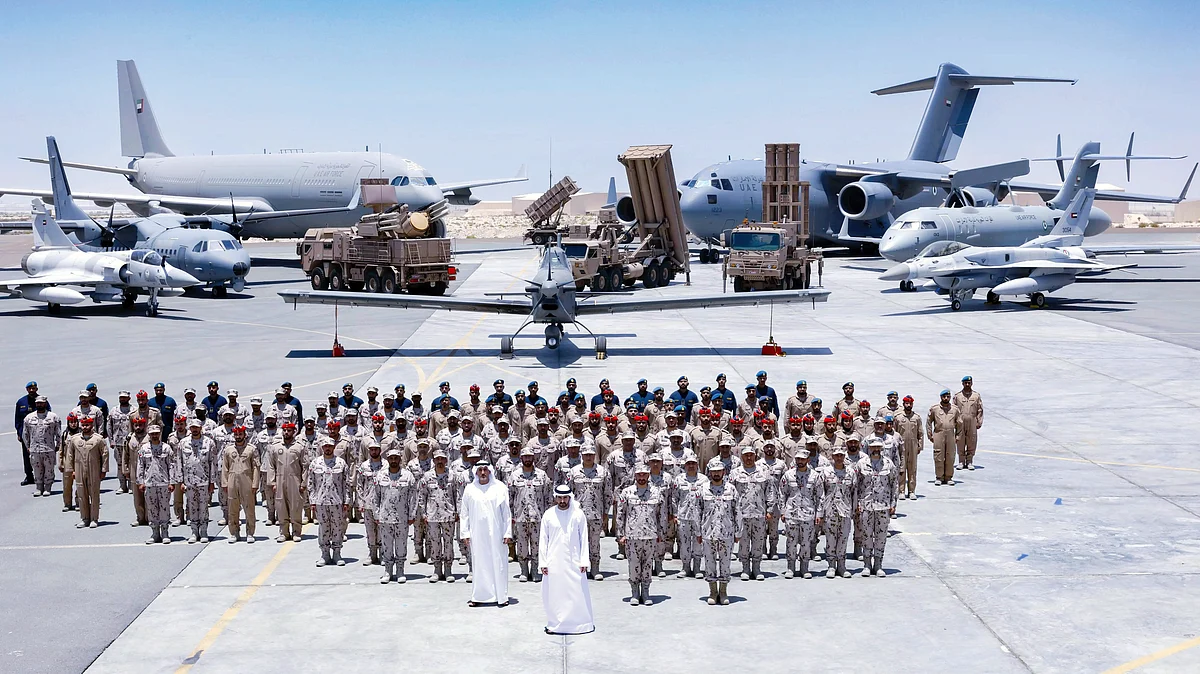


With West Asia on the boil again after a fragile cessation of hostilities, the Gulf monarchies confront an uncomfortable truth. The old security order may not have collapsed but it has certainly lost credibility. For decades, the Gulf states lived under a US security umbrella, buying protection, weapons and diplomatic backing in exchange for oil, military basing rights and strategic loyalty. The bargain was not equal, but it was predictable. The war with Iran has exposed the untenability of those old assumptions.
No state understands this better than Saudi Arabia, the strategic centre of the Gulf system. When Riyadh recalibrates, the region follows. Qatar may continue to mediate, the United Arab Emirates may pursue its own activist foreign policy, Oman may preserve its neutrality, and Bahrain and Kuwait try to hedge their bets by engaging both sides to manage the risks of regional escalation. Yet the future of Gulf security will ultimately be shaped by Saudi Arabia’s conclusion that exclusive dependence on Washington has become a strategic liability.
The Iran war has not made the US irrelevant, it has made it insufficient. America’s military power is still unmatched in the Gulf, but confidence in its judgment has eroded in Gulf capitals, which have seen Washington getting entangled in Israel’s confrontation with Iran, in a ‘war of choice’ whose consequences are being borne disproportionately by Gulf states.
US military bases, once seen as symbols of protection, are suddenly magnets of vulnerability. Qatar, Bahrain, Kuwait and the UAE are learning that to host American forces is to face the wrath of America’s enemy in West Asia. While Saudi Arabia has escaped direct attacks, it has drawn exactly the same conclusion.
The security dilemma of Gulf states has become even more complicated with Israel suddenly shifting its focus from Iran to Türkiye. Turkish President Recep Tayyip Erdoğan has repeatedly accused Israel of expansionism, while Israeli leaders portray Türkiye’s growing military presence in Syria and broader regional ambitions as a long-term strategic threat.
Also Read: A multipolar world without a global order
What began as a diplomatic feud is turning into a geo-political confrontation that threatens to drag the region into another cycle of instability.
For Gulf leaders, the Israel-Turkey rivalry is unsettling because both countries are, in different ways, partners of the US, which finds itself balancing between two allies who mistrust each other. The Trump administration has tried to repair its own relations with Ankara, signalling that it might restore Türkiye’s access to the F-35 fighter programme.
Israeli Prime Minister Benjamin Netanyahu has reacted with alarm, warning that supplying advanced American aircraft to Türkiye would fundamentally alter the regional balance of power. The US remains Israel’s primary and indispensable military patron. The Gulf monarchies are witnessing a never-before situation in which their decades-old security guarantor may itself get trapped between competing regional partners.
For Crown Prince Mohammed bin Salman, these developments are not abstract geopolitical concerns. They threaten to upend his ‘Vision 2030’ national transformation plan, which depends on big foreign investments, on a pivot away from its dependence on oil, on tourism and energy diversification and on political stability and the perception that Saudi Arabia is a safe place to invest and do business.
Regional wars threaten all these ambitions. Missiles do not have to strike Riyadh to damage Saudi Arabia’s future; political uncertainty creates business uncertainties, which can keep investors away.
The growing hostility between Israel and Türkiye compounds these risks. Syria has become the principal arena where their interests collide. Turkish military deployments in northern Syria and Israel’s attempt to prevent that build-up brings the two countries into direct confrontation.
Military incidents between Israeli and Turkish forces, once quite unimaginable, are now in the realm of possibility, according to regional analysts. Any escalation will reverberate through the Gulf, disrupting trade, investment and energy markets and potentially entangle Washington.
Also Read: The other high-risk gamble in West Asia
This is why Saudi Arabia is quietly constructing a different security architecture. It is not abandoning the US. Riyadh understands that there is no real substitute for US military capability, its missile defence systems, intelligence networks and diplomatic influence.
China has no desire to assume military responsibilities in the Gulf. Russia has neither the capacity nor credibility. Pakistan and Türkiye offer valuable partnerships but can hardly replace the US security system. Israel possesses formidable military capabilities and is a volatile adversary. Saudi Arabia’s answer to this challenge is to diversify.
Riyadh continues to buy advanced American weapons while simultaneously expanding defence cooperation with Türkiye, Pakistan, South Korea, China and Europe. It is investing heavily in domestic weapons production, drone technology, missile defence and cyber capabilities. It is exploring alternative trade routes, pipelines and logistics corridors that reduce dependence on vulnerable maritime chokepoints such as the Strait of Hormuz.
Saudi Arabia has accepted a reality that many ignore: that any security equation in the Gulf must account for Iran. It can be deterred, contained, sanctioned or negotiated with, but it cannot be wished away.
Iran is a geographic reality and it has capabilities. It has missiles, drones, proxy networks and the capacity to disrupt maritime commerce. The war is demonstrating that even a weakened Iran retains the capability to impose enormous costs on its neighbours. Saudi Arabia’s détente with Tehran is, therefore, not an act of trust but an acknowledgement of this reality.
The same realism shapes Riyadh’s view of Türkiye and Israel. Saudi Arabia has no interest in their rivalry. It seeks productive relations with Ankara — whose growing defence industry has become an attraction — even while maintaining quiet channels with Israel, where necessary.
The UAE makes no bones about mistrusting Iran and cooperating with Israel. Qatar sees mediation as security doctrine, and Oman remains the Gulf’s indispensable bridge to Tehran. Kuwait and Bahrain have both tried to cautiously hedge their bets, even making diplomatic overtures to Iran, but the balance is precarious at best, as demonstrated by the latest Iranian strikes on US bases in these countries.
Saudi Arabia is trying something more ambitious: to create a new regional order in which the US is still indispensable but not the sole guarantor of security; Iran is engaged even if mistrusted; Türkiye an important strategic partner; China an economic pillar and Israel still a powerful regional actor.
It’s not clear at this point if this delicate dance will succeed. The Gulf states don’t lack military hardware, but they do lack collective security mechanisms. The Iran war has demonstrated that even the most sophisticated weapons systems cannot guarantee resilience. The war has exposed the vulnerability of energy infrastructure, desalination facilities and supply chains — and by extension the vulnerability of potential future investments in these Gulf economies.
Ashok Swain is a professor of peace and conflict research at Uppsala University, Sweden. More by the author here
Join our official telegram channel (@nationalherald) and stay updated with the latest headlines