


Iran delivers a lesson in the art of war
Iran knows it does not have to defeat the US militarily. It just needs to wait for America’s politics to turn, writes Ashok Swain


Wars are not won only by those who drop bombs and kill people. They are won by those who achieve their political objectives while denying the enemy. By that measure, Iran has already won its war with the US even though it has not defeated America in any conventional sense.
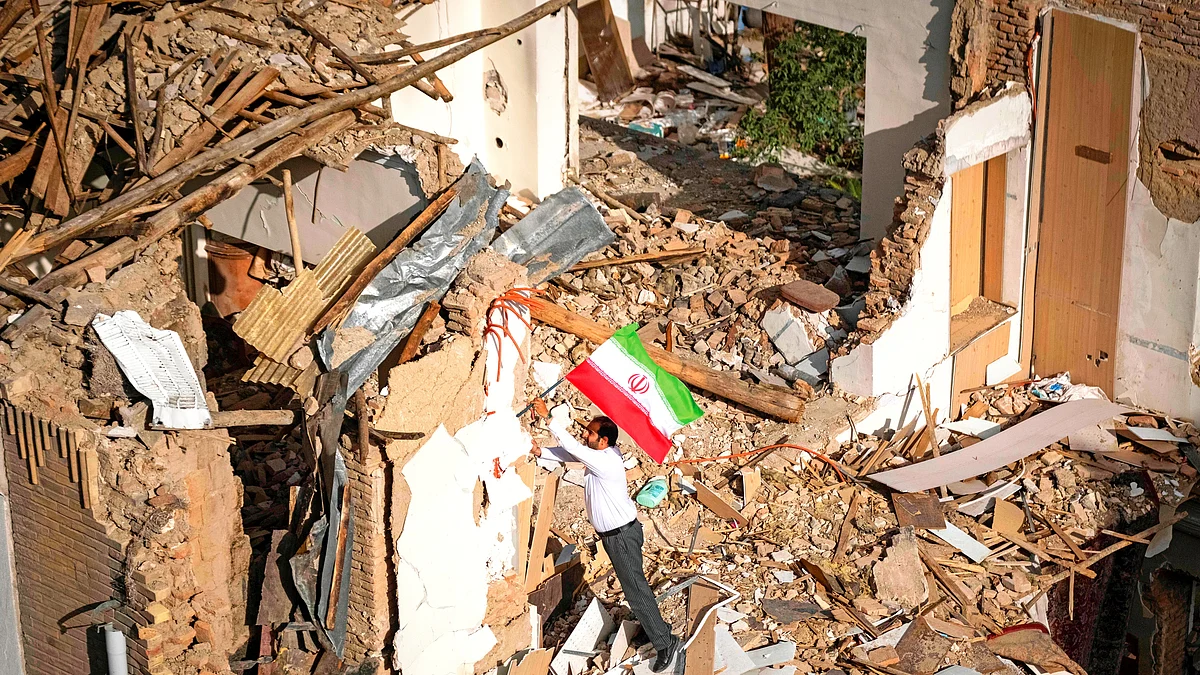
Iran has been bombed, its leaders have been killed, its infrastructure heavily damaged, its military capacity degraded. Yet it has survived with its dignity intact. Even more importantly, it has forced Donald Trump to look for a way to exit his ‘war of choice’, with his ego intact. Iran has demonstrated that preparedness and resilience can trump firepower.
Donald Trump entered this war believing his ‘shock and awe’ tactics would overwhelm Iran. The US and Israel assumed that killing Iran’s supreme leader and striking its nuclear and military facilities would trigger a collapse of the ‘regime’. That assumption has unravelled.
The Iranian state did not disintegrate. Its institutions held firm. A new supreme leader emerged. The Revolutionary Guard did not splinter. The public did not rise to bring down the system. Instead, they came out in huge numbers to voice their support for the leadership. The regime, weak before the war, has been strengthened by resistance to foreign aggression.
This is a miscalculation the US has made over and over again in West Asia, even before Trump — the folly of equating dislike of a government with an appetite for foreign aggression. Many Iranians may resent the clergy that rules over them, they may desire an end to their economic hardship, but when the country is attacked by foreign powers, loyalties to the national flag prevail over internal divisions.
Also Read: Why Trump’s America is a lonely superpower
The US and Israel may have imagined that their campaign would expose the fragility of the regime, but instead they gifted it a patriotic shield. A government that was struggling with internal dissent and mass protests was now seen as a defender of Iranian sovereignty. Dissent became easier to stigmatise and hardliners in Iran found fresh validation of their warnings of a western conspiracy.
Iran’s ‘victory’ will not spare ordinary Iranians their hardships; if anything, these might worsen in days to come. But the balance of bargaining power has shifted decisively. Before the war started, Washington was making maximalist demands about Iran’s nuclear and missile programme, its regional policies. And now Trump is the one trying desperately to find a way to spin the war as a success to voters back home.
Iran is demanding an end to hostilities, sanctions relief, security guarantees, the release of its frozen assets and recognition of its leverage over the Strait of Hormuz. That is not the stance of a defeated state; it demonstrates Iran’s confidence that it now holds a winning hand.
Trump’s desperation to declare victory does not disguise the reality of a war that is not going his way and is extracting a heavy political, economic and diplomatic price.
The war has driven up energy prices, unsettled markets, angered allies, frightened Gulf partners and created an adverse political climate at home. His approval ratings are dropping when mid-term elections are round the corner. He can threaten and he can brag, but it doesn’t alter the reality that Iran has not surrendered and cannot be made to surrender without a prolonged ground invasion that the US neither wants nor can afford.
Also Read: Can the Gulf states weather this war?
This is why Tehran holds the stronger hand in negotiations. Iran knows Trump’s timetable. It understands US domestic politics far better than Washington understands Iran. It can see that the White House needs a ceasefire more urgently than does Iran, which is better prepared to politically absorb the shocks of a war of attrition. The economic costs of the war are huge for Iran, but it has the stomach to endure because it has weathered sanctions and isolation for decades.
The Strait of Hormuz has become the decisive battlefield. America can still destroy ships, bomb bases, patrol skies. But Iran has shown that it can turn this narrow waterway into a lever to manoeuvre the global economy. By obstructing/regulating passage, threatening shipping across this vital global trade artery and imposing costs on tankers, Tehran has reminded the world that geography is power. The US may rule the high seas, but Iran controls the most sensitive energy corridor on earth.
By weaponising the Strait of Hormuz, Iran has changed the rules of the game. Gulf monarchies that depend on open trade, stable markets and external security guarantees suddenly found themselves dangerously exposed. Divisions among them have become more apparent, and their long-standing confidence in American protection is badly shaken. Investors have seen how quickly the region’s financial hubs can be destabilised by missiles, drones and maritime disruption.
Oil-importing nations in Asia watched anxiously, aware of their dependence yet largely powerless to respond. Europe, meanwhile, showed little appetite for being drawn into another prolonged conflict in West Asia. By demonstrating the global costs of ignoring its strategic power, Iran has gained phenomenal leverage.
Which is why Iran’s survival resonates beyond West Asia. In much of the Global South, the war will not be parsed in the language of non-proliferation or counterterrorism; it will be read as another case of a superpower trying to dictate the fate of a sovereign country through military force. Iran may not be a democracy, but its defiant stand against a hegemon will still be celebrated. Like Vietnam in the 1970s, Iran has become a mirror in which weaker states see the possibility of resisting a much stronger superpower.
Vietnam became a symbol because it outlasted America. Iran has achieved something similar. It does not have to defeat the US militarily. It needs only to deny Trump long enough to raise the price of the war and for American politics to turn against the war.
The big irony is that the war may push Iran closer to the nuclear threshold. If Iranian leaders conclude that only a nuclear deterrent can stop future attacks, the war will have produced the opposite of its stated aim. America’s great misfortune is that it keeps confusing military superiority with strategic leverage. It can win battles and lose wars. It can punish adversaries and strengthen them politically. It can declare victory and still be forced to negotiate from a weaker position.
In the brutal arithmetic of power, Iran has emerged stronger in this exchange, and the US is weaker than Trump can admit. The war began with the fantasy that Iran would break. It may end with the recognition that Iran stands and must be negotiated with.
Ashok Swain is a professor of peace and conflict research at Uppsala University, Sweden. More by the author here
Join our official telegram channel (@nationalherald) and stay updated with the latest headlines