


Margin notes in the Sahil Wakode saga
Student suicides have been on the rise in India. But the media spotlight misses a large penumbra of young adult stress
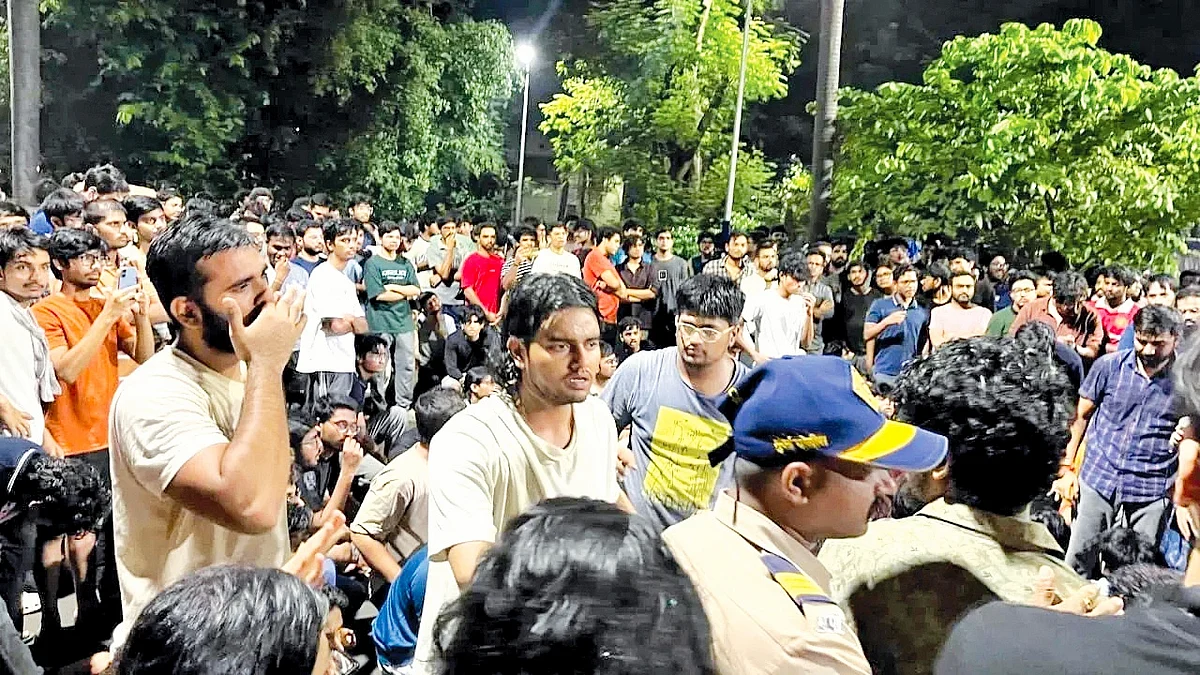


The recent death by suicide of Sahil Wakode, a second-year student at IIT Bombay, has raised questions around alleged caste-based discrimination in the elite institution.
The police are investigating the circumstances leading to Sahil’s unfortunate death on 18 September after an exam incident where he was allegedly using unfair means.
While Sahil’s family sees this as caste-based harassment that drove him to suicide, the IIT-B administration says the student never lodged a complaint of caste discrimination. A majority of the institute’s faculty members have sided with the professor in question.
Let’s hope there is a fair inquiry. But Sahil’s tragic suicide also refocuses attention on another depressing reality. Between 2020-21 and 2024-25, there have been 45 student suicides in just the IITs (there are now 23) — six in 2022-23, 16 in 2023-24, 13 in 2024-25. Twenty-eight of these 45 students came from SC/ST/OBC communities.
Across India, suicides are disproportionately concentrated among the young. A ‘Global Burden of Disease’ study published in The Lancet in 2016 found that suicide was the leading cause of death among people aged 15 to 39. Eight years later, things were much worse.
The latest National Crime Records Bureau (NCRB) data provides another measure of the problem. India recorded 14,488 student suicides in 2024, compared with 8,068 in 2014 — an increase of nearly 80 per cent over a decade. Student suicides constituted 8.5 per cent of all suicides in 2024 (India recorded 1,70,746 suicides that year) compared with 6.1 per cent in 2014.
It was an uptrend through the decade 2014-24, except 2022, which showed a marginal decline year on year. In 2024, Maharashtra recorded the largest number of student deaths by suicide (1,909) followed by Uttar Pradesh (1,585), Madhya Pradesh (1,447) and Tamil Nadu (1,287). These four states accounted for 43 per cent student suicides in India.
While the increasing absolute numbers do not mean a corresponding increase in the suicide rate as well (because the number of students enrolled in schools and colleges also rose in this period), the numbers are alarming alright.
Mortality statistics, though, tell only half the story. A 2024 study published in the Indian Journal of Psychological Medicine surveyed 8,542 college students (mean age: 20) from 30 universities in 15 cities of nine Indian states.
The findings were disturbing, to say the least. Nearly one in five (18.8 per cent) reported having considered suicide at some point in their lives. More than one in eight (12.4 per cent) reported suicidal thoughts during the preceding year, while 6.7 per cent reported a suicide attempt at some point. In other words, suicide statistics do not account for the larger numbers contemplating serious self-harm.
A companion analysis of the same research programme examined correlates of suicidal ideation and attempts. It points to a far more complex landscape than the familiar shorthand of ‘exam pressure’. Family relationships, stressful life events, anxiety, substance abuse, exposure to suicidal behaviour and self-harm all feature in the analysis, presenting evidence that the problem cannot be reduced to exam pressure and the availability or lack of counselling on campus.
The other NEET
India’s Periodic Labour Force Survey (PLFS) 2025 puts the proportion of 15- to 29-year-olds who are not in employment, education or [vocational] training (‘NEET’) at 25 per cent. That is one in four young Indians.
We might assume that an unemployed youth will be actively seeking a job. But a NEET young person may not be studying, working, training or actively looking for employment. The category includes several different situations and should not be interpreted as a measure of joblessness alone. This is central to understanding India’s young-adult crisis.
What does it mean to be a 22- to 25-year-old, no longer a student, without a job, not in vocational training and not even looking for a job?
We do not have sufficient evidence to say that disengagement produces suicide. But we have enough evidence to ask if choked aspirations, economic uncertainty, social isolation and prolonged disengagement are part of the wider landscape.
The latest PLFS data (September 2026) shows substantial state-level variation in the proportion of 15- to 29-year-old NEETs. Where the national average is 25 per cent (one in four), Bihar has 32.1 per cent, West Bengal 29.9, Uttar Pradesh 29.1, Tripura 28.1, Punjab 27.7, Haryana 27.2 per cent, Tamil Nadu 23.1 per cent, Kerala 21.5 per cent, Maharashtra 21.9 per cent, Karnataka 20.8.
In PLFS 2025, among 15- to 29-year-olds, the female labour force participation rate was only 26.8 per cent, compared with 60.2 per cent for men, while the corresponding worker population ratios were 24.4 per cent for women and 58 per cent for men.
Women are disproportionately represented among India’s NEET youth as well: nearly 40 per cent young women in that age group are NEET compared with 10 per cent young men. The gender skew in withdrawal from education and the labour market is another concerning facet of the story of young Indian adults.
There is no neat correspondence, however, between suicide data and youth disengagement, as measured in the numbers of NEET young adults. Maharashtra’s NEET rate is below the national average but the state recorded the highest number of suicides (22,174) in 2024. Likewise Kerala: lower-than-average NEET rate; high suicide rate.
What’s happening to these young adults outside the ambit of education, employment and training?
Suicides in premier institutions like the IITs get a lot of attention, but the high levels of stress in the much larger community of young Indians who are ‘NEET’ is perhaps being underreported and consequently underestimated. Outside the NEET ambit, there are young students in ordinary colleges and private coaching centres hoping to break into an overcrowded labour market.
Many aspire to government jobs in the railways, banks, police and paramilitary because they promise a measure of security. But the uncertainty and the attendant stress are at breaking point.
Jaideep Hardikar is a senior Nagpur-based journalist and author of Ramrao: The Story of India’s Farm Crisis. More by him here
Join our official telegram channel (@nationalherald) and stay updated with the latest headlines