


The Ashura Paradigm: Karbala’s legacy animates resistance in Palestine, Iran and Lebanon
As the world observes Ashura today, our grief must transform into a catalyst for action
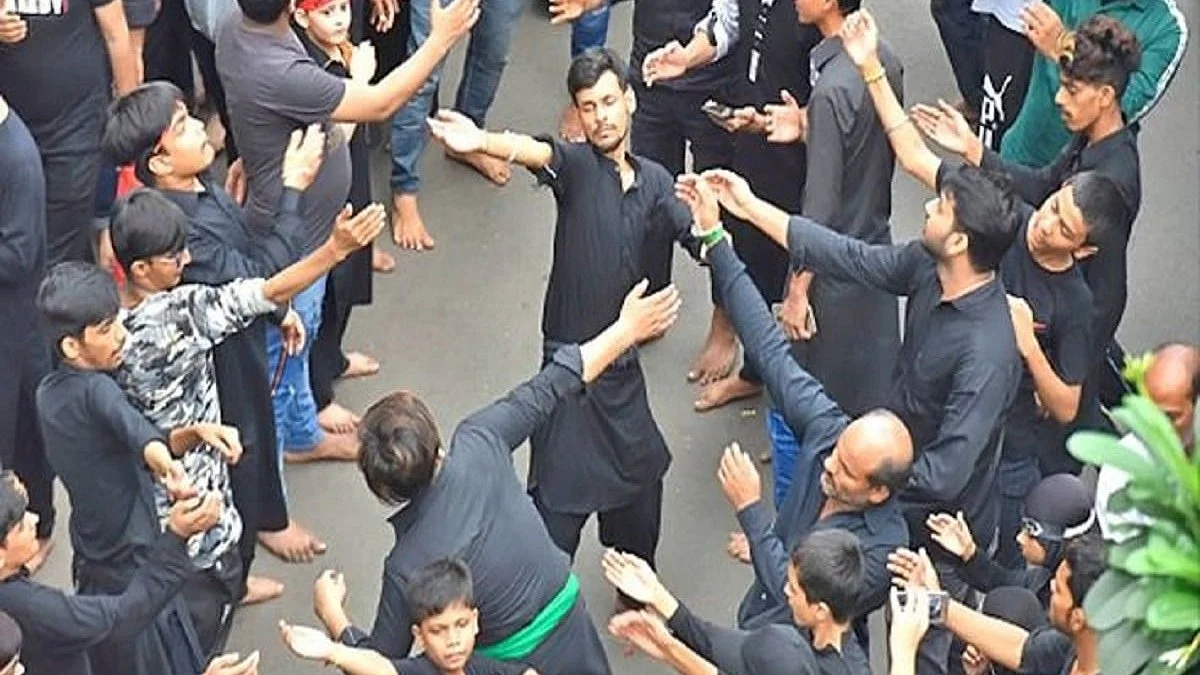


Today, the 10th of Muharram (Ashura), the global collective conscience reaches the shattering climax of Karbala. On this day in 680 CE, Imam Hussain ibn Ali, the grandson of the Prophet Muhammad, alongside his family and a meagre band of 72 companions, stood ground against the massive, tyrannical army of the Umayyad caliph Yazid. They were systematically slaughtered after days of a brutal siege, choosing physical annihilation over spiritual submission to an unjust empire.
As millions across the globe mark this day of supreme sorrow on 26 June 2026, Karbala cannot be treated as an ancient relic. Our gaze is violently pulled to the contemporary, blood-soaked landscapes of the Middle East. The world is watching a modern-day manifestation of the Ashura paradigm—unfolding in the systematic genocide in Gaza, the merciless assault on southern Lebanon, and the unyielding stance of Iran against catastrophic imperial aggression.
The parallels are structural, ethical, and deeply alive. Ashura reminds us that Karbala is an ongoing reality for those who refuse to surrender to modern empires, proving how the spiritual resilience of the oppressed transforms a physical siege into an immortal campaign for freedom.
The Modern Euphrates: Siege as State Policy
The agonizing culmination of Ashura underscores the weaponization of survival itself. For days leading up to the massacre, the children in Imam Hussain’s camp were entirely cut off from the waters of the Euphrates River, crying out from thirst under a scorching desert sun. Yazid deployed this strategy of starvation to break the spirit of the Prophet’s household and force their unconditional capitulation.
Yet, what the tyrant underestimated was the spiritual resilience of those tents; deprivation became the crucible in which an unbreakable defiance was forged.
In our contemporary era, this exact strategy of denial has been resurrected as state policy with staggering cruelty, only to be met with an equally profound, Hussaini-style steadfastness:
The Gaza blockade:
An absolute siege has weaponized water, food, electricity, and medical supplies, reducing a captive population of millions to engineered starvation. The modern children perishing under the rubble from dehydration echo the historic thirst of the infant Ali Asghar on the Day of Ashura. Yet, amidst the ruins, the people of Gaza display a supernatural resilience (Sumud), refusing to abandon their land or their dignity.
The destruction of Southern Lebanon:
Indiscriminate bombardments have repeatedly targeted water networks, agricultural fields, and civilian infrastructure, aiming to displace historic communities and sever their connection to their ancestral land. In response, the communities of the south mirror the patience of the Holy Prophet's family, clinging to their soil with absolute defiance.
Economic warfare on Iran:
Decades of suffocating, unilateral Western sanctions function as a modern financial blockade, deliberately designed to deprive an entire nation of life-saving medical goods and economic stability, testing the limits of an entire population's collective endurance.
The denial of fundamental human necessities is the oldest weapon in the tyrant’s playbook. It aims to reduce human beings to absolute desperation, yet across centuries, it has failed to crush the underlying resolve for human dignity.
Asymmetric warfare and the hubris of might
Ashura remains the textbook definition of an asymmetric conflict. On one side stood a heavily armed state military numbering in the thousands, representing the absolute geopolitical dominance of an empire. On the other side stood 72 men, surrounded by women and children, armed only with their conviction. Yazid’s generals believed that overwhelming military annihilation on the 10th of Muharram would erase Hussain’s message forever.
This same hubris drives the modern, technologically advanced military machines acting in the region today. Whether dropping thousands of tons of explosives on the dense civilian neighbourhoods of Palestine or launching devastating air campaigns across southern Lebanon, the oppressor operates under a singular delusion: That absolute material dominance can obliterate the human desire for freedom.
"Death with dignity is better than a life of humiliation." ~Imam Hussain ibn Ali
This immortal declaration is the spiritual fuel animating the regional resistance. In southern Lebanon, despite facing targeted assassinations and high-tech precision warfare, the local population and its resistance have repeatedly shattered the myth of invincibility surrounding the occupying forces. Their resilience proves that a population deeply rooted in its land, drawing inspiration from the patience of Hussain, cannot be erased by bombs.
Iran and the rejection of hegemony
The core of Karbala was a refusal to give Bay'ah (an oath of allegiance) to an illegitimate, corrupt ruler. In the modern geopolitical landscape, this mantle of defiance has been explicitly adopted by the Iranian resistance, which has consistently refused to bow to US-Israeli regional hegemony.
This confrontation reached a historic and catastrophic flashpoint during the intense military conflict of early 2026.
Initiated by the joint US-Israeli air campaign known as ”Operation Epic Fury," the onslaught targeted Iran's leadership, security infrastructure, and civilian centers with nearly 900 strikes in its opening hours. The empire expected total capitulation after the assassination of top leadership figures, assuming that material devastation would break the nation's political will.
Instead, they met an unyielding wall of strategic resistance rooted in the paradigm of Ashura. Iran’s multi-layered response—utilising drone and missile deterrence, disrupting critical maritime chokepoints like the Strait of Hormuz, and enduring immense internal and external pressure—demonstrated that unilateral imperial aggression can be checked when a people possess the collective resilience to withstand total warfare.
The eventual signing of the Islamabad Memorandum earlier this June 2026 served as a stark reminder that even the world's most formidable military coalitions cannot force the total surrender of a nation that chooses resistance over subjugation.
Also Read: Karbala: The anatomy of a tragedy
The victory of blood over the sword
Historically, Yazid’s forces won the battle of Karbala on the 10th of Muharram. They slaughtered the men, took the spoils, and celebrated their immediate political victory. Yet, in the court of history, Yazid is universally reviled as a symbol of unmitigated tyranny, while Imam Hussain is revered globally by peoples of all faiths as the archetype of ultimate justice. This is the concept of the ”Victory of Blood over the Sword."
A tyrant can destroy the body, but they cannot kill the cause.
This is a timeless dialectic that reveals that while the centuries have turned, the fundamental calculus of tyranny and the nature of resistance remain identical. In 680 CE, the oppressor relied on complete water deprivation, arrows, and massive troop encirclement to force submission.
Today, the modern front faces an updated array of iron and malice: total blockades, indiscriminate aerial bombardment, suffocating financial sanctions, and advanced asymmetric warfare. The strategic objective, however, is unchanged—to achieve total regional hegemony, ethnically cleanse indigenous populations, and dismantle any sovereign resistance that dares to stand in the way.
Yet, the human response to this cruelty has also remained unbroken across the ages. Where Imam Hussain answered tyranny with an uncompromising refusal to bow to illegitimate authority (Hayhat minna-dh-dhillah), the people of Palestine, Lebanon, and Iran counter with unwavering steadfastness (Sumud) and defensive retaliation, refusing to surrender an inch of their dignity or territory.
Ultimately, the judgment of history favors the oppressed. Just as the Umayyad empire suffered a permanent moral bankruptcy while the martyr achieved eternal victory, the modern era is witnessing the total collapse of the Western moral narrative and a profound global awakening of human conscience.
The global shift we see today—where millions of people across continents march in solidarity with Palestine and Lebanon, and where international legal bodies condemn the actions of the genocidal regimes—is proof that the moral architecture of the oppressor has collapsed, just as it did for Yazid centuries ago.
Commemorating Ashura with conscience
To mourn for Imam Hussain on this 10th of Muharram while remaining silent on the genocide in Palestine, the slaughter in southern Lebanon, and the imperialist siege of Iran is to fundamentally misunderstand the message of Ashura. The rituals of Muharram are empty if they are divorced from the pulse of contemporary justice. Imam Hussain did not sacrifice his life so that posterity would merely shed tears; he did so to establish a permanent, living standard of defiance against tyranny.
Gaza, southern Lebanon, and the blockaded towns of the region are the Karbalas of our time. The children crying for water under the rubble of bombed buildings are the children of Hussain. The blockaded borders are the closed banks of the Euphrates.
As the world observes Ashura today, our grief must transform into a catalyst for action. Let our voices echo the fierce, unyielding spirit of Karbala, demanding an end to the occupation, an end to the genocide, and the absolute liberation of all oppressed peoples. For the axiom remains eternally true: ”Every day is Ashura, and every land is Karbala."
~Hasnain Naqvi is a former member of the history faculty at St. Xavier’s College, Mumbai. More of his writing here
Join our official telegram channel (@nationalherald) and stay updated with the latest headlines