


The lives of ‘employer-less’ gig workers
Regardless of their classification, workers must have access to universal labour rights, writes Ajit Ranade
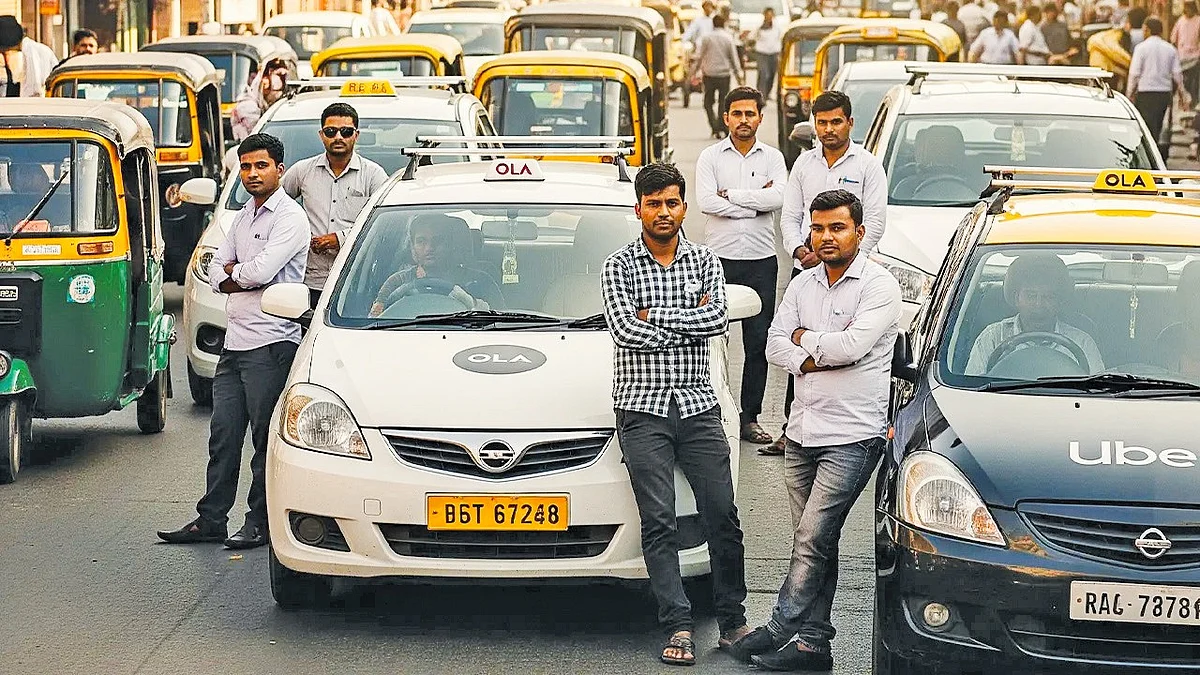


A few years ago, outside the transport commissioner’s office in Bandra, thousands of Ola and Uber drivers staged a protest. Their demands were modest: better fares, fair commissions, humane working hours and some protection against arbitrary penalties.
The official response was revealing. The commissioner reportedly told them he had no jurisdiction. They were not ‘employees’ but ‘business partners’, entrepreneurs running their own micro-enterprises. Had they been old-style taxi permit holders, he might have been able to help them, since the applicable rules were clear.
That moment was a wake-up call. Not just for cab drivers, but for millions of workers who suddenly discovered that while they bore all the risks of work, they enjoyed almost none of its protections.
What we call the ‘gig economy’ is often portrayed as a new phenomenon born of apps and algorithms. In reality, it is an old Indian phenomenon wearing a digital mask.
Nearly two decades ago, the Arjun Sengupta Committee on the unorganised sector documented a striking fact: close to 64 per cent of the workers in the unorganised sector were self-employed, and thus did not have an identifiable employer. This is because they worked for multiple principals over short spells. They were self-employed, casual, piece-rate workers — construction hands, home-based workers, street vendors. Today’s gig workers are their technological descendants.
So why are gig workers protesting now, in a far more organised way? Because the scale and intensity of platform-mediated work has changed the nature of dependence.
Take cab drivers. Recent protests in Mumbai saw nearly 90 per cent of app-based cabs go off the roads, with drivers demanding fare parity with black-and-yellow taxis, a cap on commissions, welfare boards and state-level gig worker legislation. Similar anger simmers among food-delivery workers, warehouse pickers and instant-commerce riders. Nationwide strikes have demanded a minimum monthly income, regulated work hours, and social security.
Also Read: The death of a lifeline called NREGA
At the heart of the unrest is a simple asymmetry. Platforms insist workers are independent entrepreneurs and business partners. Yet the platforms decide prices, allocate tasks, impose penalties, deactivate accounts, tweak parameters and constantly change rules through opaque algorithms.
Workers, meanwhile, invest their own capital — vehicles, fuel, smartphones, insurance — and absorb all the downside risk. They do not even have accident cover from the employer, which would be the equivalent of work-place injury cover. This asymmetry cannot be termed entrepreneurship; it is unfair risk-shifting from the big to the small.
The defence offered by platform CEOs is familiar: better a precarious livelihood than no livelihood at all; over-regulation will kill innovation. India does need jobs and platforms have undeniably expanded access to work. But a labour market that creates livelihoods by stripping workers of basic protections and making them more vulnerable is not a sustainable growth model.
Historically, labour movements were organised around factories and identifiable employers. Gig workers lack both. They are, in a literal sense, employer-less. This is precisely why their collective action matters, and in some ways, was inevitable, emerging not despite their legal status, but because of it.
When delivery workers log off en masse, or cab drivers strike, they are asserting a fact that the law has been slow to recognise: economic dependence matters more than contractual labels. Courts and regulators are beginning to see this. The Bombay High Court’s sharp observations on ‘total lawlessness’ when cab aggregators operated without proper licences were as much about passenger safety as about worker vulnerability.
The tide is turning globally as well. The UK Supreme Court classified Uber drivers as ‘workers’; entitled to minimum wages and paid leave. Spain’s Rider Law treats food-delivery riders as employees. Other countries have created intermediate categories — neither full employees nor pure contractors — but with enforceable floors of rights. International evidence converges on one point: flexibility need not mean a vacuum of rights for workers.
While the Code on Social Security, 2020 recognises gig and platform workers as a distinct category for the first time, a lot remains to be done. Eligibility for State-designed social security schemes and proposed thresholds — 90 days of work with an aggregator or 120 days across platforms — to qualify for benefits such as insurance and health cover are welcome. Registration through e-Shram, welfare boards and contributory funds — such as levies on platform turnover — can create a portable safety net.
Where the code falls short is on core labour rights: minimum wages, limits on working hours, collective bargaining, strong protections against arbitrary deactivation. Social security remains largely discretionary and scheme-based. For a majority of the workers whose incomes fluctuate daily and whose accounts can be switched off overnight, this is a very thin shield.
The deeper significance of the recent protests lies in what they signal about India’s structural transformation. Platforms did not create the trend of informal employment, they amplified it. What is needed is more formalisation.
If India’s future of work is increasingly platform-mediated, then formalisation cannot mean necessitating that everyone will have standard employment contracts, i.e. jobs. It must mean extending a universal floor of rights — minimum pay standards, safety, insurance, due process — to all workers, regardless of how they are classified, whether employees, business partners or self-employed contractors.
It is a demand for markets to be embedded in rules, for innovation to coexist with dignity. The Arjun Sengupta Committee argued long ago that growth without security breeds vulnerability and resentment. That warning echoes loudly today.
The challenge for policymakers is not to kill the gig economy, but to civilise it. If India can manage that balance, the gig economy could become a bridge to a more formal, inclusive labour market — rather than a cul-de-sac of permanent insecurity and precarity.
Now that would be real innovation.
Ajit Ranade is a noted economist. More of his writing may be found here
Article courtesy: The Billion Press
Join our official telegram channel (@nationalherald) and stay updated with the latest headlines