


The passing of five giants and the legacy of India’s socialist movement
As 2025 draws to a close, India’s socialist fraternity has been left poorer with the passing of five towering socialists
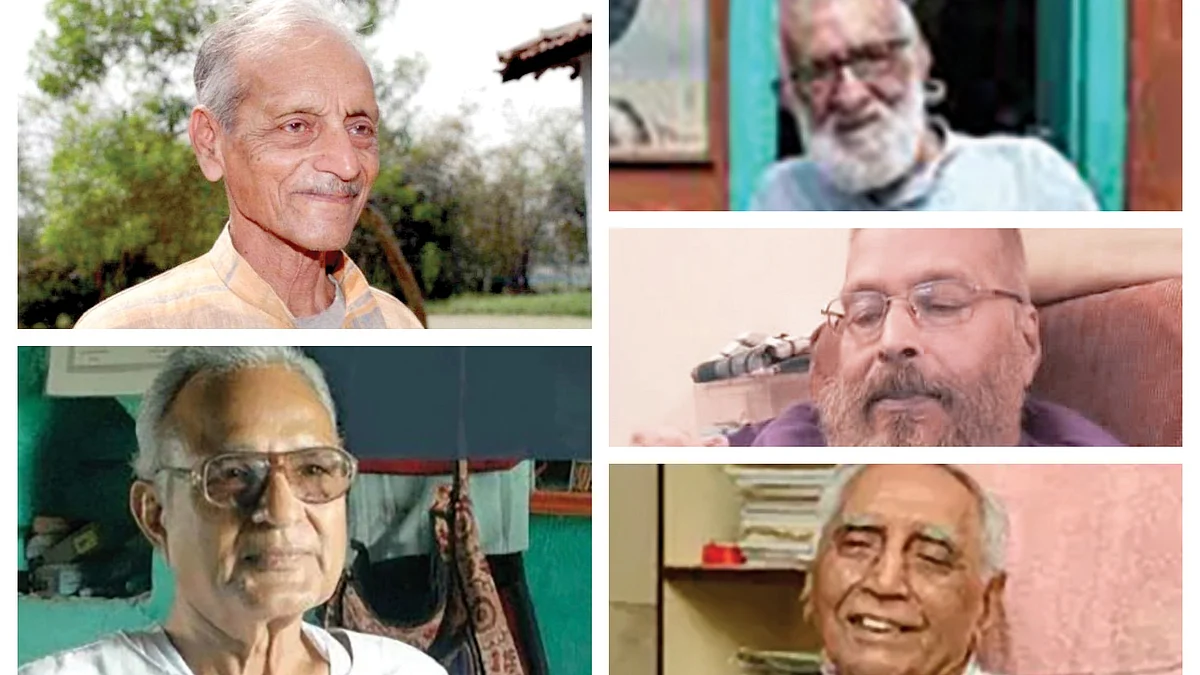


As 2025 draws to a close, India’s socialist fraternity has been left poorer. In the last three months alone, five towering socialists — figures who embodied and defined the movement’s ethos — have passed on. None of them was a politician in the conventional sense. None of them chased public office. Their lives were dedicated to work that most do not even think of as ‘politics’.
But if a leader is someone who shows society a direction, and if politics is truly the art of turning the good into the real, then each of them deserves to be remembered as a statesman in the richest sense of the word. They did not belong to any party that today calls itself socialist but they came from the same nursery.
On 2 October, after entering his hundredth year, Dr G.G. Parikh passed away in Mumbai. In November came the news from Muzaffarpur that Satchidanand Sinha had died at the age of 97, followed just days later by the passing of Prof. Satish Jain in Agra. And most recently, we have news from Maharashtra of the passing of Pannalal Surana and Baba Adhav, both of whom had also crossed 90.
Every one of them was heir to the Narendra Dev–Jayaprakash–Lohia tradition. They were moulded by socialist politics, and till the end of their lives, their faith in building an egalitarian society remained unshaken.
Yet none of them chose the path of power politics. Despite being senior and respected members of socialist parties, G.G. Parikh and Satchidanand Sinha never contested an election themselves. They did help others, though. It was Satchidanand Sinha who brought George Fernandes to Muzaffarpur to contest — and win.
Also Read: How Indian is our Constitution?
Baba Adhav contested once and Pannalal Surana several times, but neither ever made a moral compromise to win. They refused to treat elections as the be-all and end-all of politics, using them instead as tools to build ideas and organisations.
After the socialist movement splintered, all of them chose to stay with small but principled socialist groups rather than latch onto big parties — fully aware that their chosen path would never lead to power or the kind of ‘success’ that power breeds.
Meanwhile, many other leaders from the socialist fold happily climbed into the BJP’s lap or made deals, openly or stealthily, with the politics of communalism. But these steadfast socialists chose lifelong conflict with power. Till their last breath, they resisted the politics of lies and hatred.
Each of these soldiers of the socialist movement carved out their own domain in the struggle for an equal society. Baba Adhav led a historic fight to secure justice for workers in the unorganised sector. He built unions of coolies and rickshaw-pullers, ensured they earned dignified wages, got them access to affordable food, and pushed Maharashtra to pass special protective legislation for them.
G.G. Parikh built the Yusuf Meherally Centre, through which he created a model of public health, education and cooperativism among Adivasi communities. After the Latur earthquake, Pannalal Surana set up an organisation called Apna Ghar for orphaned children — an institution that continues to do meaningful work today.
Satchidanand Sinha and Satish Jain chose the life of ideas. Born into a renowned freedom-fighter family in Bihar, Satchidanandji even dropped out of his B.Sc. midstream. He became an autodidact as a socialist activist and spent his life refining and spreading the movement’s intellectual tradition.
He wrote more than a dozen books in both Hindi and English, and hundreds of essays. He will be remembered for his original writings on internal colonialism, the changing forms of caste, the inevitability of coalition politics, the hollowness of modern civilisation — alongside penetrating work on art and aesthetics.
Prof. Satish Jain, after studying economics in the United States and teaching at the left-leaning Jawaharlal Nehru University, kept alive the search for a Gandhian-socialist model of development.
For socialist workers, Pannalal Surana was an institution unto himself. Writing pamphlets on every issue, shaping cadres intellectually — this was his unique contribution.
For this generation, socialism was not confined to politics or theory — it was a way of life. Working in different spheres, they turned equality and simplicity into lived values. Despite being a JNU professor, Satish Jain’s simple, frugal lifestyle was striking.
Even as he crafted new theories about India and the world, Satchidanandji spent the last four decades of his life in Manika village in Muzaffarpur district, far away from the spotlight. Pannalalji continued to travel by public transport till the very end. He set an ideal of living frugally. The same spirit of aparigraha (non-possession) ran visibly through the lives of G.G. Parikh and Baba Adhav.
Losing these beautiful people is saddening. But in their own ways, each of them prepared their successors. They passed on their ideas and ethics to a new generation of activists. The seeds they scattered will enrich the soil of India’s public life for a long time to come.
More of Yogendra Yadav’s writing can be read here
Join our official telegram channel (@nationalherald) and stay updated with the latest headlines