


Amit Shah missing, Lok Sabha passes another Bill in three minutes
The Bankers’ Books Evidence Bill 2026 was passed in five minutes. Taxation and Other Laws (Amendment) Bill, 2026 in three. No discussion.
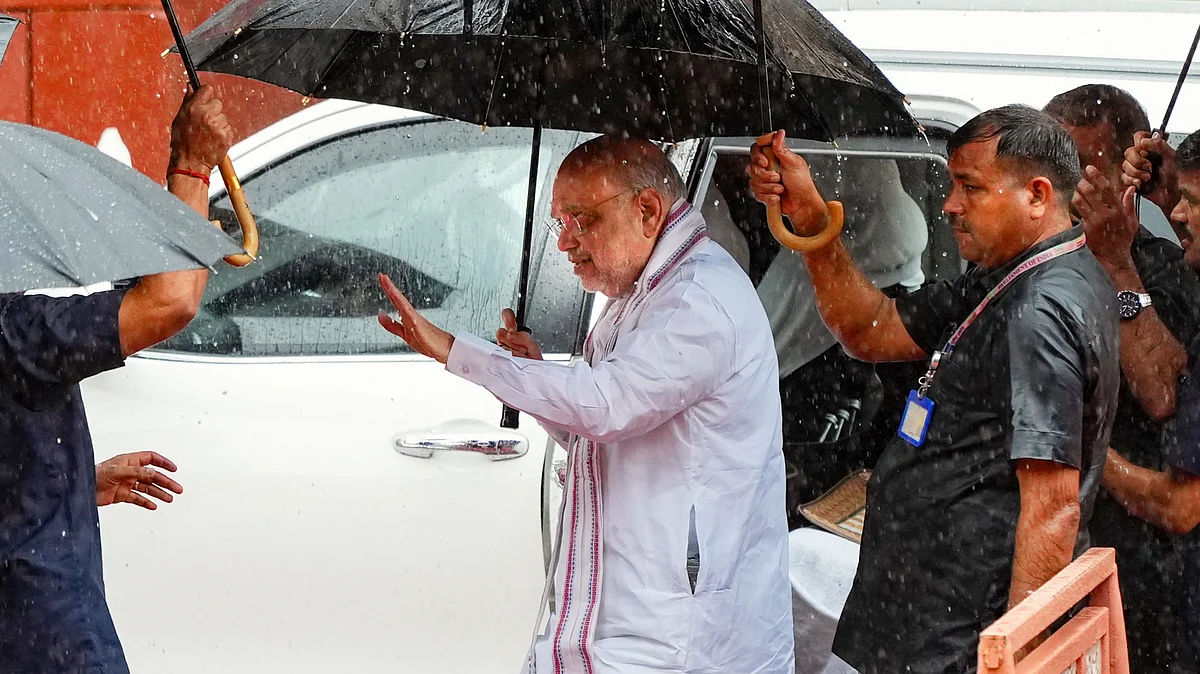


The Indian Parliament is acquiring international notoriety for passing legislation within minutes and without deliberation. The government's explanation is always the same: the Opposition has disrupted proceedings.
During the current monsoon session too, the Lok Sabha has passed seven Bills so far, five of them without debate. The Opposition has been making what it calls a reasonable demand that home minister Amit Shah appear in the House and make a statement on the police crackdown on students in Delhi on 20 July.
A similar pattern has increasingly emerged over the past five years: the government refusing to allow discussions on issues ranging from the Special Intensive Revision (SIR) of electoral rolls to Operation Sindoor, while using the resulting disruptions to push Bills through at lightning speed.
Rajya Sabha MP Derek O'Brien courted controversy a few years ago by posting: "In the first 10 days of the Parliament session, the government rushed through and passed 12 Bills at an average time of 'under seven minutes' per Bill. Passing legislation or making papri chaat!" The trend has continued unabated.
On Thursday, 6 August, the Taxation and Other Laws (Amendment) Bill, 2026 — which amends three Acts and replaces an ordinance — was taken up at 2.11 pm and declared passed by 2.14 pm.
"There was a statutory resolution disapproving the Bill, but it was swiftly negatived. There were amendments moved by MPs, which were not taken up," parliamentary watchdog Maadhyam noted.
A day earlier, on 5 August, the Bankers' Books Evidence Bill, 2026, for which three hours had been allotted, was passed in just five minutes without any debate.
Both Prime Minister Narendra Modi and home minister Amit Shah have been absent from the Lok Sabha over the past two weeks. While both have continued to attend public functions, Shah even travelled to Pune on 1 August to confer the Lokmanya Tilak Samman on national security advisor Ajit Doval.
Though Shah continues to function from his office in Parliament House, he has not appeared in the Lok Sabha. Instead, minister of state for home affairs Nityanand Rai has been handling home ministry-related business in the House.
The Opposition has protested the home minister's absence, arguing that, since Delhi Police reports to him, he owes Parliament an explanation for the police action against students. Under the Constitution, the government is accountable to the Lok Sabha. Yet neither the prime minister nor the home minister appears willing to answer questions or assume responsibility for the actions of Delhi Police.
Parliamentary affairs minister Kiren Rijiju and Speaker Om Birla have repeatedly appealed to members to "let the House function", yet appear unable to ensure the presence of the leader of the House. The Opposition has accused the government of evading accountability and reducing Parliament to a "Bill-making factory".
Real-time payments made through RTGS and NEFT currently attract service charges, while UPI transactions have so far remained exempt. Proposed amendments to the Payment and Settlement Systems Act form part of the Taxation and Other Laws (Amendment) Bill, 2026, which was introduced in the Lok Sabha on 4 August and passed by voice vote on 6 August.
As soon as the House reassembled at 2.00 pm on Thursday following an adjournment, finance minister Nirmala Sitharaman moved the Bill to amend the Payment and Settlement Systems Act, 2007, and the Income Tax Act, 2025, besides replacing the 5 June ordinance that granted income tax exemption on interest income and capital gains earned by foreign portfolio investors from specified investments.
Three minutes later, it had been passed.
Join our official telegram channel (@nationalherald) and stay updated with the latest headlines