


Congress readies joint Opposition pushback on women’s quota session
Kharge flags ‘grave consequences’ as Centre eyes delimitation-linked reforms during poll cycle
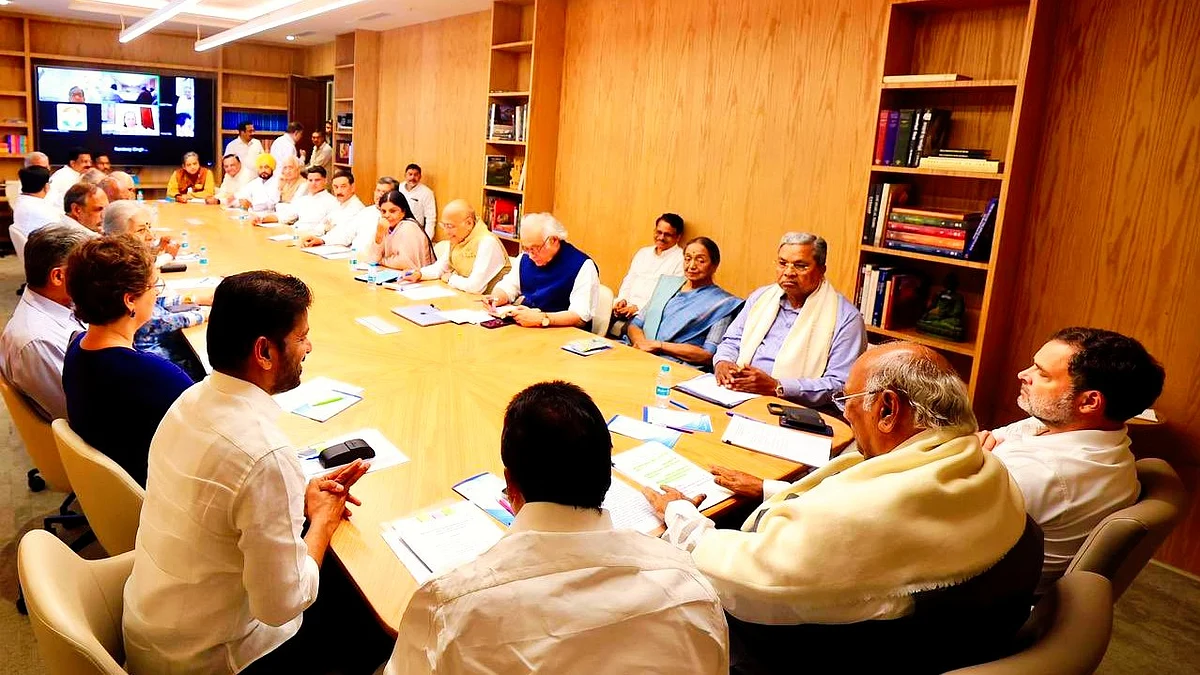


In an escalating political confrontation over the Centre’s move to convene a special session of Parliament on women’s reservation later this month, the Congress on Friday convened its highest decision-making body, the Congress Working Committee (CWC), and signalled plans for a coordinated Opposition pushback.
Addressing the meeting, party president Mallikarjun Kharge accused the government of attempting to push through far-reaching constitutional changes during an active election cycle, warning that proposals to amend the women’s reservation framework alongside expanding the strength of Parliament could violate the Model Code of Conduct and have “grave consequences”.
Kharge questioned both the timing and intent behind the 16–18 April session, alleging that the Government of India was seeking to “secure political advantage” by advancing reforms with significant electoral implications without wider consultation.
“Such proposals, which could fundamentally alter India’s electoral architecture, require wide consultation, not legislative haste,” he said.
At the centre of the Congress’ concerns is the convergence of three politically sensitive issues — women’s reservation, delimitation, and the proposed expansion of Lok Sabha seats.
While reiterating its support for women’s political representation, the party flagged what it termed a “sequencing problem”, arguing that linking reservation to future delimitation could delay implementation while reshaping electoral power balances in favour of certain regions.
Kharge indicated that the government may operationalise women’s reservation only from the 2029 general elections, alongside a fresh redrawing of constituencies.
“Delimitation has serious consequences. It can alter representation between states and regions. Such a move demands the deepest possible deliberation,” he said.
The concern is not merely procedural but political. Addressing the media after the meeting, Congress leader Jairam Ramesh said the party would seek to convene a broader Opposition consultation, suggesting an all-party meeting after 29 April once the ongoing assembly elections conclude.
Opposition parties, particularly from southern and eastern states, have long argued that a delimitation exercise based on population changes could disproportionately increase representation for northern states, potentially altering the federal balance.
The meeting, attended by senior leaders including Rahul Gandhi and Priyanka Gandhi Vadra, concluded with a decision to develop a joint Opposition strategy.
“The Opposition will move forward unitedly,” Ramesh said, indicating the response would extend beyond the Congress.
In a social media post, Rahul Gandhi reiterated the party’s commitment to “women’s empowerment and social justice”, while cautioning against what the Opposition views as the political instrumentalisation of reform agendas.
Political observers say the Congress response reflects a broader contest — not over the principle of women’s reservation, but over its timing, design and linkage with delimitation.
Kharge also recalled the Hyderabad special session in 2023 where Congress had urged the Modi government to convene Parliament to pass the women’s reservation Bill.
By framing the issue as one of institutional integrity and federal balance, the Congress has positioned itself at the forefront of Opposition resistance to what it describes as the centralisation of electoral power.
With the special session approaching, the stage is set for a high-stakes confrontation that blends constitutional reform with electoral politics — and could reshape the contours of representative democracy in India.
Join our official telegram channel (@nationalherald) and stay updated with the latest headlines