


Congress seeks short duration discussion on West Asia conflict in Parliament
Unfolding geopolitical turmoil warrants a parliamentary debate over its impact on India’s economy, diplomacy and citizens abroad: Ramesh
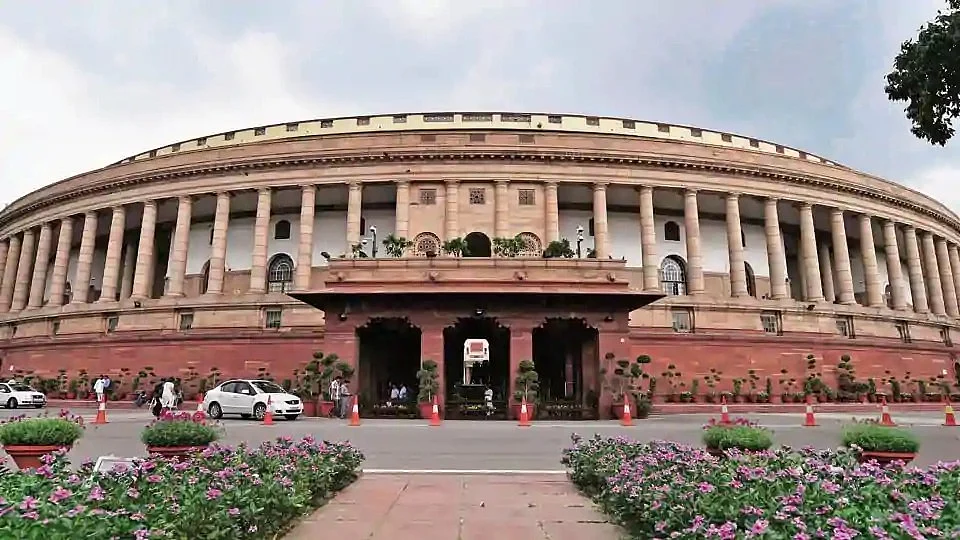


The Congress on Friday called for a full-fledged short duration discussion in Parliament on the rapidly deteriorating situation in West Asia, asserting that a mere suo motu statement by the government would fall far short of the gravity of the crisis.
Speaking to PTI ahead of the second phase of the Budget session, Congress general secretary in-charge of communications Jairam Ramesh argued that the unfolding geopolitical turmoil demands a detailed parliamentary debate, especially given its far-reaching implications for India’s economy, diplomacy and the safety of millions of Indians working in the region.
The second half of Parliament’s Budget session, scheduled from 9 March to 2 April, spans roughly 25 days but will see only 17 sittings due to intervening festivals and holidays. During this period, Parliament must also deliberate on key legislative business, including the Appropriation Bill, the Finance Bill, and discussions on the functioning of several ministries. Yet, Ramesh insisted that the escalating West Asian conflict warrants urgent parliamentary scrutiny.
According to him, the crisis has assumed extraordinary proportions after joint military strikes by the United States and Israel on Iran on 28 February, which reportedly killed Iran’s supreme leader Ali Khamenei. The situation has since spiralled into a dangerous cycle of retaliation, with Iran launching a series of counter-attacks targeting Israel and American military facilities across the Gulf, including bases in the UAE, Bahrain, Kuwait, Jordan and Saudi Arabia.
Ramesh emphasised that the conflict has direct consequences for India, pointing out that nearly 10 million Indians live and work in West Asia, sending home an estimated $50–60 billion in annual remittances. Their livelihoods, safety and economic contributions, he said, make the crisis a matter of pressing national concern.
“The government must allow a full discussion,” he said, dismissing the idea of a suo motu ministerial statement as inadequate. “A minister comes, makes a statement and leaves, and members are not allowed to seek clarifications. On such a critical issue, Parliament must have the opportunity to debate.”
Ramesh also raised concerns about what he described as increasing pressure from Washington on India’s foreign policy choices, particularly regarding energy imports from Russia. Referring to the recent 30-day waiver granted by the United States for India to continue purchasing Russian oil, he criticised the language used by US treasury secretary Scott Bessent, saying it portrayed India as a “supplicant” receiving favours rather than acting as a sovereign nation.
Using a vivid cricketing analogy, Ramesh said the Modi government has been “on a sticky wicket for a long time, with googlies being bowled from Washington”. He suggested that the United States had repeatedly placed India in uncomfortable diplomatic situations, citing statements by US President Donald Trump about the halt of India’s Operation Sindoor and continued American pressure over Russian oil imports.
The Congress leader alleged that under Prime Minister Narendra Modi, India’s global stature has diminished. “The government today stands shrunken and diminished,” he claimed, arguing that New Delhi appears to be “playing second fiddle not only to the United States but even to Israel”.
Drawing a historical comparison, Ramesh invoked the leadership of former prime minister Indira Gandhi during tensions with the United States in the early 1970s. Despite sharp criticism and pressure from the administration of US President Richard Nixon and his adviser Henry Kissinger, he said, Indira Gandhi stood firm in defence of India’s national interests.
In contrast, he argued, the current government has remained silent on several contentious issues — including the killing of Iranian leaders, American pressure regarding Russian oil purchases, and Trump’s remarks about Indian military operations.
The Congress leader also referred to a dramatic naval incident in which a US submarine reportedly torpedoed and sank an Iranian warship in international waters near Sri Lanka, calling it an unprecedented development that underscores the widening scope of the conflict.
As hostilities intensify across West Asia, Ramesh reiterated that Parliament must deliberate on the issue in detail, given its strategic and economic ramifications for India.
For its part, India has so far maintained that the crisis should be resolved through dialogue and diplomacy, urging restraint from all sides as the region teeters on the edge of a broader confrontation.
With PTI inputs
Join our official telegram channel (@nationalherald) and stay updated with the latest headlines