


DMK still opposed to delimitation Bill, clarifies Udhayanidhi Stalin
Clarification comes after reports claimed DMK had softened its stand on the Bill
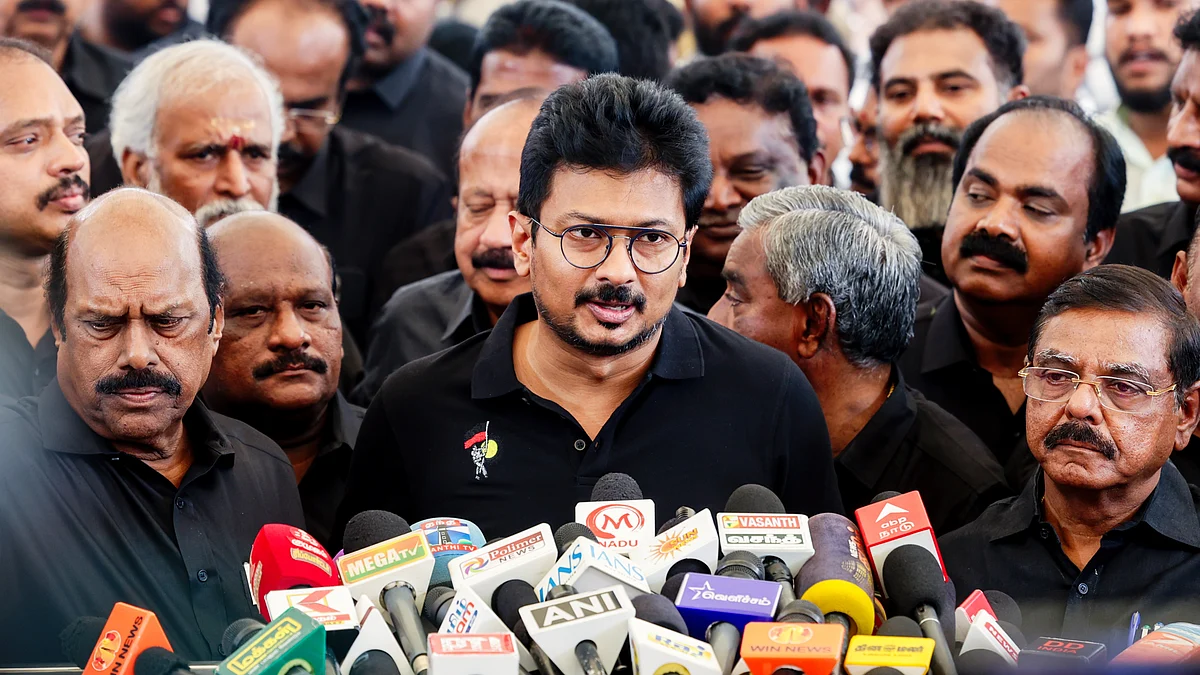


"The DMK has always opposed delimitation. We will continue to oppose it in the future," DMK leader Udayanidhi Stalin said on Friday, 7 August.
"This is not a new issue. The Centre is presenting it as if it has surfaced for the first time," the leader of the Opposition in the Tamil Nadu Assembly told reporters.
The clarification came after The Hindu reported that the DMK had offered conditional support to the Centre, which is reportedly keen to push the delimitation Bill through during the ongoing monsoon session of Parliament.
The monsoon session is scheduled to conclude on 13 August. However, several media reports have suggested that the government may convene a short special session of Parliament to pass the Bill. The Centre had also attempted to introduce the legislation in April, but failed to secure the required two-thirds majority of members present and voting in the Lok Sabha.
Based on the current strength of Parliament, the NDA would require the support of around 360 MPs in the Lok Sabha and 164 members in the Rajya Sabha to secure the necessary two-thirds majority. Following splits and mergers involving MPs from the Trinamool Congress and the Shiv Sena (UBT), the ruling alliance is believed to have moved closer to that mark.
If the DMK — with 22 Lok Sabha MPs and eight Rajya Sabha members, and until recently a constituent of the INDIA bloc — were to support the Bill, the government would reportedly have the backing of around 354 MPs in the Lok Sabha, leaving it only a few votes short of the required majority.
The DMK has historically opposed the Delimitation Bill, arguing that linking parliamentary representation to population would disproportionately benefit the more populous Hindi-speaking states while reducing the political influence of southern states that have successfully controlled population growth.
The version of the Bill introduced in Parliament in April 2026 proposed expanding the strength of the Lok Sabha from 543 to 850 members. It also sought to operationalise women's reservation by earmarking a portion of the newly created seats for women.
Media reports have suggested that the government is considering changes to address concerns raised by southern states. However, it has neither shared the text of the revised Bill nor accepted the Congress' demand for an all-party meeting to discuss the proposed changes.
Earlier on Friday, media reports claimed that the DMK was willing to support a revised Bill if it retained the current distribution of Lok Sabha seats, based on the 1971 Census, for another 25 years beyond 2027, until 2052.
According to those reports, the DMK had sought a uniform 50 per cent increase in Lok Sabha seats for all states, along with a statutory commitment in the Bill to implement the revised allocation in 2052. The proposed schedule of seat distribution for each state, the reports said, would come into force only after that date.
Udhayanidhi Stalin's clarification suggests that the government may continue to face an uphill task in mustering the numbers required to pass the Bill in its present form.
Join our official telegram channel (@nationalherald) and stay updated with the latest headlines